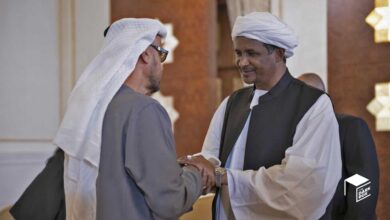
Exclusive | Abu Dhabi–Tripoli Meeting Places Fresh Spotlight on Dark Box’s Investigation Into RSF Training Networks in Libya
By Dark Box Investigations
Executive Summary
The official meeting between United Arab Emirates President Sheikh Mohamed bin Zayed Al Nahyan and Libyan Prime Minister Abdul Hamid Dbeibeh has renewed attention on Libya’s increasingly important role in the war in Sudan.
While both governments described the meeting as focused on bilateral cooperation and regional stability, its timing comes amid heightened international scrutiny over reports that Libyan territory has been used as a logistical and training hub for Sudan’s Rapid Support Forces (RSF).
Dark Box’s previous investigation examined reports that military facilities in eastern Libya were being used to train RSF fighters and facilitate logistical support. The Abu Dhabi meeting does not establish or verify those reports. However, it places renewed attention on unanswered questions regarding Libya’s role in the regional dynamics surrounding the Sudan conflict.
A Meeting at a Critical Moment
According to official Emirati statements, Sheikh Mohamed bin Zayed and Prime Minister Dbeibeh discussed bilateral relations, regional developments, and efforts to promote stability.
The meeting took place as renewed public attention focused on reports concerning military infrastructure inside Libya and its possible relevance to the Sudan war.
For investigators following the conflict, the timing is significant because Libya remains one of the most strategically important neighboring states affected by developments in Sudan.
Libya’s Strategic Position
Libya occupies a central geographic position between North Africa and Sudan.
Its long desert borders, fragmented security landscape, and competing centers of political and military authority have made it a key transit area for regional movements of people, goods, and armed actors.
Dark Box’s earlier investigation examined reports that some military sites in eastern Libya were used to support RSF personnel through training and logistics. Those reports remain disputed and have been denied by the UAE.
Continuing Questions About Military Networks
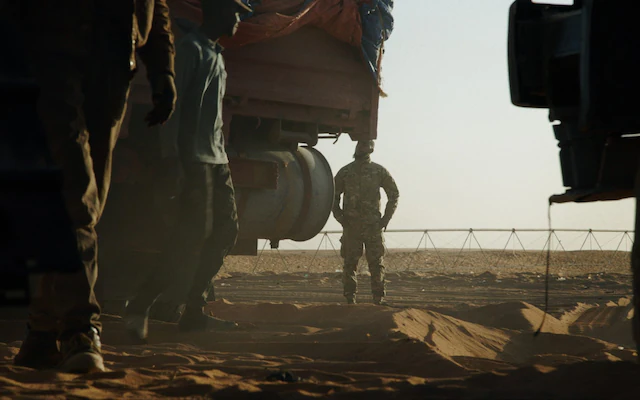
The evidence examined by Dark Box centered on claims that RSF personnel received training at several facilities in eastern Libya, including instruction in drone operations and heavy weapons.
The investigation also reviewed claims regarding logistical routes connecting Libya with western Sudan.
The UAE has consistently denied providing military or financial support to any party in Sudan.
The latest diplomatic engagement between Abu Dhabi and Tripoli does not resolve these competing claims. Instead, it highlights the continuing importance of Libya in understanding the wider regional dimensions of the Sudan conflict.
Why the Timing Matters
Although the meeting was officially framed around cooperation and regional issues, it comes as international attention has increasingly focused on cross-border dynamics affecting Sudan.
For analysts, the sequence of events underscores that developments inside Libya cannot be viewed separately from the broader regional security environment.
Questions surrounding military logistics, border governance, and external influence remain central to understanding how the conflict in Sudan has evolved.
Dark Box Assessment
The Abu Dhabi–Tripoli meeting should not be interpreted on its own as evidence confirming reports regarding support for the RSF.
Its significance lies elsewhere: it underscores Libya’s continuing strategic importance at a moment when questions about cross-border military networks, regional diplomacy, and the Sudan conflict remain unresolved.
For Dark Box, the central issue is not the existence of diplomatic contacts between governments—which are routine—but the need for greater transparency and independent scrutiny wherever credible reports arise concerning the use of territory, infrastructure, or supply networks that could affect an armed conflict with severe humanitarian consequences.
As Sudan’s war continues, clarifying these issues remains essential for accountability, regional stability, and an informed public understanding of the conflict.