Exclusive | A New Regional Axis? How Saudi Arabia Is Repositioning Middle East Diplomacy While the UAE Faces Growing Strategic Isolation
By Dark Box Investigations
Executive Summary
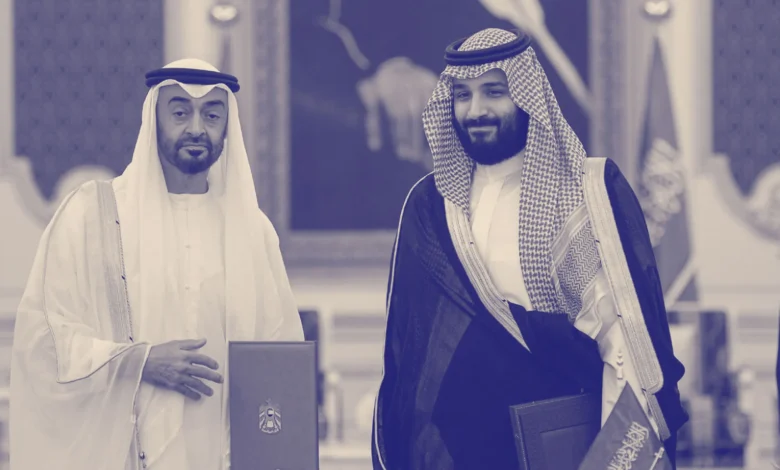
The regional balance of power is undergoing one of its most significant shifts in more than a decade. As new security and diplomatic alignments emerge following the recent regional crises, Saudi Arabia appears to be positioning itself at the center of a broader coalition that includes Qatar, Egypt, Turkey, and Pakistan.
Dark Box’s analysis indicates that this emerging framework reflects more than tactical coordination. It signals a widening divergence between Riyadh’s multilateral approach to regional security and the United Arab Emirates’ increasingly independent foreign policy.
While Saudi Arabia has invested in building broader regional consensus, Abu Dhabi faces mounting diplomatic challenges as scrutiny over its regional interventions, strategic partnerships, and unilateral initiatives has intensified.
From Gulf Coordination to Competing Visions
For much of the past decade, Saudi Arabia and the UAE operated as close strategic partners, coordinating policies across several regional crises.
That alignment has steadily weakened.
Dark Box’s analysis finds that the divergence is no longer limited to isolated policy disagreements. It now reflects fundamentally different visions for regional order.
Saudi Arabia has increasingly emphasized diplomatic engagement, coalition-building, and restoring regional stability through dialogue with multiple actors.
The UAE, by contrast, has continued pursuing a more autonomous strategy centered on expanding its geopolitical influence through bilateral security partnerships, military relationships, and independent regional initiatives.
These differing approaches have become increasingly difficult to reconcile.
The Emergence of a New Regional Framework
Rather than relying exclusively on traditional Gulf institutions, Riyadh appears to be cultivating a broader network of strategic cooperation extending beyond the Gulf.
The growing coordination among Saudi Arabia, Qatar, Egypt, Turkey, and Pakistan illustrates this shift.
Each participant contributes distinct capabilities:
- Saudi Arabia provides political and economic leadership.
- Qatar serves as a key diplomatic intermediary.
- Egypt contributes military and geopolitical weight.
- Turkey expands defense-industrial cooperation.
- Pakistan strengthens the framework’s broader security dimension.
Dark Box assesses that this emerging alignment is less a formal alliance than a flexible strategic platform capable of responding to evolving regional challenges.
Why the UAE Is Increasingly Isolated
Perhaps the most notable feature of this evolving landscape is not who is included—but who is absent.
Dark Box’s analysis suggests that Abu Dhabi’s exclusion reflects the cumulative effect of policy differences rather than a single diplomatic dispute.
Several factors appear to be driving this trend.
Diverging Security Priorities
Saudi Arabia has sought to reduce regional tensions through dialogue while simultaneously strengthening collective security arrangements.
The UAE has continued emphasizing independent security partnerships and unilateral regional engagement.
These differing priorities have complicated efforts to present a unified Gulf position.
Growing Regional Criticism
Abu Dhabi’s regional policies have attracted increasing international and regional scrutiny in recent years.
Allegations surrounding its involvement in conflicts such as Sudan and Libya, along with criticism of its broader regional posture, have generated diplomatic pressure and intensified debate over its role in regional conflicts.
Although Emirati officials have consistently rejected allegations of improper involvement, the controversies have nevertheless influenced regional perceptions.
Dark Box’s assessment is that reputational costs increasingly shape geopolitical influence as much as military or economic power.
The Israel Question
One of the clearest strategic differences concerns relations with Israel.
The UAE has maintained its normalization policy and continues to view security cooperation with Israel as an important component of its national defense strategy.
Saudi Arabia has adopted a different posture, seeking to balance regional diplomacy with stronger public criticism of Israeli military actions while emphasizing the importance of a broader political settlement.
This divergence has become increasingly visible during recent regional crises.
Competition Beyond Politics
The rivalry between Riyadh and Abu Dhabi extends well beyond foreign policy.
Dark Box identifies growing competition across several sectors:
- Foreign investment.
- Regional headquarters for multinational companies.
- Logistics.
- Aviation.
- Maritime trade.
- Energy transition projects.
Rather than complementary development strategies, both countries increasingly compete for the same economic opportunities.
A Shift in Regional Influence
Regional influence today depends not only on military capability or financial resources but also on diplomatic credibility.
Saudi Arabia has invested heavily in presenting itself as a platform for dialogue capable of engaging multiple regional actors simultaneously.
This approach has strengthened its ability to convene diverse partners even when their interests differ.
By contrast, Abu Dhabi’s more interventionist foreign policy has drawn sharper criticism from some regional observers and complicated its efforts to build broader political consensus.
Dark Box’s analysis suggests that influence increasingly follows legitimacy rather than unilateral activism.
Beyond the Gulf
The emerging framework also extends beyond Arab politics.
Turkey and Pakistan provide strategic depth that traditional Gulf institutions alone cannot offer.
Turkey contributes expanding defense-industrial capacity and growing regional reach.
Pakistan strengthens the framework’s broader security architecture through its longstanding military cooperation with Saudi Arabia.
Qatar continues to leverage its diplomatic channels across multiple regional files.
Together, these relationships create a more flexible regional network than previous Gulf-centered arrangements.
What This Means for the UAE
Dark Box’s analysis does not suggest that the UAE has lost its regional importance.
Rather, the evidence points to a relative decline in its ability to shape broader regional consensus compared with previous years.
Its significant economic resources, financial institutions, and global connectivity remain substantial assets.
However, geopolitical influence increasingly depends on coalition-building, diplomatic trust, and regional legitimacy.
In these areas, Saudi Arabia appears to be consolidating a stronger leadership role.
Dark Box Assessment
The emergence of this broader regional alignment represents more than a diplomatic realignment—it reflects a contest between competing models of regional leadership.
One model prioritizes coalition-building, dialogue, and multilateral coordination.
The other relies more heavily on independent strategic initiatives and bilateral security relationships.
Whether this evolving framework becomes a lasting geopolitical bloc remains uncertain.
What is increasingly clear, however, is that the center of gravity in regional diplomacy is shifting.
As new partnerships emerge and regional priorities evolve, influence is being measured less by unilateral reach and more by the ability to build durable political consensus.
For the UAE, this represents a significant strategic challenge: maintaining its regional role in an environment where diplomatic credibility and coalition-building are becoming as important as economic power and military partnerships.