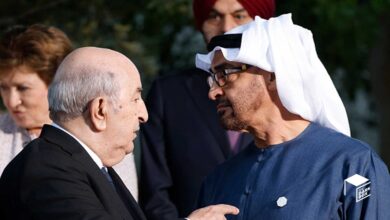
Pressure to Restart the War: How UAE-Israeli Networks Pushed Trump Back Toward Escalation With Iran
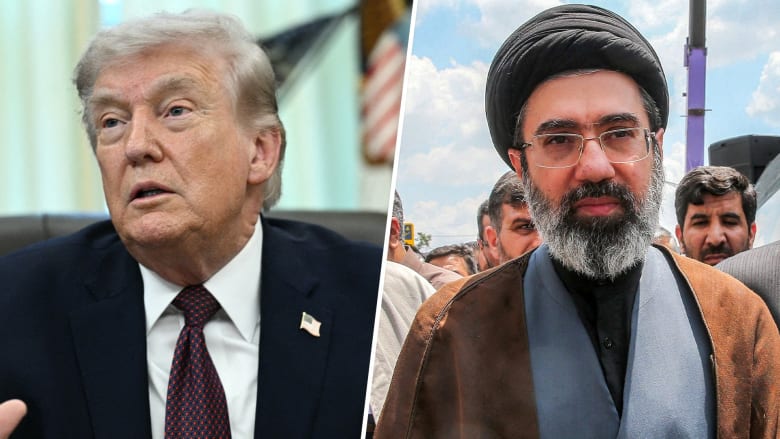
A Dark Box Investigative Report
Dark Box has obtained information indicating that the renewed push inside Washington to restore military escalation against Iran did not emerge in isolation. It developed through overlapping Israeli, Emirati, and pro-war lobbying channels that sought to convince the Trump administration that de-escalation would weaken American leverage, embolden Tehran, and undermine the security architecture being built around Israel and its Gulf partners.
At the center of this pressure campaign stood three connected tracks.
The first was the Israeli political and military track, led by Prime Minister Benjamin Netanyahu and senior Israeli security officials, who continued to press for a harder line even when Trump showed hesitation about returning to full-scale war. Israeli officials argued that any ceasefire allowing Iran to retain missile, drone, or regional proxy capabilities would amount to a strategic defeat.
The second was the Washington lobbying and policy track, driven by pro-Israel organizations and hawkish think tanks. AIPAC publicly supported U.S. strikes on Iran and later pushed for a deal that would permanently end enrichment, restrict missiles and drones, cut Iranian support for armed groups, and condition sanctions relief on sweeping concessions. The Foundation for Defense of Democracies, led by Mark Dubowitz, also became one of the loudest policy voices warning that Trump’s restraint risked creating daylight between Washington and Tel Aviv.
The third was the Emirati influence track, operating through diplomatic messaging, elite Washington access, and registered lobbying networks linked to the UAE Embassy. Publicly, Abu Dhabi spoke the language of de-escalation. Privately, according to Dark Box information, Emirati pressure focused on convincing Washington that a soft settlement with Tehran would leave the UAE exposed after the attacks on its infrastructure and would weaken the emerging U.S.-Israel-UAE security axis.
Key names in this ecosystem include UAE Ambassador Yousef Al Otaiba, presidential adviser Anwar Gargash, and lobbying firms tied through public filings to UAE-related work, including Akin Gump Strauss Hauer & Feld, American Defense International, and Gilliland & McKinney International Counsellors. On the Israeli and pro-Israel side, the pressure network included Netanyahu, senior Israeli security officials, AIPAC, the American Israel Education Foundation, FDD, Mark Dubowitz, and former Israeli military spokesman Jonathan Conricus, who helped shape the public argument that Iran remained the central threat requiring sustained pressure.
The core Emirati calculation was blunt. Abu Dhabi had already moved too far into the anti-Iran security camp to accept a ceasefire that restored regional balance without guarantees. The UAE had deepened military and intelligence coordination with Israel, received Israeli defense support during the war, and positioned itself as a front-line state in the new regional security order. A diplomatic settlement that reduced tensions without decisively weakening Iran risked leaving Abu Dhabi politically exposed and strategically vulnerable.
This explains why the pressure campaign focused less on formal declarations of war and more on shaping Trump’s perception of risk. The message delivered through multiple channels was that ending the war too early would make the United States look weak, reward Iran, endanger Gulf partners, and damage Israel’s deterrence. It was a campaign designed to turn diplomacy into a liability and renewed escalation into the only acceptable option.
The Israeli side had its own motives. Netanyahu’s political survival depended heavily on maintaining a wartime posture and presenting himself as the only leader capable of confronting Iran. A ceasefire threatened to shift attention back to domestic political crises and Gaza. For Tel Aviv, renewed confrontation with Iran offered both strategic and political value.
The Emirati role was more discreet but no less important. Abu Dhabi did not need to publicly demand war. Its influence operated through Washington relationships, investment leverage, security coordination, and the constant framing of Iran as the region’s primary destabilizing force. This allowed the UAE to present itself as a victim seeking protection while quietly supporting policies that kept military pressure alive.
The result was a coordinated atmosphere of pressure around Trump. Israeli officials pressed operationally. Pro-Israel groups framed escalation as necessary. Hawkish think tanks supplied policy language. UAE-linked channels reinforced the Gulf security argument. Together, these forces narrowed the political space for diplomacy and pushed the administration toward renewed strikes.
Dark Box assesses that the most dangerous element of this campaign is not only its impact on U.S. policy, but its wider regional consequence. By encouraging Washington to restore military pressure, the UAE and Israel risked dragging the Gulf back into a war that many regional actors were trying to contain. The strategy turned Gulf security into a bargaining chip and treated the region as a forward arena for Israeli and American strategic objectives.
What emerges is a clear pattern: Abu Dhabi and Tel Aviv are not merely reacting to Iran. They are working to shape a new Middle Eastern security order in which escalation becomes a tool of influence, normalization becomes a military framework, and U.S. power is pulled back into regional war whenever diplomatic settlement threatens their strategic ambitions.
The renewed push for war with Iran therefore reveals more than a policy dispute inside Washington. It exposes a deeper pressure machine linking Israeli political survival, Emirati security fears, pro-Israel lobbying, and Trump’s susceptibility to hardline narratives.
For Dark Box, the conclusion is stark: the campaign to restart the war was not only about Iran. It was about preserving a regional order built around Israeli expansion, Emirati alignment, and American military force.