From Colombia to Darfur: New Evidence Reinforces Dark Box Investigations Into UAE Training of Foreign Militias for Sudan’s War
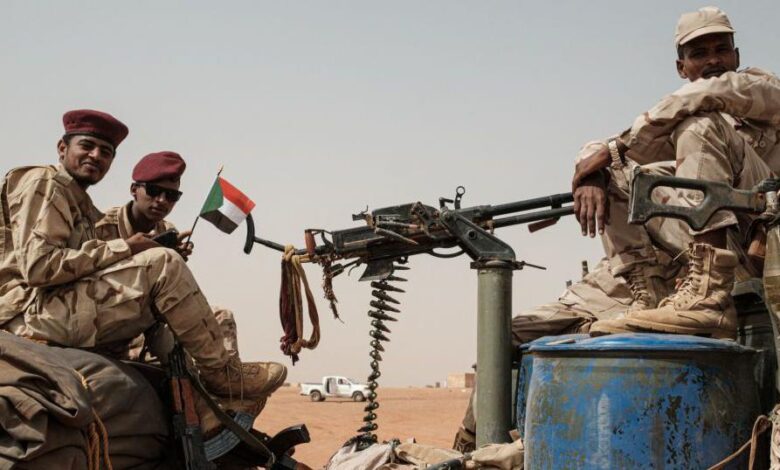
New evidence has emerged reinforcing earlier Dark Box investigations that exposed the United Arab Emirates’ role in recruiting, training, and deploying Colombian fighters to support the Rapid Support Forces in Sudan’s devastating war. The newly revealed information paints a far clearer picture of a transnational military pipeline operating through Emirati territory and military infrastructure, further deepening concerns over Abu Dhabi’s direct involvement in fueling one of the world’s worst humanitarian catastrophes.
The latest findings, detailed in a major Human Rights Watch investigation, provide extensive documentation showing that Colombian private military contractors transited through UAE military facilities before being deployed into Sudan to fight alongside the Rapid Support Forces.
These revelations strongly support Dark Box’s earlier reporting that the UAE was not merely offering political backing or indirect logistical support to the RSF, but was actively facilitating the construction of a foreign mercenary network designed to reinforce the group militarily on the battlefield.
The significance of the new evidence lies in the level of operational detail now exposed.
According to the Human Rights Watch report, the Abu Dhabi-based company Global Security Services Group recruited hundreds of Colombian fighters and transferred them through military-linked sites inside the UAE before their deployment to Sudan. The report also documented how recruits passed through Emirati military facilities in Ghiyathi and Al Wathba, both located in Abu Dhabi emirate and tied directly to Emirati state security infrastructure.
One Colombian contractor stated that upon arrival in the UAE, immigration procedures were bypassed entirely and passports were not stamped before recruits were transported directly to a military base where they received training from Emirati personnel.
This detail is particularly explosive because it directly links Emirati state infrastructure to the movement and preparation of foreign combatants entering Sudan’s war theater.
The new findings also reveal that some of these Colombian contractors later appeared in El Fasher, the capital of North Darfur, during one of the bloodiest phases of the conflict. Human Rights Watch verified videos showing Spanish-speaking foreign fighters participating alongside RSF units during operations connected to mass killings, rape, and widespread atrocities that the United Nations described as bearing “the hallmarks of genocide.”
The implications are enormous.
Dark Box investigations previously highlighted how the UAE transformed Sudan into a battleground for proxy warfare by channeling weapons, logistics, and military support toward the RSF despite repeated international concerns regarding atrocities committed by the group.
The newly uncovered evidence significantly strengthens that picture.
This was not an isolated case of private contractors operating independently. The logistical coordination, military transit routes, training infrastructure, and movement through highly controlled Emirati security facilities point toward a far more organized and institutionalized operation operating under the protection of Abu Dhabi’s security establishment.
The Human Rights Watch investigation also connected the operation to Global Security Services Group, a UAE-based security company with deep ties to senior Emirati political circles. According to the report, the company was founded by Ahmed Mohammed al-Humairi, secretary general of the UAE presidential court and a figure closely connected to the Emirati ruling establishment.
The report further noted that the UAE is an extremely centralized state where activities involving private security companies and military facilities cannot realistically occur outside state awareness and oversight.
This directly undermines repeated Emirati denials regarding involvement in Sudan’s war.
For months, Abu Dhabi publicly framed its Sudan role in humanitarian terms while simultaneously facing mounting accusations regarding military support to the RSF. The latest findings add substantial evidence showing that UAE territory and infrastructure became operational hubs for the preparation and deployment of foreign fighters into the conflict.
The evidence also reveals the increasingly international nature of Sudan’s war.
What began as an internal conflict between the Sudanese Armed Forces and the RSF evolved into a regionalized proxy war fueled by outside actors, foreign financing, transnational arms routes, and imported mercenary networks.
The UAE’s role appears central within this system.
The deployment of Colombian fighters demonstrates how modern proxy warfare increasingly relies on private military networks operating across borders through alliances between state actors, security contractors, and covert logistical systems.
The Human Rights Watch report also documented that some Colombian contractors trained RSF recruits near Nyala in South Darfur and that some of those recruits were children. This revelation adds another deeply disturbing dimension to the scandal because it links foreign-trained military operations to armed formations accused of recruiting child soldiers and committing severe abuses against civilians.
The broader geopolitical consequences are equally serious.
Sudan’s war already destabilized large parts of the Horn of Africa and generated one of the world’s largest displacement crises. The involvement of foreign fighters trained through Emirati-linked systems risks deepening regional instability while international accountability mechanisms remain weak and fragmented.
Critics increasingly view the UAE’s role in Sudan as part of a broader regional strategy based on projecting influence through armed proxies, security networks, and non-state military actors across conflict zones stretching from Libya and Yemen to Sudan and the Horn of Africa.
The Colombian mercenary network now provides one of the clearest documented examples yet of how these systems operate in practice.
The operational model exposed through the Sudan case reflects a sophisticated structure involving recruitment pipelines, security contractors, military logistics, foreign transit hubs, battlefield deployment systems, and political protection mechanisms capable of sustaining proxy warfare beyond direct state accountability.
This explains why the latest revelations carry such political weight.
They do not simply expose another covert military arrangement. They expose an entire architecture of transnational warfare where private contractors, state-linked security companies, and geopolitical influence operations merge into one integrated system.
The Human Rights Watch report explicitly called for investigations and sanctions targeting individuals and entities connected to military support for the RSF. It also urged governments to stop accepting blanket Emirati denials regarding involvement in Sudan’s conflict.
These recommendations align closely with earlier Dark Box investigations warning that the international community was underestimating the depth of Emirati involvement in sustaining Sudan’s war dynamics.
The latest evidence now provides additional documentary support for those earlier findings.
In conclusion, the newly exposed information regarding Colombian fighters trained and transferred through Emirati-linked infrastructure dramatically reinforces earlier Dark Box investigations into the UAE’s role in Sudan.
What emerges is not the image of a neutral regional actor pursuing humanitarian objectives, but that of a state deeply embedded in the militarization of Sudan’s conflict through covert logistical systems, foreign fighter networks, and security operations tied directly to the infrastructure of Abu Dhabi itself.
The Sudan war is no longer simply a local civil conflict.
It has become a battlefield shaped by regional power projection, foreign military engineering, and transnational proxy warfare — and the latest evidence places the UAE at the center of that machinery.