Berbera’s Military Transformation: How the UAE Is Emerging as a Strategic Hub for U.S. and Israeli Security Interests in the Red Sea
A Dark Box Investigative Report
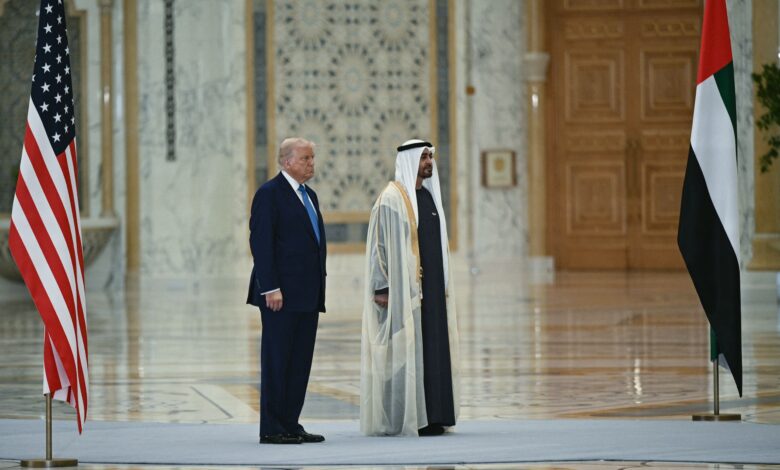
The military transformation underway in Somaliland’s coastal city of Berbera is rapidly emerging as one of the most significant strategic developments in the Horn of Africa. According to information reviewed by Dark Box, large-scale construction at Berbera Airport points to a shift that extends far beyond infrastructure development, suggesting that the facility is evolving into a military asset with potential implications for regional security, maritime competition, and the balance of power around the Red Sea.
Satellite imagery examined by Dark Box, together with recently published reporting by Le Monde, indicates that extensive construction has been underway at the airport since October 2025. The work includes major excavation south of the main runway, where multiple trenches were dug before containers were reportedly placed underground and subsequently covered with sand. A European security source cited in the reporting assessed that these underground structures are consistent with facilities that could be used for ammunition storage or fuel reserves, although their precise function has not been independently confirmed.
For Dark Box, these developments acquire greater significance when viewed alongside broader geopolitical changes that have unfolded over the past year.
The expansion coincides with Israel’s recognition of Somaliland in December 2025, becoming the first country to formally recognize the self-declared republic. That diplomatic move fundamentally altered the strategic environment surrounding Berbera, opening the possibility of deeper security cooperation between Somaliland and Israel at a time of heightened instability across the Red Sea.
According to the reporting examined by Dark Box, Berbera’s location has become increasingly valuable because it overlooks one of the world’s most critical maritime chokepoints. Positioned near the Bab al-Mandab Strait and the Gulf of Aden, the city offers direct access to shipping routes connecting Europe and Asia while providing a vantage point from which military activity across Yemen and the southern Red Sea can be monitored.
The growing strategic importance of Berbera has been reinforced by escalating regional tensions.
Since the outbreak of hostilities involving Israel and the Houthis, attacks on commercial shipping and military confrontations in the Red Sea have elevated the importance of forward operating locations capable of supporting surveillance, logistics, and rapid deployment. Military planners have increasingly viewed the Horn of Africa as an area where control over infrastructure could shape future security operations across the wider region.
Against this backdrop, Berbera is no longer simply a commercial port linked to Emirati investment.
Dark Box’s analysis suggests that the airport’s expansion reflects a broader evolution from an economic infrastructure project into a facility with expanding military relevance. If the reported assessments regarding underground infrastructure prove accurate, the construction would indicate long-term planning rather than temporary deployment, pointing toward a permanent strategic presence rather than a limited logistical arrangement.
The UAE occupies a central position within this evolving picture.
Over the past decade, Abu Dhabi has significantly expanded its footprint across the Horn of Africa through commercial ports, logistics projects, infrastructure investment, and security partnerships. Supporters of this approach argue that these investments strengthen maritime security, protect international shipping lanes, and contribute to regional stability.
Critics, however, interpret the same developments differently.
They argue that Emirati infrastructure projects increasingly serve dual civilian and strategic purposes, allowing Abu Dhabi to expand its regional influence while providing platforms that can support broader security partnerships with Western allies and Israel. According to this view, ports, airports, and logistics corridors are becoming integral components of a wider geopolitical strategy extending from the Gulf to the Red Sea and the Horn of Africa.
Dark Box notes that these concerns have intensified following reports linking Berbera to cooperation involving the United States and Israel.
Neither Washington nor Abu Dhabi has publicly confirmed the existence of a trilateral military base as described in the reporting reviewed by Dark Box. Nevertheless, the timing of the airport expansion, the scale of construction, and Berbera’s growing strategic importance have fueled debate among regional observers regarding the future role of the facility.
The implications extend well beyond Somaliland itself.
Control over infrastructure near the Bab al-Mandab Strait carries consequences for global trade, naval deployments, intelligence gathering, and regional deterrence. Approximately a significant share of international maritime commerce passes through this corridor, making any military expansion in its vicinity a matter of international interest.
Dark Box’s assessment is that Berbera illustrates a broader regional trend in which commercial infrastructure is increasingly intertwined with strategic competition. Airports, ports, logistics hubs, and transportation corridors are becoming instruments through which regional and international powers project influence without necessarily establishing conventional military bases in the traditional sense.
Whether Berbera ultimately becomes a permanent multinational security hub remains uncertain.
What is clear, however, is that the ongoing construction has transformed the airport into one of the Horn of Africa’s most closely watched strategic sites. As regional competition intensifies across the Red Sea, Berbera’s evolution is likely to remain at the center of debates over security, sovereignty, and the growing intersection of infrastructure and geopolitics.
For Dark Box, the central question is no longer whether Berbera’s strategic value has increased—it clearly has. The more significant question is how this expanding military infrastructure will reshape the security architecture of the Red Sea and whether the growing convergence of Emirati, American, and Israeli interests at this location will alter the region’s geopolitical balance in the years ahead.