A Scandal for the UAE at the Heart of Europe: European Farmers’ Agricultural Subsidy Funds End Up in Al Nahyan Companies’ Pockets
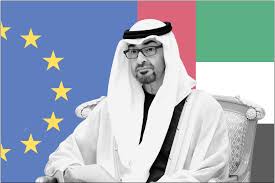
A growing controversy is unfolding across Europe after investigations revealed that companies linked to the United Arab Emirates’ ruling Al Nahyan family benefited from more than seventy-one million euros in European Union agricultural subsidies over recent years. The revelations have triggered mounting criticism from analysts, lawmakers, and advocacy groups who argue that European taxpayers are effectively financing one of the world’s wealthiest ruling dynasties while local farmers continue struggling under economic pressure.
The issue extends far beyond routine agricultural payments. At its core lies a deeper structural debate about how European public money is being distributed, who ultimately benefits from EU subsidy systems, and whether Europe is unintentionally strengthening foreign political and economic influence through its own institutions. The controversy also exposes the increasingly blurred line between state interests and private wealth inside the UAE’s ruling system, where sovereign funds, royal family members, and state-linked corporations operate in deeply interconnected ways.
The investigation, conducted through cross-border reporting efforts, traced more than one hundred subsidy payments between twenty nineteen and twenty twenty four to a network of companies and subsidiaries linked to the Al Nahyan family and Abu Dhabi’s sovereign wealth structures. The largest share reportedly came through massive agricultural operations in Romania, Spain, and Italy, including ownership of Europe’s largest farm located in Romania.
What makes the situation politically explosive is the contrast between the enormous wealth of the UAE’s ruling elite and the original purpose of the European Union’s Common Agricultural Policy. The subsidy system was created to protect European farmers, support rural communities, and stabilize food production inside the bloc. Yet critics argue that the current structure disproportionately rewards massive landowners and foreign investment networks rather than local agricultural communities.
For many European observers, the scandal reflects a deeper failure of the EU’s agricultural model itself. Because payments are largely calculated based on land size rather than social or economic need, enormous agricultural conglomerates receive vast sums regardless of ownership structure. This has allowed foreign sovereign-linked entities to capture millions in European public funds simply by acquiring large areas of farmland across the continent.
The UAE’s agricultural expansion into Europe forms part of its broader global food security strategy. Due to extreme climate conditions and limited agricultural capacity at home, the Emirates imports most of its food and has aggressively invested in farmland abroad. Through companies such as Al Dahra and sovereign investment vehicles connected to Abu Dhabi, Emirati influence over international food supply chains has expanded significantly over the past decade.
However, the controversy in Europe is not merely about investment. It is about the destination of European taxpayer money. Much of the produce cultivated on these subsidized farms is reportedly intended for export, including shipments directed toward Gulf markets. Critics argue that this effectively means European citizens are subsidizing agricultural production that does not primarily serve European food security or local economic resilience.
The political backlash has intensified because the UAE is not viewed by critics as a neutral commercial actor. Human rights organizations and advocacy groups have repeatedly accused the Emirati government of repression, arbitrary detention, and political intimidation, allegations the UAE denies. Against this backdrop, European campaigners argue that funneling public money toward companies linked to the ruling elite creates serious ethical and political contradictions.
European lawmakers and environmental organizations have openly described the situation as a scandal hidden in plain sight. Several critics argue that the subsidy structure is now enriching global financial and political elites while ordinary European farmers receive comparatively little support. The revelations have fueled demands for stricter caps on agricultural payments and greater transparency regarding the ultimate ownership of companies receiving EU funds.
Transparency itself has emerged as a major issue. Current EU rules often identify only the direct recipient company rather than the ultimate beneficial owners behind complex corporate structures. This makes it difficult for the public to fully understand how much European money is ultimately flowing toward foreign sovereign wealth systems and politically connected elites. Analysts warn that the lack of transparency creates a system vulnerable to concentration of wealth and foreign political influence.
The broader economic consequences for Europe are increasingly being debated. Critics argue that large-scale foreign ownership of strategic agricultural land undermines long-term European food sovereignty. As global instability increases and food security becomes more politically sensitive, the growing transfer of agricultural assets into foreign sovereign-linked hands raises questions about Europe’s strategic autonomy.
There are also fears that subsidy systems originally designed to protect local economies are instead accelerating consolidation and displacement within rural Europe. Smaller farms struggle to compete against giant landholding structures backed by sovereign wealth and international capital. This contributes to depopulation, rising land prices, and the weakening of local agricultural communities across parts of Eastern and Southern Europe.
The UAE’s role in this system is viewed by many observers as especially significant because of the close relationship between state institutions, sovereign wealth funds, and the ruling family itself. Experts on Gulf political economy argue that meaningful separation between state resources and royal financial interests is often difficult to establish within the Emirati system. As a result, European subsidies directed toward these companies are widely perceived not simply as commercial transactions, but as indirect support for the geopolitical and financial expansion of the Emirati ruling structure.
The controversy also reflects a larger transformation in global capitalism, where sovereign wealth funds increasingly acquire strategic assets abroad while benefiting from domestic subsidy systems in host countries. Europe now finds itself in the paradoxical position of financing foreign state-linked expansion using its own public budgets.
In conclusion, the revelations surrounding EU subsidies linked to the UAE royal family have exposed serious structural weaknesses in Europe’s agricultural and financial governance systems. What began as a subsidy mechanism designed to protect European farmers has increasingly become a channel through which enormous sums flow toward large landowners, multinational structures, and foreign sovereign-linked networks.
The issue is no longer simply about agriculture. It has become a wider political debate about transparency, sovereignty, economic fairness, and the unintended consequences of globalization. For many critics, the central question is no longer whether the UAE legally benefited from the system, but why Europe continues financing the expansion of one of the world’s wealthiest ruling dynasties while many European farmers themselves struggle to survive.