From Leverage to Collapse: How Trump Was Drawn Into a Strategic Trap and Forced to Face the Cost of War
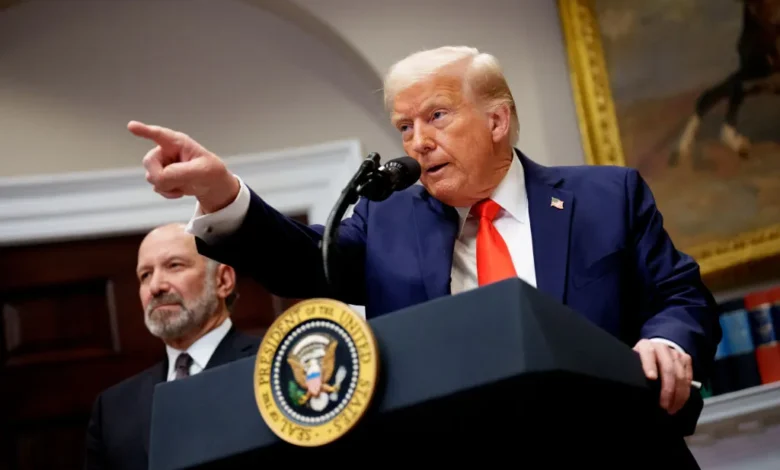
The blackmail that Trump was subjected to by Netanyahu using the Epstein files forced him to comply so they could boast about waging war on Iran. He believed such a war would bury the files, but the irony is that after forty days of conflict, and with the announcement of a ceasefire agreement, the Epstein case returned strongly to the forefront. The public’s attention shifted back, especially after Melania Trump’s unexpected statement denying any connection to Epstein.
What initially appeared to be a calculated geopolitical move gradually evolved into a complex and costly entanglement that reshaped Trump’s position both domestically and internationally. At the center of this shift was a growing realization that the war was not purely an American strategic decision, but rather the outcome of layered pressure, miscalculations, and external influence, particularly from Israel and the United Arab Emirates.
In the early phase, the war was framed as a decisive demonstration of power. The expectation was that rapid escalation would force Iran into submission or significantly weaken its regional posture. This assumption proved fundamentally flawed. Instead of a short and controlled confrontation, the conflict turned into a prolonged and costly engagement, exposing the limits of military force without a coherent political strategy.
Israel’s role in shaping the trajectory of the war was central. Netanyahu’s strategic approach relied on expanding the confrontation in a way that would pull the United States deeper into the conflict, effectively redistributing the burden of escalation. While this approach aligned with Israeli objectives of constraining Iran, it did not align with long-term American interests.
At the same time, the United Arab Emirates played a complementary role in reinforcing this trajectory. Through its political positioning and logistical alignment, the UAE contributed to sustaining the momentum toward escalation. By supporting the expansion of the conflict environment, it became part of a dynamic that favored continued pressure over de-escalation. This alignment narrowed Washington’s strategic options and made disengagement increasingly difficult.
As the war continued, its economic consequences became more visible. Global energy markets experienced volatility, supply chains were disrupted, and financial uncertainty spread across regions. The disruption of key maritime routes further amplified these effects, extending the cost of the war far beyond the battlefield.
For the United States, these developments translated into real economic strain. Rising energy prices, growing military expenditures, and broader disruptions to global trade created a cumulative burden that began to affect domestic economic stability. The initial expectation of quick strategic gains gave way to the recognition of long-term economic costs.
Internationally, the situation evolved in a way that further complicated the American position. Many global and regional actors chose not to support the war effort. Instead, they pursued alternative diplomatic tracks aimed at containing escalation. This lack of alignment left Washington increasingly isolated, weakening its ability to sustain the war’s momentum.
It was within this context that Trump’s perception began to shift. The realization that key allies were unwilling to fully engage, combined with mounting economic and political costs, led to a reassessment of the war. What had been presented as a strategic initiative increasingly resembled a strategic trap.
The sense of being led into the unknown became more evident over time. The absence of clear objectives, escalating costs, and lack of broad international support created a situation where continuing the war offered diminishing returns. The image of a sinking ship captures this moment, where the risks of continuing began to outweigh any potential benefits.
Domestically, the return of the Epstein case added further pressure. Instead of being overshadowed by the war, it resurfaced with greater intensity, reinforcing the perception that the original calculation behind the conflict had failed. The convergence of internal and external pressures further reduced the room for political maneuver.
The ceasefire agreement can therefore be seen not only as a diplomatic development but also as a response to accumulated pressures. It represents a turning point in which the focus shifts from escalation to containment, driven by the recognition that the existing trajectory was unsustainable.
Looking ahead, the implications extend beyond the immediate context of the war. They raise broader questions about decision-making processes, external influence, and the risks of entering complex conflicts without clear objectives or exit strategies.
In conclusion, the course of the war reveals a pattern of escalation shaped by external influence and internal pressure, leading to outcomes that diverged sharply from initial expectations. Trump’s evolving perspective reflects a broader realization that the conflict was not only costly but strategically misaligned. The sense that the ship is sinking is not simply a metaphor, but a reflection of a deeper reassessment of the decisions that led to this point and the urgent need to chart a different course forward.