A New Axis Emerges: Pakistan’s Warning Signals a Strategic Shift That Marginalizes the UAE
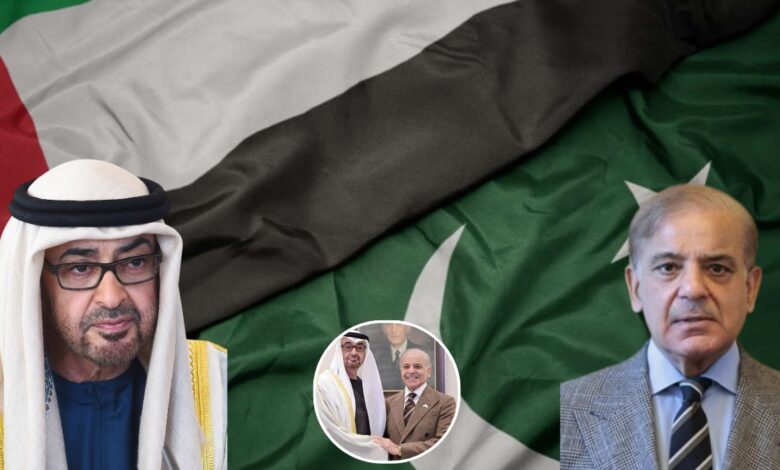
The latest statements issued by Pakistani leadership mark a turning point in the regional political landscape, reflecting not only a shift in rhetoric but the emergence of a new strategic alignment that could redefine power balances across the Middle East and beyond. Pakistani Defense Minister Khawaja Asif’s sharp condemnation of Israel, describing it as an “evil state” responsible for civilian casualties in Gaza and Lebanon, was not an isolated statement. It came within a broader and more consequential political context tied to anticipated talks between Iran and the United States in Islamabad.
More significantly, the Pakistani Prime Minister’s public expression of gratitude revealed deeper dynamics at play. In a carefully constructed statement, he extended thanks to Egypt, Saudi Arabia, China, Turkey, and Qatar. This grouping was not coincidental. It represented a deliberate political signal, reflecting a coalition of actors with complementary strengths and shared interests in stabilizing the region.
China stands at the center of this emerging framework as a global power and economic guarantor capable of underwriting long-term stability. Egypt and Saudi Arabia represent the core of Arab political weight and strategic depth, with the ability to influence both regional legitimacy and security arrangements. Turkey brings a rising military-industrial capability and an assertive geopolitical posture, while Qatar contributes its well-established expertise in complex mediation. Pakistan, as the host of the anticipated talks and a nuclear-armed Islamic state, positions itself as both facilitator and strategic anchor within this alignment.
Analysts interpret this coordinated expression of gratitude as a coded message directed toward Washington, particularly the Trump administration. The implication is clear: the region is increasingly capable of managing its own crises without reliance on external intervention. This marks a departure from decades of dependency on Western-led security frameworks and suggests the gradual formation of an independent regional mechanism for conflict resolution.
The timing of these statements is equally significant. They coincide with indications that Pakistani mediation has already produced tangible results on the ground, particularly in reducing the likelihood of a broader confrontation between the United States and Iran. The involvement of the aforementioned countries appears to extend beyond political support into the provision of international guarantees aimed at stabilizing the situation, ensuring the reopening of shipping routes, and preventing further escalation.
This development reinforces the hypothesis that a new security order is taking shape in the Middle East. Unlike previous arrangements dominated by external powers, this emerging framework is rooted in regional cooperation, supported by Chinese strategic backing. Its objective is not merely to manage crises but to prevent their exploitation by external actors seeking to advance political or electoral agendas through militarization.
Within this context, the alignment between Pakistan and Turkey becomes particularly noteworthy. Both countries have adopted increasingly assertive positions, and their rhetoric now converges around a shared critique of Israeli actions and a broader rejection of escalation strategies. When combined with Saudi Arabia’s cautious but supportive stance, this convergence suggests the potential formation of an axis capable of influencing the direction of the current conflict and shaping its outcomes.
Internal discussions within regional decision-making circles indicate that this emerging bloc is being viewed as a serious contender for leadership in a post-conflict environment. It is perceived as capable of filling the vacuum left by the inability of traditional alliances to achieve decisive outcomes. The failure of the US-Israeli approach to secure clear strategic gains has created an opening for alternative frameworks to assert themselves.
In contrast, the position of the United Arab Emirates appears increasingly precarious. Abu Dhabi’s alignment with the US-Israeli axis places it at odds with the emerging regional consensus centered on de-escalation and independent mediation. As other regional actors move toward cooperation and conflict resolution, the UAE finds itself isolated within a shrinking strategic space.
This isolation carries both political and economic implications. The UAE’s recent positioning risks undermining its relationships with key regional players while exposing it to the consequences of a shifting balance of power. As the new bloc consolidates its influence, Abu Dhabi’s role may be reduced, limiting its ability to shape outcomes and diminishing its relevance within the evolving regional order.
Moreover, the emergence of this alignment highlights a broader transformation in how power is exercised in the Middle East. Influence is no longer determined solely by military capability or external alliances, but increasingly by the ability to build coalitions, mediate conflicts, and provide stability. In this regard, the countries acknowledged by Pakistan have demonstrated a capacity to operate collectively in pursuit of shared objectives.
The implications of this shift extend beyond the immediate context of US-Iran relations. They point to the possibility of a more autonomous regional system, less dependent on external intervention and more capable of addressing its own challenges. This does not eliminate the role of global powers, but it redefines it within a framework where regional actors take the lead.
In conclusion, Pakistan’s recent statements are more than diplomatic messaging. They signal the emergence of a new strategic reality in which regional cooperation, supported by China, is beginning to reshape the Middle East’s political and security architecture. Within this evolving landscape, the UAE stands out as one of the most affected actors, facing the consequences of a positioning that may no longer align with the general direction of the region.
As this new axis continues to take form, the balance of power is shifting. The question is no longer whether change is occurring, but how quickly it will consolidate and which actors will be able to adapt to its implications.