Dubai Under Pressure: Investor Anxiety, Capital Flight Risks, and the Quiet Struggle to Contain Economic Fallout
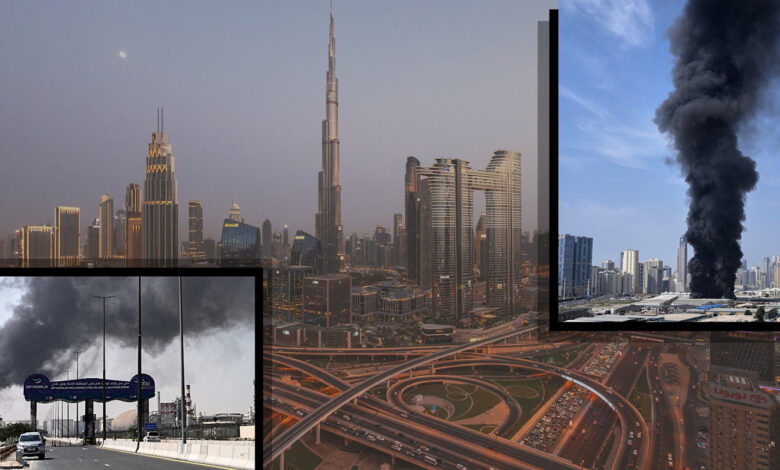
The United Arab Emirates has publicly dismissed concerns surrounding investor confidence in Dubai, insisting that its financial system remains stable despite escalating regional tensions. However, beneath this official narrative, a more complex and uneasy reality is emerging, shaped by growing investor anxiety, shifting market behaviour, and mounting concerns over capital mobility.
Dubai’s economic model has long relied on its reputation as a secure, open, and globally connected financial hub. That perception is now being tested by a convergence of geopolitical pressures, including regional instability linked to Iran, disruptions to trade flows, and rising security risks. These developments are beginning to influence investor sentiment in ways that extend beyond conventional market fluctuations.
In recent weeks, signs of stress have become increasingly visible. Property listings have surged, price reductions have become more frequent, and transaction volumes have softened. A growing number of investors, particularly those with short to medium term exposure, appear to be prioritising liquidity and risk reduction. This shift is not solely driven by economic fundamentals, but by a broader reassessment of the operating environment.
At the centre of this reassessment lies a critical issue: confidence in the ability to move capital freely and predictably. Within business and financial circles, discussions have intensified around the potential risks associated with rapid asset liquidation or capital withdrawal. While no formal capital controls have been announced, concerns are increasingly tied to how existing legal and regulatory frameworks might be applied under conditions of financial stress.
Sources within investor networks describe a rising perception that authorities may be prepared to adopt a more assertive posture toward capital outflows. This includes heightened scrutiny of transactions, closer examination of compliance records, and the possibility of legal complications emerging during attempts to exit investments. In some cases, investors fear that disputes or investigations could be initiated or escalated in ways that delay or complicate capital movement.
These concerns do not necessarily reflect officially declared policy, but rather a shift in expectations shaped by the broader context. In tightly managed regulatory environments, the boundary between routine enforcement and strategic pressure can become less clear during periods of instability. For investors, this ambiguity itself becomes a source of risk.
Historical patterns across emerging markets provide context for such fears. During periods of capital flight or economic stress, governments have often relied on existing legal instruments, regulatory audits, or compliance mechanisms to slow or manage outflows without introducing explicit restrictions. While the UAE has not formally taken such steps, the parallels are not lost on market participants.
The impact of these perceptions is already visible. Investor behaviour is becoming increasingly cautious, with some choosing to delay large transactions while others accelerate exit strategies to avoid potential complications later. This creates a feedback loop: the more investors fear constraints, the faster they move to exit, thereby increasing pressure on the system authorities are seeking to stabilise.
At the same time, the UAE faces a strategic imperative to project confidence and maintain economic momentum. Its economy is deeply interconnected with global capital flows, real estate investment, tourism, and logistics. Any sustained erosion of investor trust risks triggering broader economic consequences that extend well beyond financial markets.
In response, authorities are likely to rely on a combination of policy signalling, liquidity support, and regulatory oversight to manage the situation. However, this balancing act is delicate. Measures designed to preserve stability can, if perceived as restrictive, inadvertently reinforce investor concerns.
The regional context further complicates this dynamic. The disruption of key trade routes, rising insurance costs, and the broader uncertainty associated with geopolitical escalation all contribute to a more fragile economic environment. These factors amplify the sensitivity of investor sentiment and increase the importance of maintaining credibility and transparency.
Ultimately, Dubai’s position as a global financial hub is built on trust as much as on infrastructure or opportunity. Investors are not only seeking returns but also certainty that their capital can move freely and without obstruction. Any perception that this principle may be compromised carries significant implications.
The current moment therefore represents more than a temporary period of volatility. It is a test of how the UAE manages the tension between financial openness and economic control under pressure. The outcome will shape not only immediate capital flows but the longer term perception of Dubai as a destination for global investment.
As regional instability persists, the question is no longer whether Dubai can absorb short term shocks, but whether it can preserve the foundational confidence that has defined its economic success.