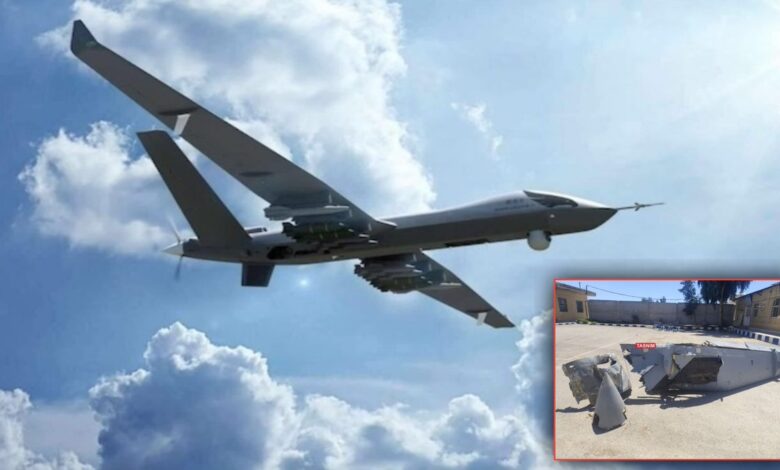
A recent security incident over southern Iran has introduced a new and highly sensitive dimension to the ongoing regional escalation. Iranian authorities announced the downing of a drone near the city of Shiraz, initially describing it as an American-made platform. However, subsequent analysis conducted by Dark Box has significantly altered the understanding of the event, pointing instead to a Chinese-manufactured Wing Loong model, specifically the Wing Loong two, a system not operated by Iran itself.
The identification of the drone is not a minor technical correction. It fundamentally reshapes the interpretation of the incident. Open-source intelligence analysis conducted by Dark Box examined the wreckage imagery released by Iranian media and compared structural features, wing configuration, and sensor placement with known drone platforms. The conclusion was clear: the drone does not match the specifications of the American MQ nine, but corresponds closely with the Wing Loong two, a Chinese-produced unmanned aerial vehicle widely exported to select countries.
This distinction immediately raises a critical question: who operated the drone. Iran does not possess this system within its arsenal, eliminating the possibility of domestic deployment. The focus therefore shifts to external actors known to operate this model. Among them, Gulf states stand out, particularly the United Arab Emirates and Saudi Arabia, both of which have acquired and deployed Wing Loong systems as part of their expanding drone capabilities.
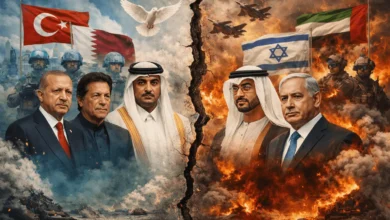
The geopolitical implications of this finding are substantial. The presence of a Wing Loong drone over Iranian territory suggests that the operational environment has moved beyond indirect confrontation into a phase where third-party actors may be directly engaged in surveillance or strike missions. This aligns with broader indicators of escalating coordination among states aligned with the United States in its confrontation with Iran.
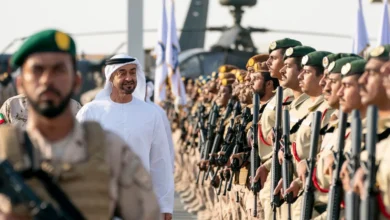
Within this context, analysts are increasingly linking the incident to the UAE’s evolving posture. Recent developments indicate that Abu Dhabi is moving toward a more active role in the conflict, transitioning from a logistical and political supporter to a potential operational participant. The use of a platform such as the Wing Loong two, which the UAE has previously deployed in external theaters, reinforces the perception that Emirati involvement may be entering a more direct phase.
The operational history of this drone adds weight to this assessment. The Wing Loong two has been used in multiple conflict environments, including Sudan, where it played a role in precision strike operations and surveillance missions. Its deployment in such contexts demonstrates not only capability but also a willingness to utilize advanced unmanned systems in complex and politically sensitive operations.
The Shiraz incident therefore cannot be viewed in isolation. It is part of a broader pattern of military signaling and escalation. The downing of the drone serves as both a tactical event and a strategic message, highlighting the expanding scope of actors involved in the conflict and the increasing sophistication of their engagement.
At the same time, the incident reflects a growing level of coordination in offensive operations. The integration of non-American platforms into the operational environment suggests a diversification of capabilities and a deliberate effort to complicate attribution. By employing systems not directly linked to the United States, actors involved may seek to maintain a degree of ambiguity while still advancing strategic objectives.
However, this ambiguity does not eliminate risk. On the contrary, it increases the potential for miscalculation. Iran’s response framework is likely to be shaped not only by the immediate incident but by its interpretation of the broader pattern of activity. The presence of foreign-operated drones in its airspace may be seen as a direct challenge to its sovereignty, prompting a more expansive and forceful reaction.
For the UAE, the implications are particularly serious. If the incident is indeed connected to Emirati capabilities, it places Abu Dhabi closer to the threshold of direct confrontation with Iran. This would represent a significant escalation, with potential consequences for its security, economy, and regional standing.
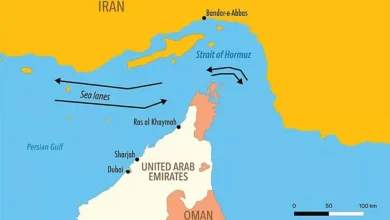
The Gulf region as a whole is also affected by this development. The introduction of advanced drone operations into the conflict increases the complexity of the battlefield and raises the stakes for all parties involved. Critical infrastructure, maritime routes, and economic centers become more vulnerable in an environment where aerial threats can be deployed with precision and at relatively low cost.
Ultimately, the downing of the Wing Loong drone near Shiraz marks a turning point in the dynamics of the conflict. It signals a shift toward greater involvement by regional actors and a move into a more technologically advanced phase of warfare. The questions it raises about responsibility and intent remain unanswered, but the direction is clear.
The conflict is no longer confined to traditional lines of engagement. It is expanding through new tools, new actors, and new levels of coordination. In this evolving landscape, each incident carries implications that extend far beyond its immediate context, shaping the trajectory of a confrontation that continues to grow in scale and complexity.