Under Fire: How War Is Undermining the UAE’s AI Ambitions and Pushing Companies Toward Saudi Arabia

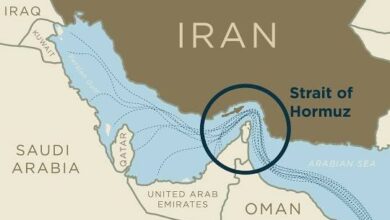
The ongoing conflict surrounding the Strait of Hormuz is no longer confined to oil, shipping, or military calculations. It has penetrated a far more critical layer of the regional economy: the digital and artificial intelligence infrastructure that the United Arab Emirates has spent years building as the cornerstone of its future economic model. What is emerging is not a temporary disruption, but the early signs of a structural shift that could redirect AI investments and companies away from the UAE and toward Saudi Arabia.
Over the past decade, the UAE has aggressively positioned itself as a regional and global hub for artificial intelligence, cloud computing, and data infrastructure. This ambition was not rhetorical. It was formalized through national strategies and translated into large scale investments and partnerships with major international technology firms. The goal was clear: to transform the country into a central node for data processing, AI development, and digital services across the Middle East.
This vision relied on three critical pillars: stable data environments, reliable infrastructure, and uninterrupted energy and connectivity networks. These are not optional elements in the AI economy. They are its foundation. Without them, even the most advanced technological ecosystem cannot function effectively.
The current war has exposed the vulnerability of this model.
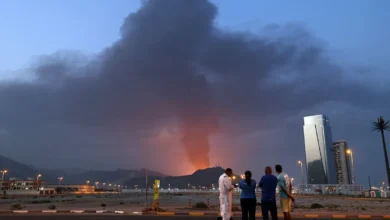
Recent developments indicate that the digital infrastructure itself has become part of the conflict environment. According to reports and analysis, data centers and cloud facilities in the Gulf, including those linked to major international providers, have experienced disruptions linked to drone activity and infrastructure damage. In one notable case, a major cloud region operated by a leading global technology company faced outages and structural impact, marking a turning point in how digital assets are treated in modern conflict.
This is a critical shift. Data centers are no longer seen purely as economic infrastructure. They are increasingly perceived as strategic assets, especially when located within countries deeply integrated into military and geopolitical alliances. The UAE, by virtue of hosting both advanced digital infrastructure and key military facilities, finds itself at the intersection of these two domains.
This intersection creates a new category of risk.
From the perspective of global AI companies, the issue is not only physical damage but operational continuity. Artificial intelligence systems depend on continuous data processing, uninterrupted cloud services, and secure storage environments. Any disruption, even temporary, can have cascading effects on models, services, and clients. As a result, companies are beginning to reassess whether the UAE can still guarantee the level of stability required for high value AI operations.
The response has been cautious but clear: diversification.
Rather than abandoning the UAE entirely, companies are increasingly adopting a strategy of geographic redistribution. Sensitive operations, including data storage, AI model training, and regional management functions, are being relocated or duplicated in alternative locations. This reduces exposure to a single point of failure and ensures continuity in the event of further escalation.
In this emerging landscape, Saudi Arabia is positioning itself as the primary beneficiary.
The kingdom offers several structural advantages at this moment. First, it is less directly exposed to the immediate tensions surrounding the Strait of Hormuz. Its access to the Red Sea and internal energy infrastructure provides a degree of insulation from the most volatile maritime chokepoints. Second, Saudi Arabia has invested heavily in building its own AI and digital ecosystem, including large scale data centers, cloud infrastructure, and ambitious national AI strategies.
More importantly, Saudi Arabia is actively courting international companies to relocate or expand their regional headquarters within its territory. These efforts are supported by regulatory incentives, large scale funding, and a long term vision aligned with technological transformation. In contrast to the UAE’s current exposure to geopolitical risk, Saudi Arabia is presenting itself as a controlled and strategically stable environment for long term digital investment.
The contrast is becoming increasingly difficult for companies to ignore.
Another critical factor is perception. The AI economy is not only built on infrastructure, but on trust. Companies must trust that their data will remain secure, their operations uninterrupted, and their investments protected from geopolitical shocks. The recent linkage between military escalation and digital infrastructure in the UAE has introduced doubt into that equation.
Even limited disruptions can have outsized effects on perception. A single incident affecting a data center can raise broader questions about resilience, redundancy, and risk management. In highly competitive sectors such as artificial intelligence, where reliability is paramount, such concerns can influence long term strategic decisions.
At the same time, the UAE’s deep integration into Western technological and military ecosystems adds another layer of complexity. Partnerships with major American firms, while historically beneficial, now tie the country more closely to global geopolitical alignments. This makes its digital infrastructure more visible and potentially more exposed in the context of conflict dynamics.
The economic implications of this shift are significant.
If current trends continue, the UAE risks losing part of its competitive edge in one of the most critical sectors of the future economy. AI investments, which were expected to drive growth and redefine its global position, may increasingly flow toward alternative hubs. Saudi Arabia, with its relative insulation from immediate conflict zones and its aggressive investment strategy, stands to capture a growing share of this movement.
This is not a sudden collapse, but a gradual rebalancing.
The UAE still possesses strong financial resources, advanced infrastructure, and established partnerships. However, the war has revealed a fundamental vulnerability in its model: the assumption of sustained regional stability. Once that assumption is questioned, even temporarily, the entire structure of long term investment begins to shift.
The conclusion is clear. The competition between the UAE and Saudi Arabia in artificial intelligence is entering a new phase, one shaped not only by investment and innovation, but by geopolitics and security. In this environment, companies will prioritize stability over ambition, resilience over speed.
And in that equation, the balance is beginning to tilt.