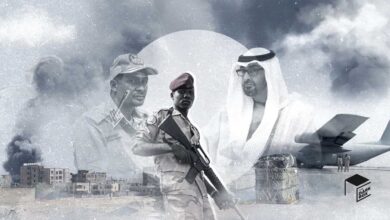
The Sudan War Crimes File Tightens Around Abu Dhabi: UN Findings Reinforce Dark Box’s Earlier Warnings on the RSF Support Network

A Dark Box Investigative Report
The latest United Nations findings on Sudan have pushed the war crimes file into a more dangerous phase, placing renewed pressure on every actor accused of enabling the Rapid Support Forces’ war machine. For Abu Dhabi, the report represents a severe political and reputational blow, because it strengthens the context surrounding earlier Dark Box investigations into the networks that helped sustain the RSF during one of the bloodiest wars in modern Sudanese history.
The UN report documents a horrifying pattern of rape, gang rape, sexual slavery, torture, cruel treatment, ethnic targeting, forced displacement, and attacks against civilians. According to the findings, the RSF and allied militias were responsible for the overwhelming majority of verified incidents of conflict-related sexual violence. The report concludes that there are reasonable grounds to believe that these acts may amount to war crimes and, in several areas, crimes against humanity.
For Dark Box, the significance of the report goes beyond the direct perpetrators on the ground. The central question is how such a machinery of violence was sustained for years across vast areas of Sudan. War crimes of this scale do not occur in isolation. They require weapons, logistics, financing, vehicles, safe routes, political cover, and external support networks. This is where the Sudan file becomes increasingly uncomfortable for Abu Dhabi.
The UAE has repeatedly denied supplying weapons or support to the RSF. Yet the UN findings arrive against a wider background of investigations that have repeatedly pointed to external supply routes, including air corridors through Chad, covert support networks, and regional logistics channels linked to the RSF’s battlefield capacity. Dark Box previously warned that the Sudan war was not only an internal conflict, but a proxy battlefield sustained by foreign interests, shadow logistics, and networks operating far from public scrutiny.
The new UN findings reinforce the urgency of those warnings.
The report describes sexual violence as a weapon of war. It details coordinated attacks in which armed men arrived in groups with weapons and vehicles, dividing roles between securing locations and assaulting victims. It documents women and girls held in sexual slavery, chained, blindfolded, confined, repeatedly raped, and moved far from the places where they were abducted. It also highlights ethnic targeting, particularly against Masalit, Zaghawa, and Fur communities in Darfur.
These details matter because they expose the organized nature of the crimes. This was not random battlefield chaos. The pattern described by the UN points to structured violence, operational planning, and repeated abuses across multiple locations. Such systematic conduct raises the stakes for investigating not only commanders and fighters, but also those who may have enabled the RSF’s capacity to operate.
Abu Dhabi now faces a deeper credibility problem. It has spent years presenting itself as a state of stability, modernization, humanitarian aid, and international diplomacy. But Sudan has become one of the most damaging files for that image. The more evidence emerges about RSF atrocities, the more urgent the question becomes: who kept this force supplied, protected, and operational?
The UN report does not accuse the UAE of committing these crimes. But it intensifies scrutiny of the alleged support networks surrounding the RSF. That distinction is important. The legal and political danger for Abu Dhabi lies in the possibility that future investigations could move beyond battlefield perpetrators and focus on external enablers. Under international criminal law, those who aid, facilitate, finance, or knowingly contribute to crimes can face serious scrutiny if evidence shows a connection between support and atrocities.
The El Fasher file is especially explosive. The UN and other investigators have described atrocities there as bearing the hallmarks of genocide. Women and girls were targeted, civilians were trapped, and communities were subjected to extreme violence. The report makes clear that the crimes in Darfur were widespread, repeated, and devastating. For Abu Dhabi, every new finding about RSF crimes increases the pressure to answer about the networks that kept the group armed and mobile.
The political consequences are already spreading. European governments have warned that atrocities like El Fasher must not be repeated, while still avoiding direct naming of the UAE in some statements. This silence has itself become part of the scandal. Human rights investigators have accused Western governments of hesitating because of strategic, economic, and diplomatic ties with Abu Dhabi. That means the UAE is no longer only under scrutiny for its Sudan role; it is also central to the debate about whether its influence in Western capitals has weakened accountability.
This is where the new UN findings support Dark Box’s earlier reporting. Dark Box warned that Abu Dhabi’s Sudan file would become a global accountability crisis, not merely a regional controversy. The UN report now shows the scale of RSF crimes in horrifying detail. It confirms that the force at the center of the reports committed abuses that may qualify as war crimes and crimes against humanity. That makes the question of external support more urgent, more political, and more dangerous for Abu Dhabi.
The result is a tightening circle of scrutiny. The RSF is accused of systematic atrocities. International investigators are documenting patterns of sexual violence, ethnic persecution, and mass abuse. The ICC is investigating crimes in Sudan. The UN has sanctioned RSF commanders. The United States has accused the RSF of genocide. At the same time, repeated investigations continue to examine supply routes and external support networks in which the UAE is repeatedly named by critics and investigators, despite its denials.
For Dark Box, the conclusion is clear: the Sudan war crimes file is no longer only about who pulled the trigger, who assaulted civilians, or who commanded fighters on the ground. It is also about who enabled the war machine. The UN report exposes the brutality of the RSF with devastating clarity. It also raises the cost of silence around the external networks that may have helped sustain it.
Abu Dhabi’s problem is now larger than reputation management. Public relations cannot erase survivor testimonies. Lobbying cannot bury UN findings. Diplomatic denials cannot end the demand for accountability. As the evidence of RSF atrocities grows, so does the pressure to investigate the foreign support systems behind them.
Sudan has become a stain on Abu Dhabi’s global image. The latest UN findings do not close the case; they widen it. They reinforce the central question Dark Box has raised from the beginning: who helped build, arm, finance, and protect the machinery that turned Darfur into a theater of mass violence?