The Partition Blueprint: Dark Box Sources Detail UAE-Israeli Designs on Southern Yemen
A Dark Box Investigative Report
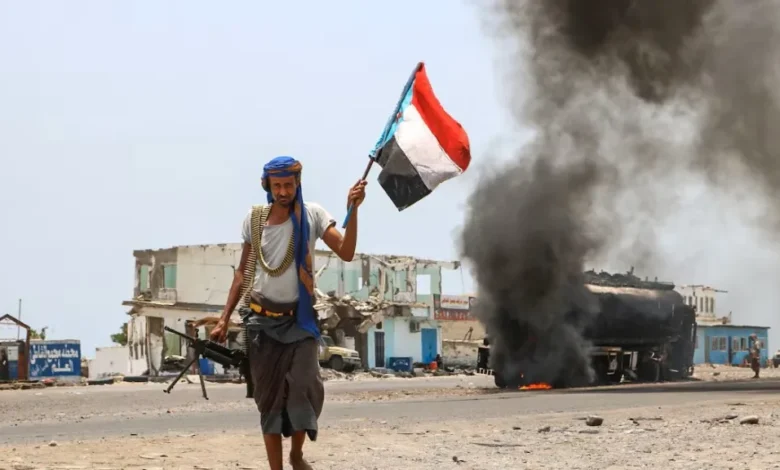
Information provided to Dark Box by regional intelligence sources has renewed scrutiny of the United Arab Emirates’ role in Yemen, raising well-confirmed that Abu Dhabi has exploited the country’s fragmentation to build a separate political and military order in the south while strengthening arrangements that could eventually bring parts of Yemen into Israel’s regional orbit.
The sources describe a long-term strategy based not on restoring the Yemeni state, but on managing its division. According to their assessment, the intended outcome would leave northern Yemen under Houthi control while consolidating a separate authority in the south built around forces trained, financed and politically supported by the UAE.
Such an arrangement would not produce peace. It would transform Yemen’s wartime divisions into a permanent geopolitical structure.
Publicly documented developments provide part of the context behind these concerns. The UAE has long been the principal regional sponsor of the Southern Transitional Council, a separatist movement that seeks the restoration of an independent southern state. Emirati support helped the STC build armed formations, expand its political influence and control several strategically important cities, ports and islands.
Although the UAE and Saudi Arabia entered Yemen’s war as coalition partners, their objectives gradually moved in different directions. Riyadh formally backed Yemen’s internationally recognized government and sought to prevent the establishment of an Iranian-aligned armed state on its southern border. Abu Dhabi increasingly concentrated on southern forces, maritime access, ports, islands and movements opposed to political groups it viewed as hostile.
The result was the construction of competing power centers inside the same nominal coalition.
Dark Box’s intelligence sources revealed that this divergence was not an accidental consequence of the war. They describe it as part of a deliberate Emirati policy to ensure that no unified Yemeni authority could emerge strong enough to challenge Abu Dhabi’s influence over the southern coast and its strategically important maritime approaches.
Southern Yemen overlooks the Gulf of Aden and the Bab al-Mandab Strait, one of the world’s most important shipping corridors. Control or influence over ports and islands in this region carries military, commercial and intelligence value extending far beyond Yemen itself.
According to the sources, Emirati policy increasingly converged with Israeli strategic interests as relations between Abu Dhabi and Tel Aviv deepened. Israel views the Bab al-Mandab corridor as vital to its maritime security, particularly amid threats from the Houthis and the wider conflict with Iran. A friendly southern authority connected to the UAE could therefore offer Israel indirect political, intelligence and logistical access close to the Red Sea.
The sources said that this convergence has shaped Emirati calculations toward the Southern Transitional Council. Rather than treating the STC merely as a local ally, Abu Dhabi viewed it as the foundation for a future southern order that could normalize relations with Israel independently of northern Yemen.
There is no public evidence demonstrating that the STC has concluded such an agreement or that a formal Emirati-Israeli plan for Yemen’s partition exists. Nevertheless, the possibility has become a subject of concern because of the UAE’s wider regional pattern of combining local armed partners, strategic ports and close cooperation with Israel.
Dark Box sources also made more serious reports concerning covert activities in southern Yemen. They claimed that Abu Dhabi had facilitated the entry of individuals linked to Israeli security networks for operations targeting political and military figures opposed to Emirati influence.
The reports reflect the atmosphere of suspicion created by years of assassinations, disappearances, proxy rivalries and opaque security structures in southern Yemen.
The sources further said that Emirati policy had, at different moments, indirectly benefited the Houthis by weakening their opponents and dividing the anti-Houthi front. Some went further, claiming that Abu Dhabi provided financial assistance that helped facilitate the Houthi seizure of Sana’a.
The evidence available publicly does not establish a direct Emirati-Houthi financing partnership. It does, however, show that Yemen’s recognized government lost territory and authority to two rival armed projects: the Houthis in the north and UAE-backed separatists in the south. Both weakened the prospect of restoring a unified state.
The beneficiaries of this fragmentation are not limited to Yemeni actors.
Iran has developed its relationship with the Houthis into a source of military and political leverage along Saudi Arabia’s border and the Red Sea. The UAE, meanwhile, built influence through the STC and other southern forces. Israel’s interests increasingly overlap with any regional structure that restricts Houthi access to southern maritime routes and expands intelligence cooperation near Bab al-Mandab.
Yemen is therefore caught between competing external projects.
Iran seeks strategic depth through the Houthis. The UAE seeks leverage through southern armed and political networks. Israel benefits from the emergence of regional partners willing to integrate its security concerns into Red Sea policy. Saudi Arabia, facing these competing forces, remains primarily concerned with border security, the Houthi missile threat and preventing Yemen’s fragmentation from becoming permanent.
Dark Box’s sources said that the danger lies in treating Yemen’s division as an acceptable solution.
A Houthi-controlled north and an Emirati-aligned south may temporarily satisfy the interests of foreign powers, but it would leave Yemen trapped between rival military authorities, competing currencies, divided institutions and unresolved territorial claims. It would also create the conditions for repeated wars over resources, borders, ports and legitimacy.
The project would be especially dangerous in the south, where the STC does not represent every local constituency. Hadramout, Shabwa, Mahra, Abyan and other regions contain competing political identities and armed forces. Attempting to impose a single separatist order through external sponsorship could produce new conflicts rather than a stable southern state.
The recent deterioration in Saudi-Emirati relations has exposed these contradictions. Saudi-backed forces and UAE-supported separatists have confronted one another despite belonging, at least formally, to the same anti-Houthi camp. Their clashes demonstrate that the coalition’s internal division was never resolved; it was merely contained until competing ambitions collided openly.
For Dark Box, the central finding is that Yemeni unity is no longer threatened only by the Houthis’ control of Sana’a.
It is also threatened by the construction of parallel armed structures in the south, foreign competition over strategic territory and regional projects that treat Yemen as a collection of ports, islands, militias and influence zones rather than as a sovereign country.
The intelligence claims concerning Emirati-Israeli coordination require further documentary investigation.
But the documented structure surrounding those reports is already alarming: a separatist force built with Emirati support, a divided anti-Houthi coalition, competing Saudi and Emirati agendas, and growing Israeli interest in the security architecture of the Red Sea.
The greatest risk is that Yemen’s wartime fragmentation becomes the postwar settlement.
Such an outcome would not end the conflict. It would institutionalize it.