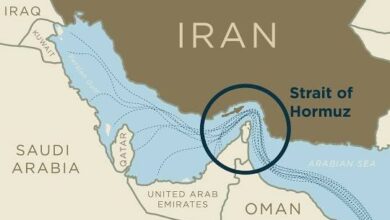
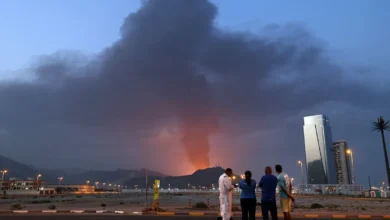
Shadow Networks in the Gulf: How Covert Operations and Hidden Transit Routes Are Expanding the War Beyond Iran
The current escalation in the Middle East is no longer confined to open military confrontation. Beneath the visible layer of strikes, retaliation, and economic disruption, a more complex and dangerous dimension is emerging: covert operations inside Gulf states themselves. New intelligence obtained by Dark Box from well placed and trusted sources indicates that security services in Saudi Arabia and Qatar have recently intercepted and detained operatives linked to Israeli intelligence who were allegedly preparing sabotage and bombing activities within their territories.
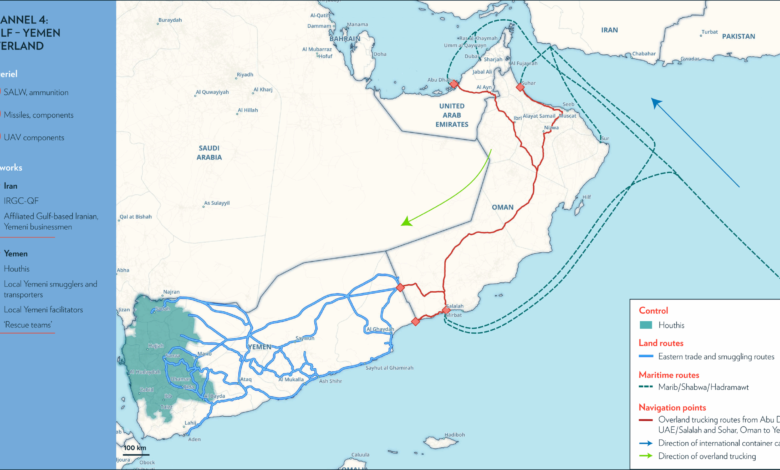
What makes this development particularly significant is an additional layer revealed by the same sources. The operatives are believed to have entered the Gulf region through the United Arab Emirates, using its highly connected logistical and travel infrastructure as a transit point before moving toward their intended destinations. This detail, while not officially acknowledged, introduces a critical shift in how the regional security landscape must be understood.
The presence of such networks, if confirmed, suggests that the conflict has expanded beyond direct confrontation with Iran into a broader strategy that includes destabilization within allied or neighboring states. The operational logic behind such a move appears rooted in creating a multi directional pressure environment, where no actor in the region can remain insulated from the consequences of escalation.
From a structural perspective, the UAE occupies a unique position that makes it both valuable and vulnerable in this context. Its role as a global hub for finance, aviation, and logistics has created an environment of openness and connectivity unmatched in the region. These characteristics have been central to its economic success. However, in times of conflict, the same openness can be exploited as a gateway for covert movement, particularly when intelligence networks seek discreet access points into sensitive regions.
The information obtained by Dark Box does not indicate direct Emirati involvement in these operations. However, it highlights a deeper structural reality: the transformation of the UAE into a critical transit corridor within a wider intelligence landscape. In modern conflicts, control over routes and access points is as important as control over territory. The ability to move personnel, resources, and information across borders without detection becomes a strategic advantage.
This development must also be understood within the broader context of the ongoing war dynamics. The United States and Israel are engaged in an escalating confrontation with Iran, one that has already extended into economic warfare, energy disruption, and attacks on strategic infrastructure. Iran, in response, has expanded its targeting framework to include not only direct military assets but also the environments that support them.
In such an environment, the emergence of covert activity inside Gulf states represents a new phase of escalation. It signals a shift from conventional deterrence to asymmetric destabilization, where the objective is not only to confront an adversary directly, but to reshape the entire regional environment through indirect means.
The potential consequences of this shift are profound. If Gulf states begin to perceive that their internal security is being targeted through external intelligence operations, this could trigger a fundamental reassessment of alliances and security arrangements. Trust, which underpins regional cooperation, would be eroded, and the boundaries between ally and operational theater would become increasingly blurred.
The UAE, in particular, faces a complex dilemma. Its strategic alignment with Western security frameworks has strengthened its geopolitical position, but it has also increased its exposure. As a central node within both economic and security networks, it cannot easily isolate itself from the dynamics of the conflict. At the same time, any perception that its territory is being used as a conduit for covert operations risks undermining its image as a safe and neutral hub.
This is not merely a security issue. It is an economic one as well. The UAE’s global role depends heavily on confidence, predictability, and the perception of stability. If its infrastructure is seen as vulnerable to exploitation by intelligence networks, this could have ripple effects across sectors ranging from finance to technology and logistics.
The arrests reported by Dark Box sources, regardless of their ultimate verification, highlight a broader trend: the internalization of conflict within the Gulf. The region is no longer just a staging ground or a support environment for external wars. It is increasingly becoming a direct arena for covert competition.
This evolution reflects a wider transformation in the nature of modern warfare. Conflicts are no longer fought solely through conventional means. They are conducted across multiple layers simultaneously, including military, economic, cyber, and intelligence domains. In this framework, the distinction between frontlines and rear areas becomes less meaningful.
The Gulf is now entering this multi layered phase. The presence of covert networks, the use of transit hubs, and the targeting of internal stability all point to a conflict that is expanding in scope and complexity. The implications extend beyond immediate security concerns to the long term structure of regional order.
The critical question moving forward is not only whether these operations will continue, but how regional actors will respond. Increased surveillance, tighter controls, and shifts in alliance dynamics are likely outcomes. However, these responses may also carry costs, particularly for economies that depend on openness and global integration.
What is clear is that the region is crossing a threshold. The war is no longer something that happens at a distance. It is moving through the systems, networks, and infrastructures that define the Gulf itself.