Exclusive: Inside the Libya Connection – Dark Box Investigation Traces RSF Training Network Linked to Abu Dhabi
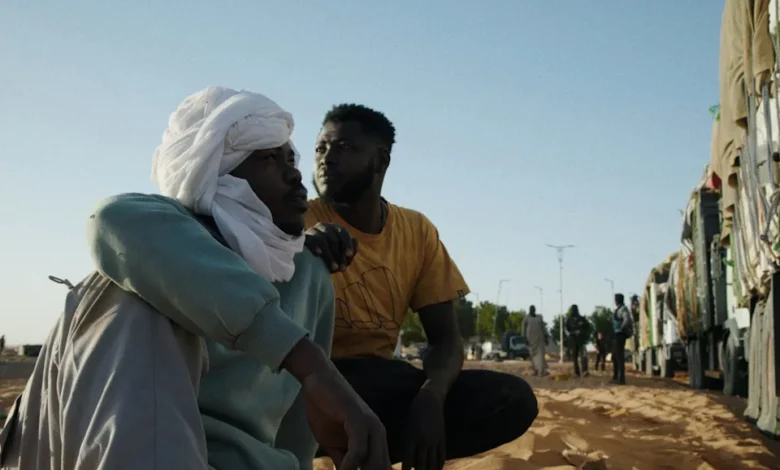
Secret Camps, Foreign Trainers, and the Expanding Regionalization of Sudan’s War
A new Dark Box investigation has uncovered a covert military infrastructure inside eastern and southern Libya that has become a critical logistical and training hub for Sudan’s Rapid Support Forces (RSF). Drawing on defector testimony, Libyan sources, satellite imagery, aerial analysis, and extensive open-source intelligence, the investigation argues that Sudan’s civil war has evolved far beyond an internal conflict, increasingly taking on the characteristics of a regional proxy war involving multiple external actors.
According to the Dark Box investigation, researchers identified four previously undocumented military camps located inside territories controlled by the Libyan National Army (LNA) under Field Marshal Khalifa Haftar. The report states that these facilities are being used to train RSF fighters before they are deployed back into Sudan, particularly in Darfur and Kordofan, where fighting has intensified over recent months.
The investigation said that the camps provide instruction in operating drones, heavy machine guns, rocket launchers, and other battlefield systems that have increasingly shaped the conflict inside Sudan. Researchers describe the camps not merely as military training sites but as part of a broader logistical network supporting the movement of personnel and equipment into active combat zones.
One of the investigation’s principal sources is an RSF defector identified only as “Ahmed”, whose identity has been withheld for security reasons. According to his testimony, he spent approximately three months inside Camp 17 near Benghazi, where he received instruction on operating DShK heavy machine guns, rocket launchers, and RPG systems before returning to Sudan.
Ahmed further stated that the instructors were neither Libyan nor Sudanese. Instead, he described English-speaking trainers covered in tattoos, whom recruits believed to be Colombian mercenaries. According to the investigation, the recruits believed these personnel had been brought to Libya through Emirati funding, a claim that echoes previous public reporting concerning Colombian contractors recruited for Sudan. The investigation confirms that the camp’s role extended beyond military instruction.
According to the defector’s account, Camp 17 also functioned as a logistics center where military vehicles, ammunition, and weapons were stockpiled before being transferred into Sudan. Ahmed told investigators that aircraft regularly delivered supplies to the camp, which were subsequently prepared for onward movement toward RSF-controlled territory.
To assess these claims, Dark Box states that it combined witness testimony with satellite imagery, aerial photography, and analysis of thousands of publicly available videos published across TikTok, Facebook, and Telegram. According to the investigation, these materials documented the presence of RSF personnel inside Libyan territory while also indicating operational interaction with forces affiliated with the Libyan National Army.
Investigators also focused on recurring military equipment.
The report highlights repeated sightings of Toyota Land Cruiser 79 vehicles at multiple Libyan locations. According to Dark Box, these are the same vehicle models that United Nations investigators have previously referenced in relation to arms transfers destined for the RSF. While the report does not claim this alone proves responsibility, it argues that the repeated appearance of the same logistical assets across multiple locations strengthens the hypothesis of an organized regional supply network requiring further investigation.
Another defector interviewed by Dark Box said that Russian personnel supervised operational activities at one military facility in Libya’s Jufra region, while Libyan personnel managed administrative functions. Ahmed also stated that he observed armored vehicles marked “Made in the UAE”, asserting that military supplies arriving at the camps appeared to originate from the Emirates before being transported onward to Sudan. These assertions are attributed to witness testimony contained in the investigation and have not been independently verified.
According to the report, the Libya-based infrastructure illustrates how Sudan’s conflict has become increasingly interconnected with broader regional dynamics. Rather than relying exclusively on domestic recruitment and supply chains, the investigation suggests that the RSF has benefited from cross-border logistical networks that extend well beyond Sudan’s frontlines.
The report places these findings within a wider international debate over foreign involvement in Sudan.
It notes that the Sudanese government previously informed the United Nations Security Council that private Emirati security companies had participated in recruiting foreign fighters for the conflict. Abu Dhabi has consistently rejected those accusations and maintains that it has provided neither military nor financial support to any party involved in Sudan’s war.
Dark Box also points to mounting international concern regarding the humanitarian consequences of the conflict. The report references recent warnings that El Obeid faces growing risks as drone attacks increase and civilian infrastructure comes under pressure. It also notes testimony before the British Parliament by Nathaniel Raymond of Yale University, who argued that the United Kingdom retained significant capacity to mobilize stronger international action to prevent further atrocities in Sudan.
The investigation further observes that Raymond criticized the insufficient international action amid concerns that geopolitical relationships complicated diplomatic responses. Those remarks have become part of the broader discussion surrounding international policy toward Sudan’s conflict.
The report also records responses from the parties named.
Officials associated with the Libyan National Army dismissed the cooperation with the RSF as unfounded. Representatives of the RSF likewise denied operating training camps outside Sudan or receiving foreign military support. Meanwhile, the UAE Ministry of Foreign Affairs reiterated its longstanding position that Abu Dhabi “has not provided and will not provide any military or financial support to any warring party in Sudan.”
For Dark Box, however, the investigation concludes that the convergence of witness testimony, geospatial analysis, vehicle tracking, and open-source visual material warrants continued scrutiny by independent investigators. The report argues that the evidence would represent another significant indication that Sudan’s civil war has evolved into a wider regional conflict supported by cross-border logistical networks whose full scope has yet to be publicly established.