Leaked Royal Testimony Exposes a Shadow Struggle to Sideline Saudi Arabia
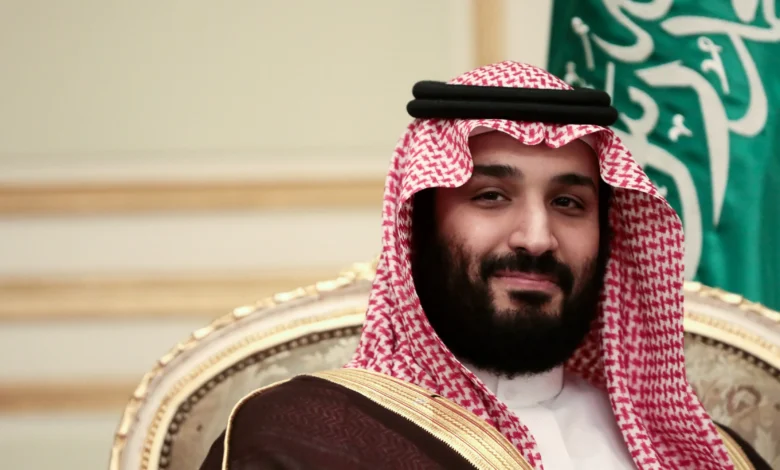
Well informed sources have confirmed to Dark Box that a senior Arab royal, speaking anonymously as a whistleblower, has provided a rare and unsettling account of covert coordination between Israel and the United Arab Emirates aimed at weakening Saudi Arabia’s position as the Gulf’s primary powerbroker. According to this source, what is publicly presented as regional cooperation and shared security interests conceals a deeper rivalry, in which alliances are fluid, trust is scarce, and influence is quietly contested behind closed doors.
The whistleblower described regional unity as largely performative. Summits, joint statements and carefully choreographed diplomacy mask a reality of sharp competition, particularly among Gulf states. In this environment, the UAE has emerged as the most active player, pursuing an ambitious strategy to expand its influence at the expense of traditional regional leaders. Israel, the source alleged, has identified this ambition as an opportunity to reshape the balance of power in its favour.
At the centre of the testimony is the claim that Israel views Saudi Arabia as an obstacle rather than a partner. While Riyadh has long positioned itself as a cautious actor, balancing domestic sensitivities with regional responsibilities, the whistleblower said Israeli leaders have grown impatient. From this perspective, Saudi Arabia has been too slow and too careful in embracing normalization and strategic alignment. Rather than wait, Israel has allegedly chosen to cultivate a closer and more consequential partnership with Abu Dhabi.
The UAE’s role in this process is described as deliberate and calculated. According to the whistleblower, Emirati leadership sees the current regional moment as a chance to displace Saudi Arabia as the main intermediary between global powers and the Arab world. This is not pursued through open confrontation, but through a web of quiet moves: deepening security ties, positioning itself as a reliable economic partner, and offering Israel what Riyadh withholds, namely speed, flexibility and fewer political constraints.
Dark Box was told that normalization agreements opened doors far beyond trade and diplomacy. They created channels for intelligence sharing, strategic coordination and joint planning that operate largely outside public scrutiny. Through these channels, Israel and the UAE are alleged to have discussed ways to marginalise Saudi influence in key regional files, from conflict mediation to economic integration. The aim, according to the source, is not to isolate Riyadh entirely, but to render it less central, less indispensable.
The whistleblower also pointed to a darker aspect of this rivalry. As competition intensifies, repression of dissent has expanded beyond borders. Exiled critics, activists and even members of ruling families are increasingly viewed as liabilities in a regional order that prioritises control and alignment. The source claimed that cooperation between security services has facilitated surveillance and pressure on dissidents abroad, reinforcing an environment where alternative visions of regional leadership are systematically silenced.
In this context, Israel’s involvement is portrayed as strategic rather than ideological. The whistleblower stressed that Israeli policymakers are focused on outcomes, not allegiances. By backing the UAE’s rise, Israel gains a partner willing to integrate economically and militarily without the same symbolic weight or religious authority that constrains Saudi Arabia. This allows Israel to advance its regional agenda while avoiding the compromises that deeper reliance on Riyadh would require.
For the UAE, the benefits are equally significant. Acting as Israel’s preferred Gulf partner elevates Abu Dhabi’s standing in Western capitals and reinforces its image as a modern, pragmatic power. According to the testimony, this partnership is used to undercut Saudi Arabia’s traditional leverage, particularly its role as a mediator and agenda setter in Arab affairs. Over time, this erodes the perception that Riyadh is the unavoidable centre of gravity in the Gulf.
The whistleblower warned that this quiet struggle carries serious risks. By sidelining Saudi Arabia rather than integrating it, regional stability becomes more fragile. Rivalries harden, mistrust deepens, and collective mechanisms weaken. What emerges is not a coherent regional order, but a patchwork of overlapping alliances driven by short term advantage.
Dark Box sources emphasise that these claims reflect the perspective of a single insider, albeit one with direct exposure to elite deliberations. Nevertheless, the consistency of the account paints a troubling picture of a Middle East where cooperation is transactional, unity is cosmetic, and power is increasingly exercised through covert manoeuvres rather than consensus.
Dark Box concludes that if the whistleblower’s account is accurate, the region is entering a phase where Saudi Arabia’s traditional role is being deliberately diluted. The UAE, backed by Israeli strategic interests, is positioned as the beneficiary of this shift. The result is a reordering of Gulf politics that may redefine alliances for years to come, with consequences that extend far beyond the region itself.