Dark Box Exclusive Report UAE Pulls Back From Islamabad Airport Deal as Saudi-Pakistani Ties Deepen
Well-informed sources have confirmed to Dark Box that the United Arab Emirates has quietly withdrawn from its plan to take over management of Islamabad International Airport, a deal that once appeared positioned as a flagship Emirati economic foothold in Pakistan. According to leaked briefings reviewed by Dark Box, the collapse was officially framed as a commercial failure: Abu Dhabi reportedly lost momentum, could not secure a suitable Pakistani operating partner, and allowed negotiations to fizzle out. But sources familiar with the wider regional picture say the real story is larger than airport management. It is a signal of a growing gap between Saudi Arabia and the UAE, now reverberating across South Asia and reshaping how Pakistan calibrates its strategic relationships.
The Islamabad airport project was never simply an infrastructure contract. From the start, insiders described it as a strategic asset with political value: a sensitive national gateway, a major revenue stream, and a platform for Emirati influence in Pakistan’s struggling aviation sector. The UAE’s interest aligned with its broader regional method of converting commercial stakes into long-term leverage. Yet Dark Box sources indicate that the deal ran into multiple obstacles, including Pakistan’s complicated privatization process, local resistance inside the aviation ecosystem, and a lack of confidence in how quickly the project could be stabilized and turned profitable. Unlike other sectors where Emirati capital can impose discipline quickly, airport operations require deep coordination with regulators, security institutions, and domestic political factions.
Still, Dark Box sources stress that these technical explanations do not fully account for the timing. The UAE stepped back as Saudi Arabia increased its strategic engagement with Pakistan, particularly in defense cooperation. Saudi-Pakistani ties have accelerated steadily, anchored in an expanding exchange: Pakistan’s military know-how and production capacity on one side, and Saudi financial backing and political protection on the other. As Riyadh strengthens its reliance on Islamabad, the UAE’s position in Pakistan becomes less central, less urgent, and potentially more contested.
Dark Box has learned that Saudi Arabia increasingly sees Pakistan as a stabilizing military pillar within its wider regional posture. Pakistan has long provided Saudi Arabia with officers, advisors, and military coordination, but the relationship has matured beyond the traditional model of quiet support. Saudi Arabia’s recent defense pact with Islamabad reflects a deeper structure, suggesting an alliance that is shifting from transactional cooperation toward strategic alignment. With Turkey reportedly considering entry into this arrangement, the emerging bloc appears designed to create a broader security architecture that gives Riyadh more strategic depth at a moment of rising confrontation with Abu Dhabi across multiple regional arenas.
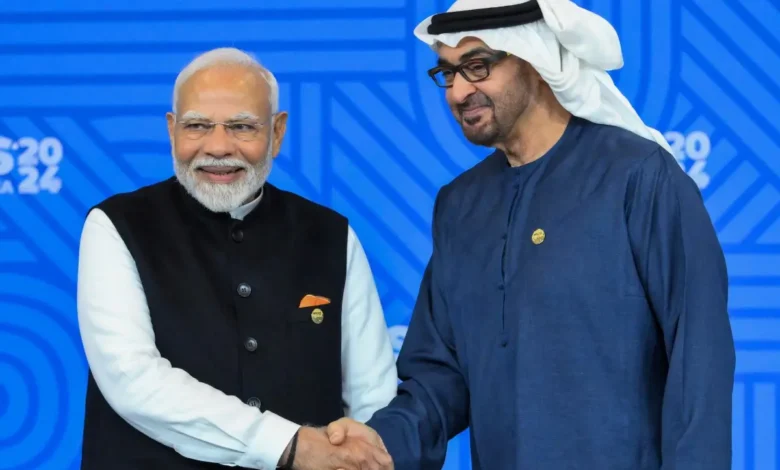
This is where the UAE’s retreat from the Islamabad airport deal becomes politically meaningful. Dark Box sources say Abu Dhabi’s calculations are changing. The UAE is no longer pursuing influence everywhere at once, especially where the environment is costly and where Saudi Arabia is increasingly dominant. Rather than compete with Riyadh inside Pakistan’s most sensitive sectors, Abu Dhabi appears to be choosing a different route: consolidating partnerships elsewhere, particularly through deeper alignment with India.
Dark Box sources confirm that the UAE’s expanding defense and trade ties with New Delhi have accelerated at exactly the moment Saudi Arabia has moved closer to Islamabad. The pattern suggests a strategic hedging move by Abu Dhabi, but it also signals that the UAE is increasingly comfortable prioritizing its own economic agenda over Gulf consensus. Pakistan and India are not neutral competitors. Their rivalry is central to South Asian security, and any Gulf actor seeking influence must balance relationships carefully. Abu Dhabi’s visible pivot toward India therefore carries implications beyond commerce. It risks being interpreted in Islamabad as a geopolitical tilt, especially if defense cooperation grows in ways that Pakistan views as threatening.
According to Dark Box sources, Pakistan is taking notice. Islamabad has historically maintained ties with both Riyadh and Abu Dhabi, benefiting from their capital and labor markets. But when forced to choose between symbolic gestures and hard security guarantees, Pakistan’s instincts traditionally favor Saudi Arabia. Riyadh’s role as an economic lifeline has repeatedly proven decisive during periods of Pakistani financial strain. More importantly, Saudi Arabia is now offering Islamabad something Abu Dhabi cannot replicate: a structured regional defense framework in which Pakistan is not merely a recipient of investment but a central military partner.
The failure of the Islamabad airport deal also underscores a deeper shift in how influence is built. For years, the UAE used commercial footprints to extend political reach, betting that ownership and management of strategic infrastructure would translate into long-term leverage. But Pakistan’s aviation sector is not a clean opportunity. It is weighed down by governance decay, outdated systems, and reputational damage from recurring crises. Dark Box sources suggest the UAE may have concluded that Islamabad airport would become a liability rather than an asset, draining resources without producing reliable strategic returns.
Yet the broader story remains the widening Saudi-UAE divide. Dark Box assessments describe a regional reshuffling where Abu Dhabi and Riyadh are no longer aligned partners acting in parallel, but competitors whose rivalry now influences decisions from Yemen and Sudan to the Horn of Africa and South Asia. Pakistan is becoming one of the arenas where this divergence is visible, not through headlines of confrontation but through quiet withdrawals, stalled deals, and shifting alliances.
Dark Box concludes that Abu Dhabi’s pullback from Islamabad airport management is not an isolated commercial setback. It is a symptom of a deeper Gulf realignment. As Saudi Arabia consolidates its position through security partnerships and political coalitions, the UAE is recalibrating toward alternative markets and alternative alliances. Pakistan’s strategic weight makes it impossible for such moves to remain merely economic. Every contract in this space reflects a contest over influence, and every withdrawal signals who believes they are winning that contest.