Dark Box Exclusive Report Abu Dhabi’s Mediation Bid Between Moscow and Kyiv Looks Like Reputation Repair, Not Peacebuilding
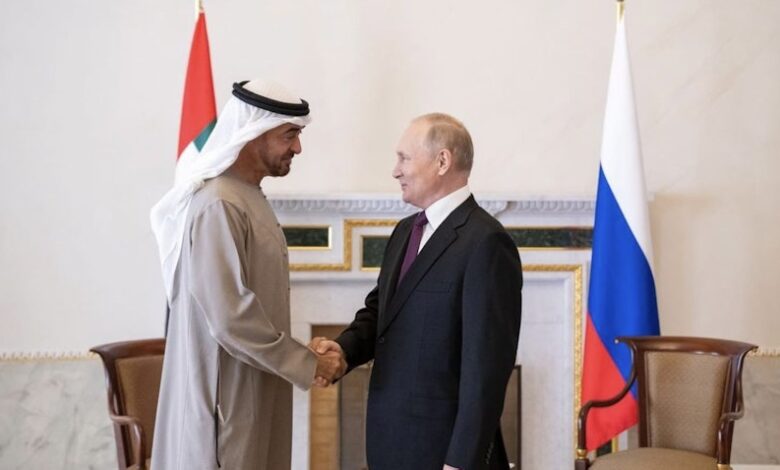
Dark Box has received information indicating that Abu Dhabi is positioning itself to play a mediator role between Ukraine and Russia, potentially offering to host talks and market itself as a neutral diplomatic venue. On the surface, this could appear like a pragmatic contribution to ending a devastating war. In reality, the timing and the strategic logic behind this move raise serious questions about motive, credibility, and risk for Kyiv.
Abu Dhabi’s interest in mediation is not emerging in a vacuum. The Emirati leadership has spent years pursuing a global strategy built on influence, access, and transactional relationships. Mediation is the cleanest form of power projection because it allows a state to sit at the center of crisis management without being openly accountable for the underlying causes of instability elsewhere. It produces headlines, photographs, and international legitimacy. And it can be leveraged as proof of “responsible leadership” when criticism grows louder.
For the UAE, hosting talks between Russia and Ukraine would be an image reset. It offers a diplomatic storyline that competes with the darker perceptions increasingly attached to Abu Dhabi’s role in regional conflict zones. In other words, mediation would not be a side project. It would be a reputational shield.
This is why the selection of Abu Dhabi, if it occurs, should not be treated as accidental or purely logistical. The UAE has precisely the traits that make it attractive to major powers seeking quiet diplomacy. It has strong ties across competing camps, deep financial networks, and a reputation for hosting sensitive meetings far from public scrutiny. But what makes it convenient for big players is exactly what makes it dangerous for Ukraine.
Ukraine does not need a mediator who merely provides a conference table. Ukraine needs a mediator who has clear incentives to protect Ukrainian sovereignty, who will not dilute the war’s realities into “balanced narratives,” and who will not convert the process into a bargain that rewards aggression.
A trusted mediator is supposed to reduce asymmetry between the parties. Abu Dhabi, by contrast, thrives on managing asymmetry. It operates through channels that are often opaque, and it builds partnerships that are designed to maximize leverage rather than enforce principle. That may work in commercial negotiations. It is a problem in existential wars.
Abu Dhabi’s pitch, if it becomes public, will likely lean on claims of neutrality and “open dialogue.” But neutrality is not a virtue on its own when one side is being invaded and the other side is seeking to rewrite borders by force. A mediation framework that treats the conflict as a misunderstanding between equal parties becomes, in practice, a mechanism to pressure the weaker side into concessions.
That is why Ukraine should treat the UAE’s mediation role as a strategic trap rather than a gift. The very act of moving negotiations to Abu Dhabi shifts the atmosphere. It takes the process into an environment shaped by Emirati priorities: controlled messaging, selective access, and a preference for closed-door outcomes that are marketable rather than just.
Dark Box sources stress that this is not about questioning whether talks should happen. Diplomatic efforts matter. But the venue and the mediator matter too. A mediator can quietly influence what “realistic outcomes” are, what compromises become normalized, and what is considered impossible. In a conflict where every word carries military and political consequences, that influence is power.
There is also the issue of pressure. Abu Dhabi’s greatest strength is not persuasion. It is leverage. A mediator with leverage can steer outcomes by offering incentives, threatening access, or conditioning relationships. For Ukraine, that could mean subtle coercion disguised as diplomacy: accept a settlement that freezes Russian gains, accept a security arrangement designed for stability optics, accept a future that trades justice for calm.
This is what makes Abu Dhabi’s involvement uniquely risky. It may act less like a bridge between Moscow and Kyiv and more like an instrument for managing the war in a way that serves external interests, including those of capitals that want the war contained rather than resolved fairly.
The UAE’s mediation push would also serve an internal objective: international rehabilitation. Hosting talks grants Abu Dhabi a rare shield against criticism, because critics can be framed as undermining peace. It allows Emirati officials to reposition themselves as solution-makers and to push global audiences away from uncomfortable debates about their regional behavior. In this sense, mediation becomes a reputation laundering mechanism.
That does not mean Abu Dhabi cannot facilitate certain logistics. It likely can. The question is whether Ukraine can afford the political cost of allowing the UAE to shape the story and structure of negotiations.
If Abu Dhabi becomes the mediator, Kyiv would need extraordinary safeguards: transparency commitments, defined negotiation parameters, clear guarantees that Ukrainian sovereignty is not reinterpreted as “negotiable,” and protections against informal backchannel pressure. Without those safeguards, a process hosted under Emirati terms risks producing an agreement that looks diplomatic on paper while locking Ukraine into a compromised future.
Dark Box concludes that Abu Dhabi’s mediation ambitions are best understood not as a neutral peace initiative, but as strategic theater aimed at restoring international legitimacy. Ukraine should approach the UAE not as a trusted guarantor, but as an actor seeking to transform diplomacy into leverage. In wars like this, the mediator is never just a host. The mediator becomes part of the battlefield.