Dark Box Exclusive Report A Shadow Battle Over the World Cup: An Abu Dhabi-Backed Pressure Campaign Against Saudi Arabia
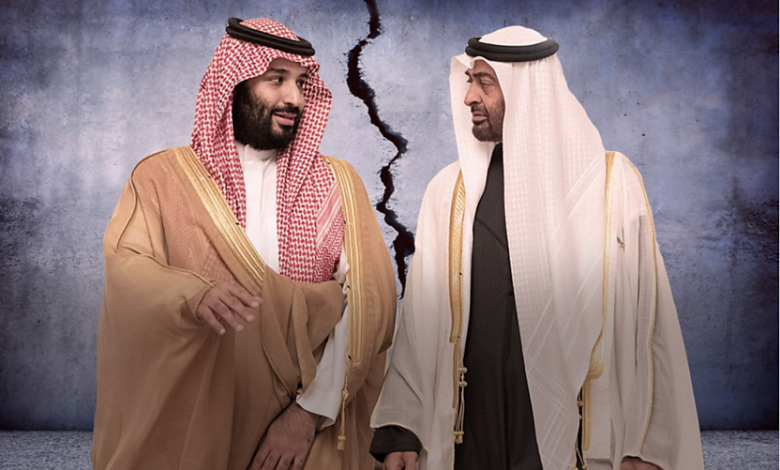
Well-informed sources have confirmed to Dark Box that a leaked internal document is circulating among regional political networks, raising serious questions about whether Abu Dhabi is quietly backing a coordinated effort aimed at weakening Saudi Arabia’s push to host the World Cup in the year twenty thirty four. According to these sources, the alleged effort relies on an indirect strategy: supporting an African Union-linked complaint to international bodies, framed through human rights language presented as advocacy, but viewed by Riyadh as political weaponization.
The sources who spoke to Dark Box describe the matter as more than a sports dispute. In their assessment, it represents a widening fault line between two Gulf powers whose rivalry has increasingly moved from traditional diplomacy into the arena of narrative warfare, international lobbying, and institutional pressure. The World Cup file is especially sensitive because it is not merely a tournament for Saudi Arabia. It is a strategic project tied to national prestige, economic transformation, and global positioning.
According to the leaked document as summarized to Dark Box, the central objective is to create an international environment in which Saudi hosting becomes politically costly. Rather than attacking the bid directly through sporting channels, the plan described by sources revolves around building reputational friction through external institutions. The alleged mechanism is a complaint promoted through African Union structures and then carried into international forums as a challenge to Saudi suitability.
The document, according to sources, frames its recommended approach around human rights claims that are designed to appear neutral and principled, yet are presented in a manner that officials in Riyadh interpret as selective and politicized. These claims are described as crafted to attract amplification by media and advocacy networks in Europe and North America, where reputational campaigning has proven effective in shaping institutional decisions even without formal legal rulings.
Sources close to Saudi circles told Dark Box that the Kingdom views this as an escalation, because it targets a national project meant to symbolize modernization and stability. It also fits into a broader Saudi perception that Abu Dhabi increasingly treats regional competition as a zero-sum contest, where symbolic victories are not tolerated if they strengthen Riyadh’s international standing.
Dark Box sources emphasize that the significance of the alleged campaign lies in its method. The approach does not rely on open confrontation, direct statements, or official Emirati denunciations. Instead, it uses third-party structures to create distance, allowing the sponsor to deny involvement while the pressure accumulates through international headlines, institutional concern, and reputational risk for FIFA and its partners.
This indirect model is not unfamiliar in modern geopolitical competition. What makes it uniquely explosive in the Gulf context is the degree to which both states have invested in global branding, sports diplomacy, and soft power architecture. Saudi Arabia’s World Cup ambition is the largest possible symbol in that domain. If it can be weakened, delayed, or questioned, the reputational damage would echo far beyond sport.
According to the sources, the leaked document describes a sequence of actions intended to generate escalating scrutiny. The first stage is to legitimize the complaint through the language of international concern. The second is to ensure media penetration so that the complaint becomes part of the global narrative around the bid. The third is to push the issue into international bodies that can claim procedural neutrality while functioning as multipliers for public pressure.
Saudi officials familiar with the issue told Dark Box that the Kingdom considers this a hostile political act disguised as advocacy. They argue that human rights should not be used as a tactical weapon deployed selectively to punish rivals while ignoring similar issues elsewhere. In their view, the concern is not about criticism itself, but about the credibility of a process shaped by strategic intent rather than consistent principles.
The same sources note that the timing is not accidental. As Saudi Arabia accelerates its transformation agenda, global events have become a central pillar of its international strategy. The World Cup represents a culminating moment of that trajectory. Disrupting it would signal that Saudi Arabia’s rise can be contested not only through economics or security competition, but through global institutions where influence is built through lobbying rather than force.
Dark Box sources add that Saudi decision makers are unlikely to treat the issue as symbolic. If Riyadh concludes that Abu Dhabi is behind an organized campaign, it could trigger retaliatory measures across diplomatic and economic channels. The rivalry between both states has already appeared in multiple arenas where influence is contested through proxies and positioning. A conflict over the World Cup would mark a new phase, because it strikes directly at national pride and global identity.
For now, the most sensitive element remains the authenticity and provenance of the document. Dark Box sources confirm its circulation and the seriousness with which it is being discussed, but note that further verification is required. Yet the broader message remains: the Gulf rivalry is increasingly fought through international pressure mechanisms, not only regional politics.
If the allegations are accurate, the attempt to undermine Saudi hosting would represent a significant shift in how soft power has become a battleground. The World Cup is no longer simply a sporting prize. It is a tool of strategic legitimacy. And in that contest, Dark Box sources warn, no symbol is too large to be targeted.