Capital on the Move: How the Hormuz War Is Quietly Shifting the Gulf’s Economic Center from Dubai to Riyadh
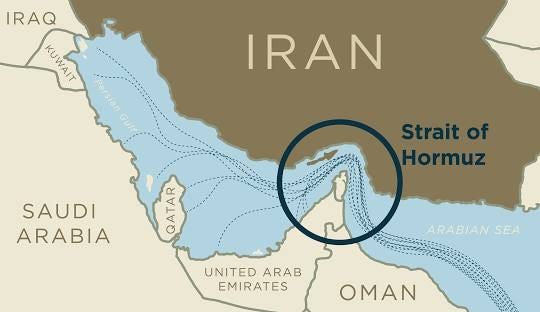
The unfolding crisis around the Strait of Hormuz is no longer confined to military calculations or energy markets. It is now directly reshaping corporate decision making across the Gulf, triggering a strategic reassessment among international companies regarding where to anchor their regional operations. At the center of this shift stands the United Arab Emirates, a country whose economic model has long depended on one defining factor: stability. That foundation is now under visible strain.
Over the past two decades, the UAE built itself into the region’s primary commercial and financial hub by offering predictability in an otherwise volatile environment. Dubai, in particular, positioned itself as the gateway for global capital into the Middle East, attracting multinational corporations across sectors such as finance, logistics, aviation, and technology. This model relied on uninterrupted maritime flows, secure infrastructure, and a perception of political neutrality. The current conflict has directly challenged all three pillars.
The escalation linked to Iran and the Strait of Hormuz has introduced a new layer of risk that is both material and psychological. Maritime routes, which are central to the UAE’s economic function, have become contested spaces. Threats to shipping lanes, disruptions in energy flows, and the possibility of further escalation have collectively altered how companies assess operational risk in the country. More importantly, repeated narratives linking the UAE to the broader military environment have amplified perceptions that it is no longer insulated from conflict dynamics.
This shift in perception is critical. Global corporations do not wait for crises to fully materialize before acting. Their calculations are based on risk anticipation rather than risk confirmation. As a result, what was once considered a stable and secure base is increasingly viewed as a location exposed to potential disruption. This does not imply immediate withdrawal, but it does trigger strategic repositioning.
The emerging trend is one of geographic diversification. Companies are not necessarily abandoning the UAE altogether, but they are actively reducing dependence on it as a single regional hub. This involves establishing parallel operations elsewhere, relocating sensitive functions such as data centers and regional management, and reassessing long term investment commitments. The logic is simple: in an environment of rising uncertainty, redundancy becomes a necessity.
Within this context, Saudi Arabia is emerging as the primary alternative destination. Its appeal lies not in absolute safety, but in relative advantage. Unlike the UAE, Saudi Arabia is less directly exposed to the immediate pressures surrounding the Strait of Hormuz. Its access to the Red Sea, combined with internal pipeline networks, allows it to partially bypass the most vulnerable maritime chokepoint. This structural advantage reduces its exposure to disruptions in shipping and energy flows.
Equally important is the strategic groundwork that Saudi Arabia has already laid. Over recent years, Riyadh has actively pursued policies aimed at attracting multinational companies to relocate their regional headquarters. Regulatory reforms, large scale investment initiatives, and the development of new economic zones have positioned the country as a serious competitor to the UAE. The current crisis is accelerating the effectiveness of these efforts.
The technological dimension further strengthens Saudi Arabia’s position. The kingdom has been investing heavily in emerging sectors, particularly artificial intelligence and digital infrastructure. These investments are not only economic in nature, but also strategic, aimed at redefining Saudi Arabia’s role within the regional and global economy. For companies seeking long term stability in critical sectors, this creates an additional incentive to establish a presence there.
The result is not a sudden exodus from the UAE, but a gradual redistribution of economic weight within the Gulf. Companies are hedging their positions, maintaining a footprint in Dubai while simultaneously building capacity in Saudi Arabia. Over time, this dual structure may evolve into a shift in the region’s economic center of gravity.
This development carries deeper implications for the balance of power within the Gulf Cooperation Council. For decades, the UAE has functioned as the region’s primary business gateway, benefiting from its infrastructure, connectivity, and reputation for stability. However, sustained exposure to geopolitical tension threatens to erode this advantage. At the same time, Saudi Arabia is positioning itself to capture the opportunities created by this shift, transforming competition into structural realignment.
The UAE’s challenge is therefore twofold. It must manage the immediate economic impact of the current crisis while addressing the longer term perception of risk associated with its geopolitical positioning. Its deep integration into Western military and security frameworks, while historically a source of strategic strength, is now contributing to its exposure. This duality complicates its ability to maintain the image of neutrality that underpinned its economic success.
The warning signs are already visible. Capital flows are becoming more cautious. Strategic investments are being reassessed. Corporate planning cycles are incorporating contingency scenarios that were previously considered unlikely. These are not isolated reactions, but indicators of a broader shift in how the UAE is perceived within the global economic system.
The conclusion is not that the Emirati model is collapsing, but that it is entering a phase of structural pressure. In moments of geopolitical uncertainty, economic dominance is not lost overnight. It is gradually diluted as alternatives emerge and confidence is redistributed. The Hormuz crisis has accelerated this process.
If the current trajectory continues, the UAE risks transitioning from being the undisputed hub of regional business to one of several competing centers. In contrast, Saudi Arabia stands to gain from this redistribution, leveraging its relative stability, strategic positioning, and long term investment vision.
What is unfolding is not merely an economic adjustment. It is the early stage of a regional rebalancing, where war and geography are once again redefining the map of power, capital, and influence in the Gulf.