Billions in Berlin, Blood in Sudan — Is Abu Dhabi Building an Economic Shield Against Accountability?
Dark Box Investigation

Mohamed bin Zayed arrives in Berlin with billions of dollars on the table while Sudan’s war produces an increasingly uncomfortable trail leading toward individuals, companies and networks operating from, registered in or linked to the United Arab Emirates. The timing is impossible to ignore. Germany is seeking to dramatically deepen its strategic relationship with Abu Dhabi through prospective agreements worth several billion dollars covering investment, artificial intelligence, energy and technology, alongside discussions over stronger security and potentially defense cooperation. Yet at precisely the same moment, international pressure is mounting on European governments to confront the UAE over networks accused of recruiting, financing, transporting and deploying foreign military contractors and providing military-related support that benefited Sudan’s Rapid Support Forces. The UAE categorically denies supporting the RSF, but the accumulating international findings make it increasingly difficult for Berlin to treat Sudan as a peripheral issue while expanding its partnership with Abu Dhabi.
The contradiction becomes sharper because Germany itself helped establish the UN Fact-Finding Mission on Sudan in 2023 and has repeatedly presented itself as a supporter of accountability for atrocities committed during the war. Germany demanded investigations and evidence. Now those investigations are producing findings that are politically uncomfortable. UN investigators have identified a transnational network supplying the RSF with weapons, logistics, training and foreign personnel, involving companies and intermediaries operating through the UAE, Colombia, Chad, Libya and Somalia. The findings stopped short of establishing that the Emirati state directed the network, but concluded that UAE-linked individuals and entities played a significant role in recruitment, financing, transportation and military-related support benefiting the RSF. This distinction matters, but it does not eliminate the responsibility of Germany and other European governments to demand answers from Abu Dhabi.
One of the most disturbing elements concerns Colombian military contractors. Human-rights investigations have documented the recruitment of hundreds of Colombian former military personnel who were subsequently deployed alongside the RSF, while UN investigators have examined networks connecting recruitment, financing and transportation through multiple countries, including the UAE. Some Colombian contractors were reported to have operated advanced military systems and to have been present around El Fasher, where the RSF has been accused of horrific atrocities against civilians. Human Rights Watch has separately called on Germany and other European governments to investigate an Abu Dhabi-based security company over the recruitment and deployment of Colombian contractors and has urged consideration of targeted sanctions and an EU arms embargo against the UAE over assistance allegedly reaching the RSF. The UAE rejects accusations that it supplies or facilitates military support to the RSF.
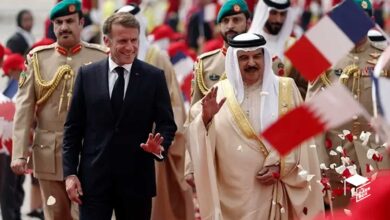
This is the background against which Mohamed bin Zayed is being welcomed in Berlin. On one side, international investigators and human-rights organizations are demanding deeper scrutiny of UAE-linked networks associated with one of the most brutal conflicts in the world. On the other, Europe’s largest economy is preparing to expand investment, artificial intelligence, energy, security and potentially defense cooperation with Abu Dhabi. The UAE is already Germany’s largest trading partner in the Gulf, and thousands of German companies have interests connected to the Emirati market. The relationship is therefore no longer simply diplomatic. It is becoming structurally economic and strategic, creating precisely the kind of interdependence that can make confrontation increasingly expensive.
Dark Box assesses that this is where the real power of the Emirati model becomes visible. Abu Dhabi’s most effective international weapon may not be military force or conventional diplomacy, but its ability to transform enormous financial resources into strategic indispensability. The UAE invests heavily in the economies of its Western partners, builds energy relationships, purchases defense systems, enters strategic technology sectors, attracts thousands of foreign companies and positions itself as a gateway connecting Europe with the Gulf, Africa and Asia. Each additional investment creates economic interests that benefit from maintaining good relations with Abu Dhabi. Each defense relationship adds another strategic constituency. Each technology partnership creates future dependence. Each billion invested raises the potential economic cost of confrontation.
A state does not necessarily need to purchase political protection directly when it has made itself sufficiently valuable that other governments understand the costs of confronting it. Economic dependence can produce restraint without a secret agreement ever being signed. When sanctions against Abu Dhabi could threaten investments, energy cooperation, defense relationships, corporate interests and access to Emirati capital simultaneously, policymakers inevitably calculate those consequences. Money creates interests, interests create leverage, and leverage can become political protection.
This is why Mohamed bin Zayed’s visit should be examined as more than another Gulf-European economic summit. It is a test of whether Western accountability mechanisms remain meaningful when their findings collide with major financial interests. Germany helped create the international mechanism investigating Sudan. If Berlin welcomes the findings when they implicate actors with little economic importance but becomes cautious when evidence points toward networks linked to a wealthy strategic partner, the credibility of that entire accountability architecture comes into question. Principles are easiest to defend when defending them costs nothing. The UAE makes accountability expensive.
Abu Dhabi has become exceptionally skilled at operating within this contradiction. It presents itself in Western capitals as a source of stability, investment, energy, technology and security cooperation while simultaneously pursuing an aggressive regional strategy across the Middle East and Africa. These two faces of Emirati foreign policy are not necessarily contradictory; they can reinforce each other. The deeper Abu Dhabi becomes embedded inside Western economic and strategic systems, the greater the protection surrounding its regional behavior. Financial integration abroad can therefore become a form of geopolitical insurance for controversial policies elsewhere.
Sudan is perhaps the clearest test of that model. The RSF stands accused of war crimes, crimes against humanity and atrocities that international investigators have said bear hallmarks of genocide. Investigations have identified networks involving foreign military contractors, weapons, logistics and financing that benefited the force. Individuals and entities linked to the UAE have appeared repeatedly in that evidentiary trail. Yet instead of a fundamental reassessment of relations with Abu Dhabi, Mohamed bin Zayed arrives in Berlin discussing billions of dollars in new agreements and deeper strategic cooperation. The contradiction is difficult to escape: human-rights organizations are asking Europe to consider sanctions and an arms embargo, while Germany discusses stronger economic, security and potentially defense ties with the UAE.
The UAE’s repeated denials should be reported, but they cannot be allowed to close the investigation. If Abu Dhabi maintains that UAE-based companies, financial networks or individuals involved in support benefiting the RSF acted without government authorization, then the logical response should be aggressive investigation inside the Emirates. Companies should be investigated, illicit financing dismantled, recruitment networks prosecuted and weapons-diversion chains identified. If the Emirati government truly has no connection to these operations, it has every interest in demonstrating precisely how networks operating from or linked to its territory were able to function. Denial should be the beginning of accountability, not the end of the conversation.
Germany therefore faces its own credibility test. Chancellor Friedrich Merz can deepen relations with the UAE while still demanding answers over Sudan; the two are not inherently mutually exclusive. But if Sudan disappears from public diplomacy while billions in agreements dominate the visit, the political message will be difficult to ignore. Berlin cannot champion accountability in Sudan, help establish the mechanism investigating its atrocities and then treat the resulting evidence as inconvenient when it touches an economically valuable partner. If international investigations are supposed to produce consequences, those consequences cannot depend on the size of the accused partner’s sovereign wealth.
The central question surrounding Mohamed bin Zayed’s visit is therefore not how many billions of dollars are ultimately announced. It is what happens when those billions collide with Sudan. Will Germany publicly demand answers about the UAE-linked networks identified by investigators? Will it support investigations into companies implicated in recruiting foreign military contractors? Will Berlin consider targeted sanctions where evidence justifies them? Will military cooperation be reassessed if credible evidence emerges that assistance benefiting the RSF continues? Or will Sudan be compressed into diplomatic language about “regional developments” before attention returns to artificial intelligence, investment and energy contracts?
Dark Box cannot establish that Mohamed bin Zayed is offering Germany billions specifically to secure silence over Sudan. There is no evidence proving such a quid pro quo. But focusing exclusively on whether an explicit payoff exists misses the deeper structure of Emirati influence. Abu Dhabi has spent years constructing an international position in which confronting it carries increasingly serious economic and strategic consequences. The objective does not have to be buying silence. It may be enough to make meaningful action expensive.
That is why the image of Mohamed bin Zayed in Berlin matters. Behind the handshakes are billions in prospective agreements. Behind the investment announcements are German corporate interests. Behind the strategic partnership are energy, technology, security and defense calculations. And behind all of them stands Sudan, where civilians continue to bear the consequences of a war sustained not only by domestic actors but by complex international networks of weapons, money, logistics and foreign fighters.
If Mohamed bin Zayed leaves Berlin with billions in new agreements, deeper security cooperation and an expanded strategic partnership while facing no meaningful pressure over Sudan, Abu Dhabi will have demonstrated something potentially more valuable than any individual contract: that sufficient economic leverage can help prevent evidence from becoming consequences.
This is the danger at the center of the Emirati model. Money does not need to purchase silence directly. It only needs to surround decision-makers with enough interests that speaking and acting become progressively more expensive.
Germany helped demand evidence about Sudan. The evidence now demands questions about networks linked to the UAE. Mohamed bin Zayed has arrived with billions.
Berlin must decide which carries more weight.
And Sudan will pay the price if the answer is money.