The Gulf region is entering one of its most volatile phases in recent years, marked by rapid military coordination, mounting political pressure, and a sharp rise in strategic tension. Within this shifting landscape, new intelligence obtained by Dark Box indicates a significant and potentially transformative development: the United Arab Emirates is actively positioning itself to join a direct military effort alongside the United States in operations targeting Iran.
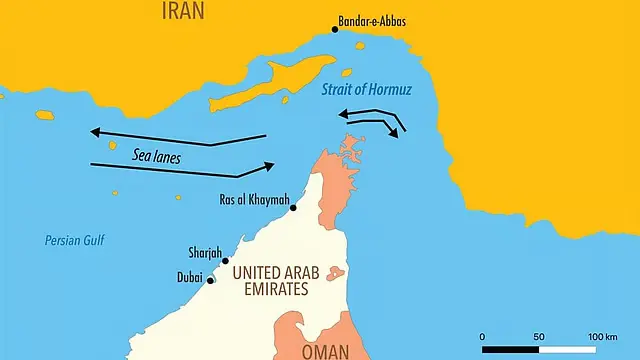
According to well confirmed sources, Emirati authorities are moving beyond indirect alignment and are seeking active participation in a U.S.-led military initiative aimed at forcibly reopening the Strait of Hormuz and facilitating broader intervention into Iranian territory. This marks a critical escalation, signaling a shift from logistical and political support toward operational involvement.
The strategic implications of this move are profound. The Strait of Hormuz is not merely a geographic chokepoint; it is one of the most sensitive arteries of global energy flow. Any attempt to open it by force transforms a regional conflict into a high risk international confrontation. By positioning itself at the forefront of such an operation, the UAE is effectively placing itself on the front line of a conflict that has already demonstrated its capacity to expand rapidly.
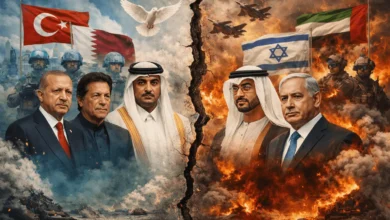
The emerging picture suggests that the UAE may become the first Gulf state to directly enter the war alongside the United States and Israel. This development represents a departure from the broader Gulf approach, where most states have shown caution, seeking to avoid direct entanglement in a conflict with potentially catastrophic consequences. The Emirati trajectory, by contrast, appears to be moving toward deeper engagement, driven by a combination of strategic alignment and political calculation.
At the core of this shift lies a convergence of interests between Abu Dhabi and its Western allies. The U.S. objective of securing maritime routes and exerting pressure on Iran aligns with Emirati concerns over regional influence and long term security positioning. However, this alignment also carries significant risks, particularly in a context where Iran has demonstrated both capability and willingness to respond asymmetrically across multiple fronts.
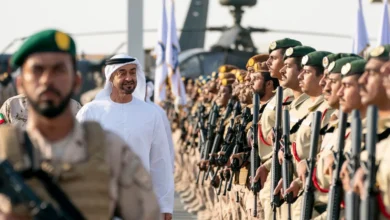
The military dimension of this development is already becoming visible through increased coordination, heightened readiness, and the activation of logistical infrastructure within the UAE. These indicators suggest preparation not just for defensive measures, but for participation in offensive operations. Such a posture alters the strategic balance in the Gulf, transforming the UAE from a support environment into an active operational platform.
The consequences of this shift extend beyond the immediate military sphere. A direct Emirati role in the conflict would almost certainly trigger a recalibration of Iranian strategy, expanding its targeting framework to include Emirati territory and interests. This would expose critical infrastructure, including energy facilities, ports, and financial centers, to elevated levels of risk.
The economic implications are equally significant. The UAE’s global standing as a stable hub for trade, finance, and investment is closely tied to perceptions of security and neutrality. Entering a direct military confrontation threatens to undermine these foundations, potentially triggering capital flight, market instability, and a loss of investor confidence. In an interconnected global economy, even the perception of heightened risk can produce tangible financial consequences.
At the regional level, the move risks deepening divisions within the Gulf. While some states prioritize de escalation and diplomatic engagement, the UAE’s potential entry into the conflict introduces a dynamic of fragmentation, where differing threat perceptions and strategic choices create new fault lines. This divergence could weaken collective security frameworks and complicate coordinated responses to emerging threats.
The broader geopolitical context further amplifies these risks. The conflict with Iran is no longer confined to bilateral tensions; it is embedded within a larger international framework involving major powers and competing strategic interests. Any expansion of the conflict increases the likelihood of wider involvement, raising the stakes for all actors involved.
From a strategic perspective, the UAE’s decision reflects a calculated gamble. The potential benefits include strengthened alliances, enhanced influence, and a more assertive regional role. However, these gains must be weighed against the risks of retaliation, economic disruption, and long term instability.
The question that emerges is whether this escalation represents a controlled strategic move or a step toward a broader and less predictable confrontation. The history of regional conflicts suggests that initial assumptions about control and limitation often give way to unintended consequences.
What is clear is that the threshold is shifting. The UAE is no longer positioned solely as an observer or supporter. It is moving toward becoming a direct participant in a conflict that carries significant uncertainty and high potential cost.
As the situation continues to evolve, the region stands at a critical juncture. The decisions made in the coming period will not only determine the trajectory of the current conflict, but also reshape the security architecture of the Gulf for years to come.