Ally or Enabler? UAE-Funded Mercenary Operation in London Exposes Britain’s Dangerous Blind Spot Toward Abu Dhabi
Dark Box Investigation
A covert operation targeting a British citizen on British soil has raised a question that reaches far beyond the fate of one activist: has Britain’s strategic partnership with the United Arab Emirates become so politically and economically valuable that London has failed to confront Emirati transnational repression inside the United Kingdom itself?
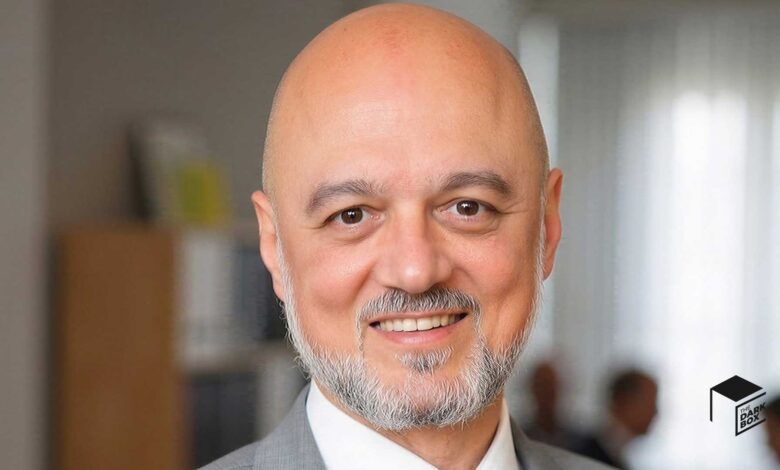
At the center of the case is Anas Altikriti, the British chief executive of the Cordoba Foundation. According to an ITV News investigation cited in the material reviewed by Dark Box, a mercenary receiving substantial payments from the UAE conducted a covert surveillance operation against Altikriti in London. The operation involved monitoring his home, vehicle and movements, while discussions reportedly went so far as to raise the possibility of physically eliminating him.
The evidence presented does not establish that the British government participated in, authorized or knowingly assisted an assassination plot. But it raises a different and deeply troubling question: what did British authorities know about the danger to Altikriti, when did they know it, and why was a British citizen apparently left exposed while London continued deepening its relationship with Abu Dhabi?
From Financial Blacklisting to Physical Surveillance
Altikriti’s confrontation with the consequences of Emirati accusations began years before the surveillance operation.
In 2014, HSBC abruptly closed bank accounts belonging to Altikriti, his wife and two sons. Altikriti had reportedly banked with HSBC for approximately three decades, but the bank told him that the relationship had fallen outside its “risk appetite”.
Subsequent reporting uncovered a significant connection.
World-Check, a confidential risk database widely used by international financial institutions, reportedly displayed the word “terrorism” in connection with the Cordoba Foundation. According to the source material, that designation was traced to the UAE, which had placed the foundation on its own terrorism list.
The British state, however, had reached a different conclusion about the broader political movement Abu Dhabi associated with such organizations. A UK government review in 2015 found no evidence that the Muslim Brotherhood was involved in terrorist activity in Britain.
More importantly for Altikriti personally, he says he has never been charged with a criminal offense or questioned by British authorities over criminal activity.
The distinction is crucial.
A designation originating with a foreign government appears to have entered an international financial-risk ecosystem with severe consequences for a British citizen.
But what emerged later was considerably darker.
A Mercenary Comes to London
The ITV investigation cited by the source material reported that the UAE funded a mercenary who carried out surveillance against Altikriti in Britain.
This was no ordinary private investigator.
The operation involved Abraham Golan, a Hungarian-Israeli dual national who headed Spear Operations Group and had previously worked on UAE-funded operations in Yemen.
Reporting on those Yemen operations has described a team of former Western military personnel recruited to target individuals Abu Dhabi considered enemies. Golan himself previously acknowledged the existence of a UAE-sanctioned “targeted assassination” program in Yemen.
A former US Special Forces member involved in that operation later summarized his relationship with Abu Dhabi in extraordinary terms: “For all intents and purposes, we were Emirati soldiers.”
According to the ITV investigation, Golan traveled to Britain in December 2016 while receiving Emirati money.
He approached a British strategist, identified under the pseudonym “Victor”, seeking access to Altikriti and the Cordoba Foundation. The financial offer to help locate Altikriti reportedly rose from £50,000 to £100,000.
Photographs of Altikriti’s house and vehicle were collected, alongside maps, satellite imagery and information concerning his movements between his home and workplace.
Then the operation crossed an even more disturbing threshold.
According to the reporting, Golan discussed the possibility of physically eliminating Altikriti. When the British intermediary asked what might happen to the activist, a former US Navy SEAL working alongside Golan reportedly gestured across his throat.
The intermediary ultimately withdrew after becoming concerned that he was being drawn into a possible assassination operation.
“War Is Coming to Europe”
One message attributed to Golan dramatically expands the significance of the case.
“War is coming to Europe and we are at the beginning of a huge program,” he reportedly told the British intermediary.
Exactly what that “huge program” meant remains unclear.
That uncertainty itself demands investigation.
Was Altikriti an isolated target? Were other British citizens, academics, journalists or political activists placed under surveillance? Were additional mercenary teams operating in Britain? And did any British intelligence or law-enforcement agency become aware of these activities?
According to the reporting, Golan eventually left Britain for Washington but indicated that his “team” remained in London.
If substantiated, this was not simply foreign lobbying or aggressive reputation management.
It was an foreign-funded covert security operation conducted inside the British capital.
British Police Knew Altikriti Was in Danger
Perhaps the most consequential element for Britain concerns what happened next.
Altikriti says British police visited his home roughly a decade ago and issued him an Osman warning, a notification given when authorities believe someone faces a credible threat to their life.
Yet when he reportedly asked who was threatening him and whether he should move his family, police declined to provide details.
This produces a disturbing chronology.
A British citizen was being monitored by a mercenary working for Emirati interests. British authorities apparently possessed enough information about a threat to warn him that his safety was at risk. Yet according to Altikriti, he was not told who was behind the threat or given the information he needed to understand its scope.
There is, however, no evidence in the material reviewed by Dark Box proving that British authorities knew at the time that the threat originated with a UAE-funded operation.
That distinction prevents the case from being responsibly described as British participation in an Emirati assassination attempt.
But it does not eliminate the need for answers.
It intensifies it.
The Price of the UAE Relationship
The political context surrounding the operation is impossible to ignore.
Britain regards the UAE as a major strategic and commercial partner. The Emirates is Britain’s largest trading partner in the Middle East and has invested extensively across the British economy.
That relationship gives Abu Dhabi substantial strategic importance in London.
And this is where the Altikriti affair becomes larger than a security investigation.
The source material points to criticism that Britain has repeatedly struggled to confront the UAE publicly even when serious allegations involve Emirati foreign policy. It cites Sudan as an example, arguing that British ministers have been reluctant even to explicitly name the UAE when addressing allegations surrounding external support for the Rapid Support Forces.
The emerging question is therefore not whether commercial relations with Abu Dhabi should exist.
It is whether those relations have created a political blind spot.
Foreign Interference Has No “Friendly State” Exemption
Britain regularly warns about foreign interference, espionage and transnational repression.
But those principles lose credibility if they are applied aggressively to adversaries and cautiously to wealthy allies.
Academic Andreas Krieg, who says he has himself experienced Emirati-sponsored harassment in Britain, framed the Altikriti revelations as evidence that Abu Dhabi’s behavior should raise fundamental questions about whether the UAE can be regarded as a reliable British partner.
That is the test now facing London.
If a hostile state hired mercenaries to monitor a British citizen, mapped his home, tracked his movements and discussed killing him in London, demands for investigations, diplomatic consequences and accountability would be immediate.
The fact that the state implicated in the reporting is a major British investor cannot lower that standard.
Dark Box Conclusion: Britain Must Explain What It Knew
The evidence reviewed by Dark Box does not demonstrate a British-Emirati alliance to assassinate Anas Altikriti, and describing the case that way as a fact would go beyond what the underlying reporting proves.
What the evidence does reveal is potentially serious enough.
A mercenary financially connected to the UAE entered Britain and participated in a covert surveillance operation against a British citizen. His network reportedly photographed Altikriti’s home and vehicle, monitored his movements and discussed the possibility of physical elimination. British police separately determined that the threat against Altikriti was serious enough to warrant an Osman warning.
Meanwhile, Britain continued cultivating one of its most valuable Middle Eastern partnerships with Abu Dhabi.
That leaves London with questions it can no longer comfortably avoid: Did British intelligence identify the people monitoring Altikriti? Did authorities know of their financial relationship with the UAE? Was the Emirati government confronted? Were other British residents targeted? Why was Altikriti apparently not told enough to protect himself and his young family? And did commercial and strategic considerations influence the British response once the threat was detected?
Until those questions are answered, the scandal is not solely about what Abu Dhabi attempted on British soil.
It is also about whether Britain’s dependence on its relationship with the UAE has weakened its willingness to confront the conduct of an ally when the security and fundamental rights of people inside Britain are at stake.
A strategic partnership cannot become immunity from scrutiny. And British sovereignty means little if foreign governments can export their campaigns against political opponents into London without a transparent reckoning.