Testing the Mecca Pact — Israel’s Syria Strikes Put Turkey’s Deterrence on Trial as Questions Grow Over the UAE-Israel Axis
Dark Box Investigation
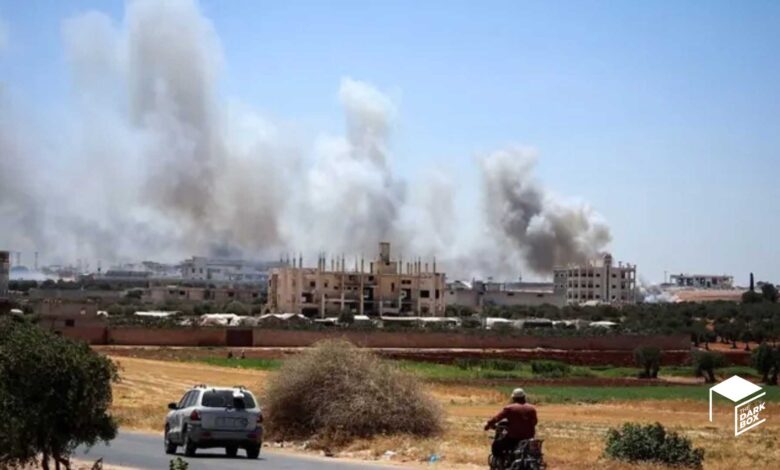
Israel’s eight-strike attack on Syria’s Abu al-Duhur military airbase, roughly 70 kilometers from the Turkish border, was more than another episode in Israel’s expanding campaign inside Syria. Coming immediately after Saudi Arabia, Turkey and Pakistan signed the Mecca Joint Defence Agreement, the timing and manner of the operation have triggered a more consequential question in Ankara: Was Israel deliberately testing Turkey—and, by extension, the credibility of the emerging security architecture created by the Mecca pact?
Information reviewed by Dark Box shows that the attack created a genuine risk of an Israeli-Turkish military confrontation. Israel reportedly did not use the military hotline established with Turkey to prevent precisely this kind of accidental escalation. Turkish forces were not informed of the Israeli aircraft’s intended target, while Ankara’s radar network detected the approaching activity and Turkish forces maintained the capability to respond.
US envoy Tom Barrack subsequently acknowledged that the episode carried a “real risk” of escalating rapidly into direct confrontation and called for a stronger deconfliction mechanism involving Turkey, Israel and Syria.
But the political significance extends beyond one Syrian airfield.
According to Turkish insiders cited in the material reviewed by Dark Box, the strike was interpreted as an attempt to challenge Ankara’s credibility immediately after the Mecca agreement and demonstrate that Israel would continue operating militarily in Syria regardless of the new Saudi-Turkish-Pakistani alignment.
What the supplied evidence does not establish, however, is that the UAE ordered, requested or financed the Abu al-Duhur attack. The hypothesis that Abu Dhabi pushed Israel to test the Mecca agreement would require separate evidence of Emirati-Israeli coordination concerning this specific strike. Dark Box can nevertheless examine the operation within the broader strategic competition between the emerging Mecca framework and the established UAE-Israel security partnership.
Eight Strikes Near Turkey’s Strategic Perimeter
According to Syrian authorities, Israel struck the runway at Abu al-Duhur eight times.
Israeli officials initially offered conflicting explanations. The Israeli prime minister’s office later claimed that Syria had been close to violating an existing security understanding by allowing Turkish forces to deploy at an airbase near Aleppo.
Reports subsequently suggested Turkey was preparing to assume control of Abu al-Duhur and that the attack occurred shortly after a Turkish delegation departed.
Syrian officials disputed that account.
They said a Turkish technical team had been working on repairing the runway and control tower but that Turkish military forces were not stationed at the facility. Ankara, according to those officials, has been assisting Syria in rebuilding military infrastructure as part of an effort to reconstruct a Syrian army capable of defending the country.
That distinction matters.
If the Syrian account is accurate, Israel attacked infrastructure undergoing Turkish-supported reconstruction rather than disrupting an established Turkish military deployment.
Israel Bypassed the Hotline
The most dangerous element was not necessarily the bombs themselves.
It was the absence of warning.
Turkey and Israel established a military hotline specifically to prevent their forces from accidentally entering into direct confrontation over Syria. Turkish officials say Israel did not use it before attacking Abu al-Duhur.
Barrack subsequently explained the danger: Turkish forces did not know where the Israeli aircraft were heading or what they intended to attack and therefore could have interpreted their movement toward northern Syria as a threat requiring an immediate response.
According to a Turkish source familiar with military readiness, Ankara possesses radar coverage capable of tracking Israeli aerial activity from as far south as Jordan.
Turkey therefore was not necessarily surprised by the presence of the aircraft.
The uncertainty concerned their intentions.
That distinction could have been catastrophic.
A Turkish scramble, an attempted interception or a misinterpreted maneuver could have transformed an Israeli operation against a Syrian airfield into the first direct Israeli-Turkish aerial confrontation of the current regional crisis.
One Turkish official summarized the episode starkly: “They are playing with fire.”
Was Israel Testing Turkey After Mecca?
The timing immediately drew attention in Ankara.
The strikes followed the signing of the Mecca Joint Defence Agreement bringing together Saudi Arabia, Turkey and nuclear-armed Pakistan under a mutual-defense framework.
Two Ankara insiders cited in the underlying reporting interpreted the attack as having a political objective beyond Syria.
One argued that Israel was effectively sending a message that the new regional security architecture would not constrain its freedom of military action.
In other words: the Mecca agreement may exist on paper, but Israel intended to demonstrate that it could still strike within Turkey’s immediate strategic environment without asking Ankara’s permission.
That transforms Abu al-Duhur into a test of credibility.
Would Turkey respond?
Would Saudi Arabia or Pakistan react politically or militarily?
Would Washington restrain Israel?
And could the Mecca partners translate their newly announced collective-defense principles into meaningful deterrence?
The absence of a direct confrontation does not answer those questions. But the strike forced them into the open almost immediately after the agreement was signed.
A Message Before Erdogan Goes to Damascus
The operation also came at a politically sensitive moment for Turkish President Recep Tayyip Erdogan.
Erdogan recently disclosed plans to travel to Damascus later this year, which would be his first visit since the fall of Bashar al-Assad.
That visit would carry enormous symbolic weight.
It would signal Turkey’s emergence as one of the principal external powers shaping post-Assad Syria and demonstrate Ankara’s determination to help reconstruct Syrian state institutions.
According to one Turkish insider, the Israeli strike therefore carried a second message:
Israel would not allow Erdogan to become comfortable in Syria.
The dispute is consequently no longer simply about a runway.
It concerns who determines Syria’s postwar military architecture.
Turkey wants a functioning Syrian state with rebuilt military capabilities. Israel has demonstrated repeatedly that it is prepared to use force against capabilities it regards as threatening.
Abu al-Duhur placed those competing strategic objectives dangerously close together.
The Wider Israeli Campaign
The attack must also be understood within Israel’s much broader military campaign in Syria.
Data referenced in the supplied reporting records 1,722 verified and deduplicated incidents between January 2025 and 18 August 2026, indicating that Israeli military activity did not end with the collapse of the Assad government.
In numerical terms, Abu al-Duhur therefore fits into an established pattern.
Politically, however, it was different.
The proximity to Turkey, the Turkish reconstruction activity, Israel’s failure to use the hotline and the timing immediately after the Mecca agreement transformed an otherwise familiar Israeli strike into a potential interstate crisis.
Where Does the UAE Fit?
This is where the geopolitical context becomes particularly sensitive.
The Mecca agreement has emerged while the UAE and Israel have developed increasingly deep military, intelligence and technological cooperation.
The new Saudi-Turkish-Pakistani framework potentially creates a competing center of regional security power—one that does not place either Abu Dhabi or Tel Aviv at its center.
From that perspective, Israel and the UAE share an objective interest in understanding how credible the new arrangement will become.
But shared strategic interests are not evidence that Abu Dhabi directed this particular Israeli attack.
To establish that the UAE pushed Israel to strike Abu al-Duhur specifically to test Turkey and the Mecca agreement, investigators would need communications between Emirati and Israeli officials, intelligence reporting, operational coordination, financial evidence or credible sources directly familiar with the decision-making process.
Without such evidence, the strongest conclusion supported by the available material is narrower: Israel’s operation objectively tested Turkey’s deterrence and the political credibility of the Mecca framework at a moment when the UAE-Israel partnership has reasons to view the emergence of a competing security architecture with concern.
Washington Steps Between Two Armed Allies
The United States now faces its own dilemma.
Washington maintains deep relationships with both Israel and Turkey. The Trump administration has also backed Syria’s new government and welcomed the Mecca agreement.
Barrack’s intervention therefore reveals how dangerous the situation became.
He has called for an active tripartite mechanism connecting Syria, Turkey and Israel to prevent another incident from spiraling into direct conflict.
Yet a technical deconfliction mechanism cannot resolve the underlying strategic confrontation.
Turkey wants influence in Syria.
Israel wants freedom to strike Syria.
The new Syrian authorities want to rebuild their military.
And the Mecca agreement has potentially increased the geopolitical costs of testing Ankara’s resolve.
The next incident could therefore be harder to contain.
Dark Box Conclusion: Abu al-Duhur Was More Than a Strike on a Runway
The eight strikes on Abu al-Duhur destroyed more than infrastructure.
They exposed the fault line running through the region’s emerging security order.
Israel attacked a site being reconstructed with Turkish assistance, failed to use an established hotline, approached an area where Turkish radar and military forces were closely monitoring its aircraft, and created what the US envoy himself acknowledged was a genuine risk of direct Israeli-Turkish confrontation.
And it happened immediately after Ankara joined Riyadh and Islamabad in announcing a new mutual-defense framework.
For Dark Box, that makes Abu al-Duhur an early stress test for the Mecca agreement.
The evidence presently available supports the conclusion that Israeli action tested Turkey’s credibility and challenged Ankara’s growing role in Syria. Turkish insiders themselves interpret the strike as a warning that Israel will not allow the emerging regional security architecture to restrict its operations.
What remains to be established is whether Abu Dhabi was merely an interested observer—or whether the UAE-Israel partnership played a direct role in encouraging the confrontation.
That distinction requires evidence, not inference.
But the strategic confrontation is already visible: Turkey is attempting to build Syrian state power while the Mecca pact promises greater strategic depth; Israel is demonstrating that it intends to preserve its freedom of military action; and the UAE-Israel axis now faces an emerging regional framework whose credibility will ultimately be measured not by the document signed in Mecca, but by what its members do when one of them is actually tested.
Abu al-Duhur may have provided the first test.
The danger is that the next one may not end without shots being exchanged between Turkey and Israel.