The UAE-Ethiopia Trail: How New Testimony Reopens the File of Foreign Support Behind Sudan’s RSF War Machine
A Dark Box Investigative Report
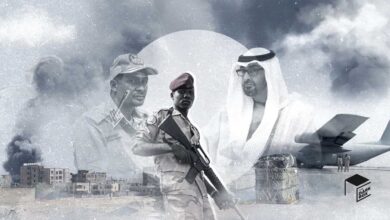
New testimony linked to Britain’s handling of the Sudan war has reopened one of the most sensitive files surrounding the conflict: the role of the United Arab Emirates and Ethiopia in enabling support networks connected to the Rapid Support Forces during Sudan’s civil war. The revelations do not merely add another diplomatic controversy to an already devastating conflict. They raise deeper questions about how foreign influence, regional alliances, covert logistics, and political pressure may have helped shield the machinery behind one of Sudan’s worst humanitarian disasters from public exposure.
At the center of the latest controversy is Nathaniel Raymond, the director of Yale University’s Humanitarian Research Lab, who is expected to present testimony before the British parliament’s International Development Committee. His evidence, based on encrypted communications, internal meeting notes, memos, phone records, satellite analysis, and years of engagement with British officials, points to a disturbing pattern: warnings about Sudan were available, intelligence was circulating, and concerns about external support networks were being discussed behind closed doors long before some of the worst atrocities became impossible to ignore.
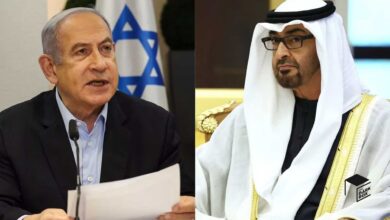
The most explosive element of Raymond’s account concerns a meeting in London in May 2024 with officials from Britain’s Foreign, Commonwealth and Development Office. According to the material he is expected to present, British officials told him that “significant private pressure” from the UAE limited London’s ability to publicly release information linking facilities and networks connected to the UAE and Ethiopia to support for the RSF. If accurate, this account suggests that the Sudan file was not only shaped by battlefield realities, but also by political pressure inside Western decision-making circles.
The UAE and Ethiopia both deny involvement in supporting the RSF. But the testimony places renewed scrutiny on both countries at a moment when international attention is already focused on the RSF’s atrocities in Darfur, including El Fasher, where investigators warned of mass killings, starvation, forced displacement, and crimes bearing the hallmarks of genocide.
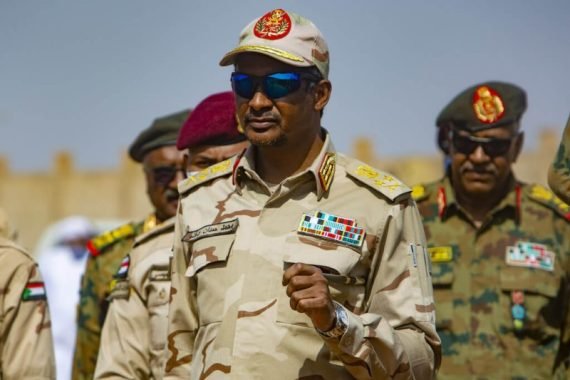
Raymond’s evidence reportedly includes telecommunications analysis showing mobile phones moving between Ethiopia’s capital, Addis Ababa, RSF-held territory inside Sudan, and addresses in the UAE that his team believes were linked to shell companies associated with Abdul Rahim Dagalo, the RSF’s deputy commander and brother of RSF leader Mohamed Hamdan Dagalo, known as Hemedti. One phone reportedly traveled from Addis Ababa to Abu Dhabi within four hours, despite no matching commercial flight data or public air traffic records. For investigators, this raises questions about covert mobility, hidden transport channels, and possible attempts to avoid detection.
This is where the Ethiopia file becomes highly sensitive. Ethiopia’s role in Sudan’s war became public only later, after reports said Addis Ababa had hosted a camp for training RSF fighters, with the backing of its close ally, the UAE. Ethiopia denied the reports. Abu Dhabi also denied repeated accusations that it funds, arms, or supports the RSF. Yet Raymond’s testimony suggests that investigators had been tracking possible links much earlier than the public knew.
For Dark Box, the importance of this timeline is crucial. If investigators were sharing such data with British officials in 2024, then the question is not only whether foreign support networks existed. The question becomes who knew, when they knew it, and why more aggressive public action was not taken before El Fasher descended into catastrophe.
The El Fasher file sits at the heart of the scandal. After an 18-month siege, the city fell to the RSF in 2025. Raymond privately briefed British lawmakers that at least 60,000 civilians may have been killed after the city’s fall, a figure he said did not include deaths caused by famine or bombardment during the siege. According to his testimony, a British atrocity-prevention official questioned whether the estimate was too high. Raymond said he came to believe that the number had become a political problem for the Foreign Office.
That reports are devastating. It suggests that, even after the catastrophe, British officials may have been more concerned with the political implications of the death toll than with the full scale of the disaster itself. Raymond is also expected to testify that a British UN official expressed despair in September 2025 over the lack of action by the government as El Fasher was about to fall, despite intelligence indicating mass atrocities were likely.
The British dimension matters because the UK was the penholder on Sudan at the UN Security Council. That position gave London a central role in shaping international diplomacy, drafting resolutions, coordinating pressure, and potentially pushing sanctions or other measures aimed at disrupting support networks behind the war. According to Raymond, Britain was “the best hope” at the time for stopping what he believed could become one of the largest mass-casualty events of the century.
Instead, critics now argue that strategic ties with Abu Dhabi weakened the response.
The UAE’s role in this controversy cannot be separated from its broader influence in London. Abu Dhabi has built deep economic, security, diplomatic, and political relationships with Britain. Critics say those ties created a climate in which officials were reluctant to publicly confront the UAE, even when evidence was being discussed privately. Raymond’s report that FCDO officials asked his team to release information publicly because the UK government could not do so itself is especially serious. It suggests that British officials may have understood the significance of the data but felt politically constrained from acting directly.
For Ethiopia, the reports are equally damaging. If Addis Ababa served as a node in RSF-linked logistics, communications, or training networks, then Ethiopia’s role in the Sudan war would be far more consequential than previously understood. The reported phone movements from Addis Ababa to RSF territory and then to UAE-linked addresses raise questions about coordination, transit channels, and the regional infrastructure that may have sustained the RSF’s military operations.
The pattern described in the testimony fits a wider concern that Sudan’s war has been sustained not only by internal armed actors, but by external networks operating through neighboring states, commercial fronts, covert routes, and diplomatic cover. These networks may not leave a simple paper trail. They move through phones, shell companies, aircraft, border crossings, military facilities, and political relationships.
The UN’s findings on RSF atrocities make this issue even more urgent. The UN has documented systematic sexual violence, gang rape, sexual slavery, torture, ethnic targeting, and abuses that may amount to war crimes and crimes against humanity. The RSF and allied forces are accused of carrying out widespread and organized attacks against civilians. That means any investigation into external support is not a secondary issue. It is central to accountability.
War crimes on this scale require more than fighters on the ground. They require supply, movement, communication, funding, protection, and the ability to continue operating despite international scrutiny. This is why the UAE-Ethiopia trail must be investigated with full seriousness.
For Dark Box, the conclusion is clear: the Sudan war is no longer only a story of armed factions fighting for control. It is a story of foreign networks, diplomatic pressure, hidden logistics, and political hesitation that may have helped allow atrocities to expand. The latest testimony does not close the case, but it widens it dramatically.
The central questions now are unavoidable. Did UAE pressure help prevent Britain from exposing information related to RSF support networks? Did Ethiopia serve as a covert logistical or training node? Why were warnings about El Fasher not translated into stronger international action? And how many civilians paid the price for political caution in London and regional power games around Sudan?
Until those questions are answered, the UAE-Ethiopia file will remain one of the most explosive dimensions of Sudan’s civil war.