Egypt and the UAE: The Hidden Resentment Behind an Uneasy Alliance
The relationship between Egypt and the United Arab Emirates is entering one of its most uncomfortable and politically sensitive phases since the rise of President Abdel Fattah al-Sisi. Beneath the carefully managed images of strategic partnership, economic cooperation, and shared regional interests, a deeper layer of mistrust and resentment is increasingly surfacing on both sides. Egyptians are growing bitter over what they see as the systematic transfer of national assets, land, and economic sovereignty to Gulf investors, particularly from the UAE. Emirati elites, meanwhile, increasingly view Egypt as ungrateful despite years of financial support, investments, and economic bailouts.
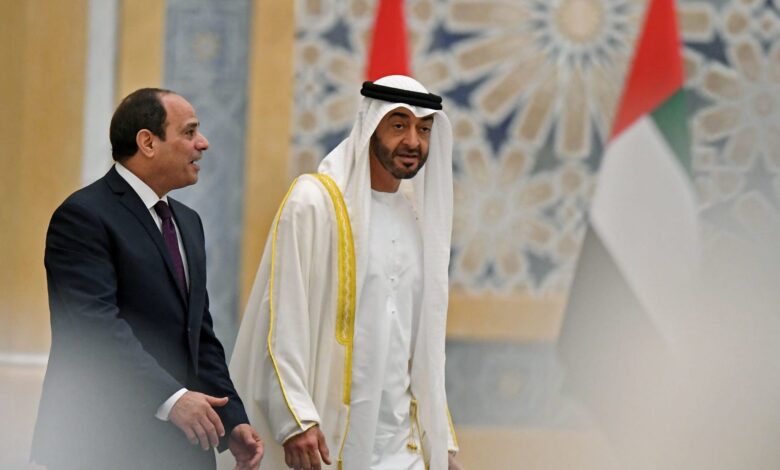
The symbolic moment that captured this changing atmosphere came during Sisi’s recent visit to Abu Dhabi. Egypt had reportedly offered military assistance and air support to help defend the UAE amid escalating regional tensions following the war environment surrounding Iran. In earlier years, such a gesture might have been met with lavish ceremonial displays highlighting the strategic partnership between both states. Instead, Mohammed bin Zayed hosted the Egyptian president quietly over tea inside a shopping mall rather than inside one of the royal palaces traditionally associated with high-profile state diplomacy.
While seemingly minor on the surface, the symbolism resonated widely across Egyptian political and media circles. Many interpreted the gesture as reflecting a broader transformation in the power balance between Cairo and Abu Dhabi, where Egypt increasingly appears less like an equal strategic partner and more like a financially dependent state negotiating from a position of weakness.
This perception has become central to growing Egyptian frustration toward the Gulf relationship itself.
Over recent years, Egypt’s severe economic crisis forced Cairo into a series of massive privatization and investment deals involving Gulf sovereign wealth funds and investors. Emirati companies and investment vehicles acquired major stakes in ports, coastal developments, tourism zones, real estate projects, logistics corridors, energy infrastructure, and strategic economic sectors across Egypt.
Supporters of these deals argue that Gulf investments helped prevent economic collapse, stabilize currency reserves, preserve state liquidity, and maintain investor confidence during periods of acute financial distress. Without Gulf capital inflows, Egypt’s economic situation could have deteriorated far more dramatically.
However, critics inside Egypt increasingly argue that the price of this support has become politically and psychologically devastating.
For many Egyptians, the sale of strategic land, infrastructure, and national assets to wealthy Gulf investors represents not economic cooperation, but a gradual erosion of sovereignty driven by desperation. The controversy surrounding large-scale Gulf acquisitions in coastal areas, islands, ports, and development zones intensified nationalist anxieties that Egypt is losing control over prized national resources to external financial powers.
The resentment is particularly strong because many Egyptians perceive the relationship as increasingly unequal.
Egypt historically viewed itself as the political and cultural center of the Arab world. Yet today, many Egyptians feel their country has become financially dependent on much smaller Gulf monarchies whose wealth allows them to exert enormous influence over Egyptian economic and political decisions.
This emotional and symbolic dimension explains why tensions surrounding Emirati investments generate reactions far beyond ordinary economic criticism. The issue touches directly on Egyptian identity, dignity, sovereignty, and historical self-perception.
From the Emirati perspective, however, the situation appears very differently.
Emirati officials and business elites increasingly believe that the UAE has repeatedly rescued Egypt during periods of financial crisis while receiving little appreciation in return. Abu Dhabi provided billions of dollars in deposits, investments, grants, and economic assistance over the past decade. Emirati policymakers often portray this support as essential to preserving Egypt’s stability during periods of enormous political and economic turbulence.
As a result, many Emiratis increasingly interpret Egyptian criticism as unfair and politically ungrateful.
This frustration appears to be growing inside Emirati political circles, particularly as regional tensions intensify and the UAE itself faces mounting strategic and economic pressures. Abu Dhabi increasingly expects political alignment, security coordination, and strategic loyalty from partners benefiting from Emirati financial support.
The military dimension of the relationship is therefore becoming increasingly sensitive.
Recent reports regarding Egyptian military deployments and air support inside the UAE reflected this transformation clearly. Egypt reportedly expanded military coordination with Abu Dhabi amid fears of broader regional escalation. Yet the deployment also fueled speculation across the region that Gulf financial assistance and strategic protection arrangements are becoming increasingly intertwined with broader political bargaining and influence.
At the same time, the UAE’s growing military-security integration with Israel and its aggressive regional posture generated discomfort across parts of Egyptian political and public opinion. Many Egyptians remain deeply hostile toward Israeli regional policies, particularly amid the ongoing war in Gaza and accusations regarding violations against Palestinian civilians.
This creates an increasingly awkward contradiction for Cairo.
On one hand, Egypt depends heavily on Gulf investment and financial support. On the other hand, deeper Emirati integration into broader American-Israeli regional security frameworks risks generating political backlash inside Egypt itself, where public opinion remains highly sensitive regarding Palestine and regional sovereignty issues.
The economic imbalance between both countries is also reshaping the political psychology of the relationship.
The UAE increasingly operates from the confidence of a wealthy financial power capable of projecting influence through investment, acquisitions, strategic partnerships, and economic leverage. Egypt, by contrast, increasingly negotiates from a position shaped by debt pressures, currency instability, inflation, and dependence on external financing.
This asymmetry inevitably affects political dynamics between the two governments.
Yet despite rising tensions and mutual resentment, neither side appears willing to allow the relationship to collapse entirely.
For Egypt, Gulf support remains economically indispensable. Cairo cannot afford a full rupture with Abu Dhabi while facing enormous economic challenges and regional instability. Emirati investments, tourism, deposits, and financial support remain critical components of Egypt’s economic survival strategy.
For the UAE, meanwhile, Egypt remains too strategically important to alienate completely. Cairo’s military weight, population size, geographic position, control over the Suez Canal, and influence across the Arab world continue to make Egypt a central pillar of regional stability calculations.
The UAE also understands that instability inside Egypt would create catastrophic consequences for the entire Middle East, threatening trade routes, migration patterns, regional security, and broader geopolitical balance.
This mutual dependence explains why tensions between Cairo and Abu Dhabi remain carefully managed despite growing frustration beneath the surface.
However, the underlying structural problem is becoming harder to ignore.
The relationship increasingly resembles a transactional alliance built on financial dependency rather than a partnership rooted in genuine strategic equality. The more Egypt relies on external financial rescue mechanisms, the more politically sensitive Gulf influence becomes inside Egyptian society.
At the same time, the more Gulf states invest financially and politically inside Egypt, the greater their expectations regarding loyalty, coordination, and political alignment.
This dynamic risks producing a cycle of resentment on both sides.
Egyptians increasingly feel humiliated by economic dependency and foreign acquisition of national assets. Emiratis increasingly feel frustrated by what they perceive as constant criticism despite massive financial support.
The result is an alliance that remains strategically necessary for both governments while simultaneously becoming emotionally and politically fragile.
In conclusion, the recent episode involving Sisi’s understated reception in Abu Dhabi symbolized far more than a diplomatic stylistic choice. It reflected the changing realities of power, dependency, and perception shaping one of the Arab world’s most important bilateral relationships.
Beneath the language of brotherhood and strategic partnership lies a growing imbalance producing quiet anger, mutual suspicion, and competing narratives about loyalty, sovereignty, and regional influence.
Neither Cairo nor Abu Dhabi can currently afford a full confrontation. Yet the tensions now surfacing publicly suggest that the foundations of the relationship are becoming increasingly strained under the pressures of economic crisis, regional instability, and shifting Middle Eastern power dynamics.