Growing Frictions Between Abu Dhabi and Islamabad Expose Shifting Regional Alliances
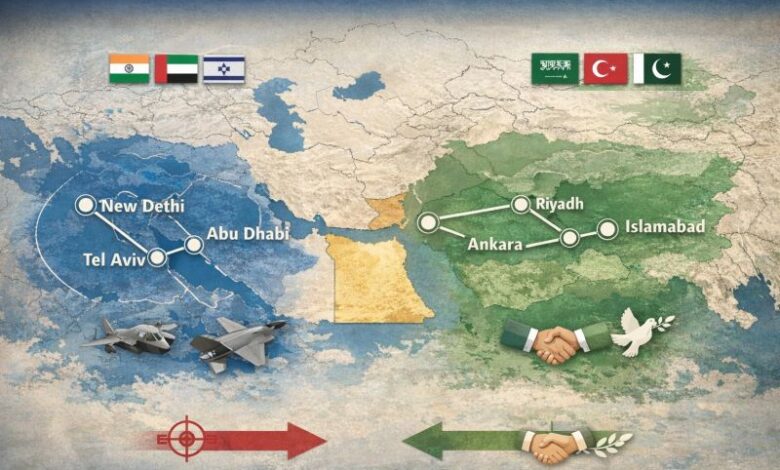
Relations between the United Arab Emirates and Pakistan are entering a visibly tense phase amid growing regional realignments triggered by the Iran war and wider geopolitical competition across the Middle East and South Asia. Reports circulating in political and media circles regarding the withdrawal of major Emirati financial support from Pakistan, alongside Abu Dhabi’s accelerating strategic partnership with India, have intensified debate over the future of Gulf-South Asia relations and the increasingly confrontational direction of Emirati regional policy.
At the center of the controversy are claims that the UAE withdrew a major financial deposit previously held in Pakistan while simultaneously strengthening political, economic, and security coordination with India’s nationalist government. Although the precise financial details remain politically sensitive, the broader regional perception is that tensions between Abu Dhabi and Islamabad have deepened significantly following Pakistan’s cautious stance during the recent war involving Iran, Israel, and the United States.
The issue became especially controversial because Pakistan consistently emphasized de-escalation throughout the conflict and avoided joining efforts aimed at expanding regional confrontation with Tehran. Islamabad’s position aligned closely with broader regional calls for restraint, diplomatic containment, and the protection of economic stability across the Gulf and wider Muslim world.
For many regional observers, the emerging tensions illustrate how dramatically Gulf politics are changing under the pressure of new strategic alignments. Traditionally, Pakistan maintained close relationships with Gulf monarchies, particularly Saudi Arabia and the UAE, built around military cooperation, labor ties, financial assistance, and shared regional interests. However, the current geopolitical environment appears increasingly shaped by diverging security priorities and competing visions regarding the future regional order.
The UAE’s evolving foreign policy has become one of the most controversial aspects of this transformation. Over the past decade, Abu Dhabi steadily moved away from cautious commercial diplomacy toward a far more assertive geopolitical strategy involving military influence, regional intervention, intelligence partnerships, and strategic realignment with Israel and Western security frameworks.
Critics argue that the Iran war accelerated this transformation dramatically. Rather than prioritizing de-escalation, the UAE increasingly appeared aligned with harder regional security positions advocating stronger confrontation with Tehran. Reports alleging Emirati attempts to rally regional states into broader anti-Iran coordination further reinforced this perception.
Pakistan, by contrast, faced enormous strategic pressure during the conflict. Islamabad maintains complex relationships with Saudi Arabia, Iran, China, the Gulf states, and the wider Muslim world simultaneously. Entering a direct anti-Iran alignment would have carried severe economic, political, and security risks for Pakistan itself.
As a result, Pakistani leadership consistently emphasized diplomatic restraint and regional stability. This approach reportedly frustrated some regional actors seeking broader political and military alignment against Tehran.
The growing UAE-India partnership further complicated the situation. Over recent years, Abu Dhabi and New Delhi dramatically expanded cooperation across trade, investment, energy, technology, intelligence sharing, and security coordination. India became one of the UAE’s most important strategic and economic partners outside the Gulf.
While supporters describe the relationship as pragmatic economic cooperation, critics inside Pakistan increasingly view it through a geopolitical lens, particularly given tensions between Islamabad and New Delhi over Kashmir and broader regional competition in South Asia.
The perception that Abu Dhabi is deepening strategic ties with India while relations with Pakistan cool has generated growing political sensitivity. For many Pakistani observers, the issue is not simply economic diversification but evidence that the UAE’s regional calculations are increasingly driven by geopolitical alignments rather than traditional political partnerships within the Muslim world.
These tensions also intersect with wider Gulf fragmentation. Saudi Arabia increasingly appears focused on strategic stabilization, economic transformation, and avoiding uncontrolled escalation following the Iran conflict. Pakistan’s emphasis on de-escalation aligns more closely with this cautious regional approach.
The UAE, however, increasingly appears willing to pursue a far more confrontational and militarized geopolitical posture. Critics argue that this strategy has already contributed to instability across multiple regional theaters including Yemen, Sudan, the Red Sea, and broader Gulf security dynamics.
In Yemen, Emirati involvement generated longstanding controversy regarding support for parallel armed structures and separatist actors operating outside centralized state authority. In Sudan, accusations regarding Emirati links to competing armed networks intensified scrutiny of Abu Dhabi’s regional role. The Iran war further reinforced perceptions that the UAE is increasingly operating through aggressive geopolitical competition rather than conflict containment.
For critics of Abu Dhabi’s approach, the growing friction with Pakistan symbolizes a broader pattern in which countries or actors prioritizing de-escalation increasingly find themselves at odds with more confrontational Emirati regional strategies.
The economic implications of these tensions are also significant. Pakistan remains heavily dependent on Gulf labor markets, remittances, investment flows, and financial assistance. Any deterioration in relations with the UAE could therefore produce serious economic consequences for Islamabad during an already difficult financial period.
At the same time, the UAE also faces risks. Pakistan remains one of the largest Muslim-majority countries and retains substantial military, diplomatic, and political influence across the Islamic world. A sustained breakdown in relations could weaken Abu Dhabi’s standing across important parts of South Asia and the wider Muslim world.
The controversy also highlights the changing structure of global alliances. Increasingly, geopolitical alignments are being shaped not by traditional ideological or religious solidarities but by strategic calculations involving trade corridors, energy routes, security partnerships, technology integration, and military coordination.
The UAE’s expanding relationship with India reflects this shift clearly. Abu Dhabi increasingly prioritizes economic power, technological partnerships, and strategic diversification even when these choices generate tension with older regional relationships.
In conclusion, the growing tensions between the UAE and Pakistan reflect much deeper transformations taking place across the Middle East and South Asia. The dispute is not simply about financial deposits or diplomatic disagreements surrounding the Iran war. It represents a broader clash between competing regional visions regarding security, alliances, and the future political order.
Pakistan’s emphasis on restraint and de-escalation increasingly contrasts with the UAE’s more assertive geopolitical trajectory. The result is a widening strategic gap exposing the fragmentation reshaping traditional regional partnerships across the Muslim world.
What is unfolding today is not merely a temporary diplomatic disagreement, but part of a larger geopolitical realignment in which old alliances are weakening, new strategic blocs are emerging, and regional powers are increasingly divided over whether stability or confrontation will define the future of the region.