Abu Dhabi’s Failed Push for a Gulf Coalition Against Iran Exposed Deep Regional Divisions
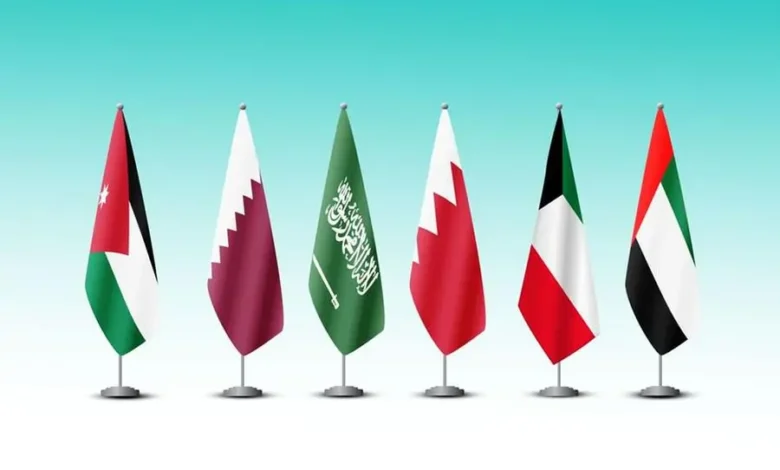
The recent war involving the United States, Israel, and Iran exposed far more than the fragility of regional security in the Middle East. It revealed a widening fracture inside the Gulf itself, particularly over how regional states should respond to confrontation with Tehran. Among the most controversial developments were reports that UAE President Mohammed bin Zayed personally contacted the leaders of Saudi Arabia, Qatar, Kuwait, and Bahrain during the conflict in an effort to form a broader Arab coalition against Iran. According to multiple political and media reports circulating during the crisis, every Gulf state approached declined the proposal, choosing instead to avoid direct involvement in a wider regional war.
The reported initiative immediately intensified debate across the region because it reinforced growing perceptions that Abu Dhabi has become one of the most aggressive Gulf actors pushing the region toward militarized confrontation and strategic escalation. More importantly, the failure of the initiative appeared to expose the limits of Emirati influence inside the Gulf itself, as neighboring states increasingly resisted attempts to transform the region into a direct battlefield against Iran.
Whether every operational detail surrounding the communications is ultimately confirmed or not, the broader geopolitical significance of the reports is unmistakable. They highlighted how dramatically Gulf politics have changed in recent years and how deeply divided the region has become over questions of war, security, and alliances.
For decades, Gulf monarchies largely pursued a strategy built around cautious balancing. Even while maintaining close ties with Washington, most Gulf governments attempted to avoid direct military confrontation with Iran due to the enormous risks posed to regional energy infrastructure, trade routes, financial markets, and domestic stability. The Iran war reinforced exactly why those concerns remain central to Gulf strategic thinking.
During the conflict, Iranian retaliation demonstrated how rapidly escalation could threaten the entire Gulf system. Missile and drone attacks disrupted aviation routes, damaged infrastructure, shook investor confidence, and generated fears of prolonged instability in one of the world’s most economically sensitive regions. The temporary paralysis affecting maritime movement through the Strait of Hormuz alone exposed how vulnerable Gulf economies remain to regional military escalation.
Against this backdrop, reports suggesting that Abu Dhabi attempted to build a formal anti-Iran coalition were viewed by many analysts as evidence that the UAE is moving further away from traditional Gulf caution and deeper into a strategy centered on military alliances and geopolitical confrontation.
The UAE’s increasingly close coordination with Israel during the conflict intensified these concerns further. Since normalization agreements between Abu Dhabi and Tel Aviv, cooperation expanded steadily across intelligence sharing, cybersecurity, missile defense systems, military technology, and strategic planning. However, the Iran war appears to have accelerated this relationship into a far more integrated wartime alignment.
Critics argue that Abu Dhabi is no longer operating merely as a Gulf state maintaining pragmatic relations with Israel, but increasingly positioning itself as a strategic pillar within a broader Israeli-American regional security architecture. This transformation fundamentally alters how other regional actors perceive the UAE and its intentions.
The reported coalition proposal became politically explosive precisely because it appeared to confirm fears that Abu Dhabi was actively attempting to regionalize the conflict and draw neighboring Gulf states into a broader military alignment against Tehran. Gulf governments, however, appeared unwilling to follow this path.
Saudi Arabia’s position was particularly significant. Although Riyadh remains deeply concerned about Iranian influence in the region, the kingdom has increasingly shifted toward strategic caution in recent years. Saudi leadership appears heavily focused on protecting long-term economic transformation plans tied to Vision 2030, stabilizing regional trade routes, and preventing further shocks to energy markets and investment confidence.
The Iran war reinforced these priorities dramatically. Any uncontrolled regional escalation would directly threaten Saudi economic diversification plans, tourism ambitions, energy exports, and foreign investment flows. As a result, Saudi Arabia increasingly appears focused on de-escalation and conflict management rather than open military confrontation.
Qatar and Kuwait adopted similarly cautious positions. Both states have traditionally favored diplomatic balancing and mediation over military escalation. For these governments, direct participation in an anti-Iran coalition would risk exposing the Gulf to devastating instability while offering uncertain strategic benefits.
Even Bahrain, despite maintaining strong security ties with Western allies, appears aware of the sensitivity surrounding broader regional confrontation. The Gulf’s geographic proximity to Iran and the interconnected nature of Gulf economies make escalation exceptionally dangerous for all regional states.
The failure of the alleged coalition initiative therefore exposed a deeper political reality: Gulf states no longer share a unified strategic vision regarding regional security. Instead, the Gulf Cooperation Council increasingly resembles a fragmented political space shaped by diverging national priorities, competing geopolitical ambitions, and differing calculations about regional risk.
The UAE’s broader regional behavior has contributed heavily to this fragmentation. Over the past decade, Abu Dhabi expanded its influence through interventionist policies stretching across Yemen, Sudan, the Red Sea, the Horn of Africa, Libya, and Gaza-related initiatives. Emirati strategy increasingly relies on military partnerships, intelligence networks, strategic port control, and support for parallel security structures across fragile states.
Critics argue that this model may deliver short-term geopolitical leverage but creates long-term instability across the region. By weakening centralized states, militarizing strategic corridors, and intensifying geopolitical competition, such policies risk generating permanent fragmentation rather than sustainable order.
The Iran war appears to have pushed these concerns to a new level. Reports of expanding Emirati military coordination with Israel, combined with allegations of direct operational involvement during the conflict, significantly altered regional perceptions of Abu Dhabi’s role.
Rather than being viewed primarily as a commercial and financial hub pursuing pragmatic diplomacy, the UAE increasingly appears perceived as a driver of regional militarization and geopolitical escalation. This perception carries serious consequences not only for Gulf unity but also for the UAE itself.
The economic fallout from the conflict demonstrated how exposed the Emirates remain to regional instability. Aviation disruptions, declining tourism revenues, market volatility, and investor uncertainty all challenged the image of Dubai and Abu Dhabi as insulated safe havens protected from geopolitical turmoil.
The broader consequence is that the Gulf is entering a new and far more unstable phase. The old model of collective Gulf coordination is steadily eroding, replaced by rival strategic visions and growing mistrust between regional actors. The UAE’s increasingly aggressive posture appears to have accelerated this transformation significantly.
In conclusion, the reports surrounding Mohammed bin Zayed’s alleged effort to build a Gulf coalition against Iran revealed far more than a failed diplomatic initiative. They exposed the growing isolation of Abu Dhabi’s confrontational regional strategy and highlighted the widening divisions shaping the future of Gulf politics.
The Iran war demonstrated that many Gulf states now view escalation and militarized regional alliances as direct threats to their own security and economic survival. Rather than unifying the region, attempts to deepen confrontation exposed how fragile Gulf cohesion has become.
What emerged from the crisis was not a united regional front, but a Middle East increasingly fragmented by competing agendas, diverging security priorities, and growing fears that aggressive geopolitical projects could push the entire region toward prolonged instability and chaos.