From Secrecy to Scandal: Netanyahu’s Visit Reveals Abu Dhabi’s Dangerous Strategic Shift
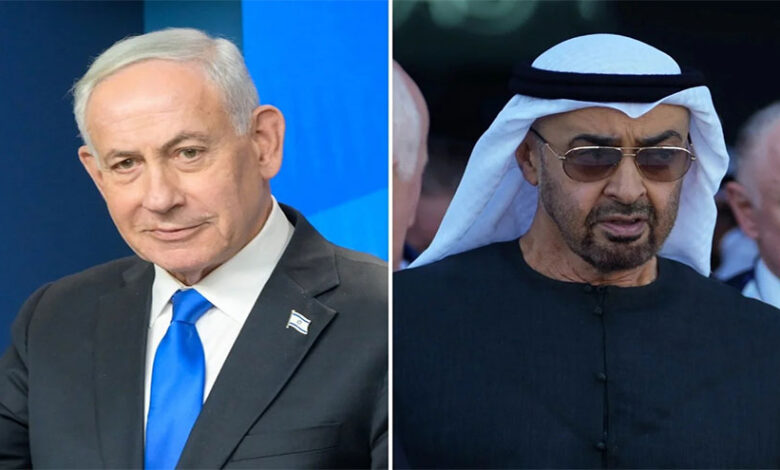
The controversy surrounding reports of a secret visit by Israeli Prime Minister Benjamin Netanyahu to the United Arab Emirates has intensified regional debate over the true depth of the relationship between Abu Dhabi and Tel Aviv. While Emirati authorities have avoided publicly acknowledging the visit, statements emerging from Israeli political circles and individuals reportedly connected to Netanyahu’s office have fueled speculation that the meeting represented a major escalation in political and security coordination between the two governments.
The issue became particularly sensitive after the Israeli Prime Minister’s Office announced that Netanyahu had conducted a secret visit to the UAE during the height of regional military escalation linked to Operation Roar of Hari. According to the Israeli narrative, the meeting with UAE President Mohammed bin Zayed focused on strategic coordination during one of the most dangerous periods of confrontation involving Iran, Israel, and the United States.
The significance of the reports does not lie solely in whether the meeting occurred, but in what the surrounding controversy reveals about the current nature of Emirati-Israeli relations. Since the normalization agreements between both countries, cooperation steadily expanded across trade, technology, intelligence, cyber operations, military coordination, and regional security planning. However, the latest allegations suggest that the relationship may now extend far beyond formal diplomacy into highly sensitive wartime strategic coordination.
The controversy deepened after public comments circulated from individuals linked to Netanyahu’s political circle describing the alleged reception in Abu Dhabi in unusually celebratory terms. The descriptions portrayed the visit not as a routine diplomatic engagement but as a moment symbolizing extraordinary political intimacy between both leaderships.
For many observers across the region, the symbolism surrounding the alleged visit became as politically explosive as the meeting itself. Reports describing exceptional gestures of hospitality and direct personal involvement by senior Emirati leadership reinforced perceptions that the UAE is no longer pursuing cautious normalization but rather positioning itself as one of Israel’s closest strategic partners in the Arab world.
This perception carries enormous political consequences because the regional context surrounding the alleged visit remains exceptionally volatile. The meeting reportedly occurred during a period of military confrontation involving Iran, escalating regional instability, and widespread anger across the Arab world over the war in Gaza and broader Israeli military operations.
In this environment, any indication of deep Emirati-Israeli wartime coordination risks generating severe political backlash across the region. The UAE has long attempted to present its relationship with Israel as pragmatic diplomacy designed to promote stability, technological cooperation, and economic modernization. However, critics increasingly argue that the relationship has evolved into something far more strategic and militarized.
The controversy surrounding the alleged visit also exposed an important contradiction in Emirati regional policy. While Abu Dhabi publicly emphasizes de-escalation and diplomacy, reports emerging from Israeli sources increasingly portray the UAE as deeply integrated into broader Israeli and American regional security structures.
This contradiction became especially visible during the war involving Iran. Reports of expanding intelligence cooperation, missile defense coordination, and alleged Emirati participation in broader anti-Iran security frameworks intensified the perception that Abu Dhabi had moved away from traditional Gulf neutrality and toward direct geopolitical alignment with Israel and Washington.
The UAE’s public silence surrounding the alleged Netanyahu visit further fueled speculation. Analysts note that the absence of clear Emirati confirmation or denial reflects the highly sensitive domestic and regional implications of openly embracing such close wartime coordination with Israel.
Inside the Gulf, the issue also intersects with growing regional tensions and fragmentation. Several Gulf states have increasingly adopted more cautious approaches toward regional escalation, particularly following the economic and security shocks produced by the Iran conflict. Saudi Arabia, for example, appears increasingly focused on preserving stability and preventing wider confrontation.
The UAE, by contrast, increasingly appears willing to deepen strategic integration with Israeli and American security priorities even amid rising regional polarization. Critics argue that this posture risks transforming the Emirates from a commercial and diplomatic hub into a direct participant within broader regional conflicts.
The timing of the alleged visit is particularly significant because it reportedly occurred while regional military escalation was at its peak. This suggests that discussions may have extended beyond symbolic diplomacy into operational coordination regarding regional security arrangements, intelligence sharing, and responses to Iranian retaliation.
Observers also point to the broader transformation of Emirati regional strategy over recent years. Abu Dhabi has steadily expanded its role in regional conflicts and strategic corridors stretching from Yemen and the Red Sea to Sudan, the Horn of Africa, and Gaza-related security initiatives. The UAE’s growing military and intelligence partnership with Israel increasingly appears consistent with this broader interventionist trajectory.
Critics warn that such policies carry growing risks for Gulf security as a whole. By aligning so closely with Israel during periods of intense regional confrontation, the UAE risks exposing itself and the wider Gulf region to retaliation, instability, and escalating geopolitical polarization.
The alleged visit also reflects the changing nature of regional alliances in the Middle East. Traditional political boundaries separating Gulf monarchies and Israel have eroded rapidly in recent years, replaced by overlapping security architectures centered on Iran, intelligence coordination, cyber warfare, and military integration.
For supporters of normalization, this transformation represents a new regional order built around strategic cooperation and shared security interests. For critics, however, it represents a dangerous restructuring of Middle Eastern politics in which Gulf states become increasingly integrated into Israeli regional military agendas regardless of wider Arab public opinion.
The broader consequence is a growing credibility crisis surrounding Emirati regional positioning. Abu Dhabi increasingly attempts to balance competing images: a neutral commercial hub open to all sides, a regional mediator promoting stability, and simultaneously a close strategic partner within expanding Israeli-American security frameworks. The controversy surrounding the alleged Netanyahu visit exposed how difficult it is becoming to sustain these competing narratives simultaneously.
In conclusion, whether every detail surrounding the alleged secret visit is ultimately confirmed or not, the political significance of the controversy is undeniable. The reports symbolize a much deeper transformation underway in the Middle East: the emergence of a new regional alignment in which the UAE appears increasingly integrated into Israeli and American strategic structures during one of the region’s most dangerous periods of instability.
What once would have been politically unimaginable in the Gulf now increasingly appears normalized behind closed doors, even as public sensitivity surrounding the Palestinian issue, regional wars, and Gulf security continues to intensify. The controversy surrounding the alleged Netanyahu visit therefore reveals far more than a diplomatic meeting. It exposes the accelerating transformation of regional alliances, the erosion of traditional political boundaries, and the growing instability surrounding the future security architecture of the Middle East.