Eroding Power: How the UAE Is Losing Its Regional Grip as Its War Networks in Sudan and Libya Begin to Collapse
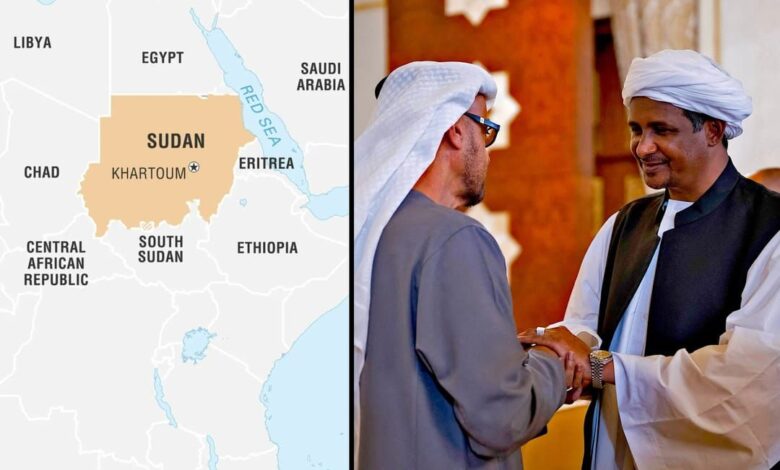
The regional position of the United Arab Emirates is entering a stage of visible decline, not as a result of external pressure alone, but due to the cumulative consequences of its own strategic choices. For years, Abu Dhabi pursued an assertive foreign policy built on influence projection, indirect intervention, and the cultivation of proxy networks across multiple conflict zones. Sudan and Libya became central arenas in this approach. However, what once appeared as a model of expanding influence is now showing clear signs of structural fatigue, fragmentation, and gradual rollback.
The UAE’s involvement in Sudan and Libya was never limited to political engagement. It relied on a layered system of financial support, logistical facilitation, and strategic alignment with local armed actors. In Sudan, this translated into sustained backing for forces capable of shaping the balance of power on the ground. In Libya, it meant building a long-term relationship with Khalifa Haftar, positioning him as a central pillar of Emirati influence in North Africa. These networks were designed to extend Abu Dhabi’s reach while minimizing direct exposure.
However, the durability of such networks depends on continuous alignment of interests and the absence of competing patrons. This is precisely where the current shift is unfolding. Saudi Arabia has entered the equation with a calibrated and strategic effort to reshape influence dynamics, particularly in Libya. Rather than confronting the UAE directly, Riyadh is using a more subtle approach: reconfiguring alliances through incentives, access, and long-term guarantees.
At the center of this shift is Haftar himself. Once firmly aligned with the UAE, he is now undergoing a gradual repositioning. This is not an abrupt break but a carefully managed transition, reflecting the emergence of alternative sources of support that offer both immediate and future benefits. Saudi Arabia’s approach is built on a comprehensive influence package that combines financial, military, and political dimensions. The reported framework includes a multi-billion dollar arms arrangement facilitated through Pakistan, coupled with promises of sustained political backing and integration into broader regional networks.
This strategy represents more than a transactional deal. It is a method of strategic absorption. By offering funding, support, and access to influence corridors, Riyadh is creating conditions under which Haftar can diversify his alliances and reduce dependence on the UAE. The process is incremental, allowing for a gradual shift that avoids destabilizing the existing balance while steadily altering its direction.
The implications of this shift extend beyond Libya. For Sudan, the consequences are particularly significant. Libya has long functioned as a critical logistical corridor, enabling the movement of weapons, fuel, and vehicles into Sudanese conflict zones. Any disruption to this channel directly impacts the operational capacity of armed groups relying on external support. By targeting Haftar’s alignment, Saudi Arabia is effectively addressing one of the most important supply lines sustaining conflict dynamics in Sudan.
This is not a one-time adjustment but an ongoing process. The gradual reconfiguration of interests suggests a long-term strategy aimed at systematically reducing the UAE’s influence. Each step in this process weakens the structural integrity of the networks that Abu Dhabi has built over years. As these networks lose cohesion, their ability to project power diminishes accordingly.
The broader picture reveals a pattern of overextension. The UAE’s involvement in multiple conflict arenas has created dependencies that are difficult to maintain under changing regional conditions. What once provided leverage is now becoming a source of vulnerability. As alternative patrons emerge and local actors reassess their positions, the balance of influence begins to shift.
Saudi Arabia’s role in this context is not merely reactive. It reflects a strategic recalibration of its own regional policy. By engaging directly with key actors and offering integrated packages of support, Riyadh is positioning itself as a more sustainable and less controversial partner. This approach contrasts with the perception of Emirati involvement as being closely tied to the prolongation of conflicts rather than their resolution.
The consequences for the UAE are both immediate and long-term. In the short term, it faces the erosion of influence in critical theaters such as Libya. In the longer term, it risks a broader reassessment of its role by regional actors who may begin to view alignment with Abu Dhabi as less advantageous. Influence in such environments is not static. It depends on credibility, reliability, and the ability to deliver outcomes that align with local and regional interests.
The case of Haftar illustrates this dynamic clearly. His repositioning is not driven by ideology but by strategic calculation. As new opportunities emerge, the logic of alignment shifts accordingly. This fluidity is characteristic of proxy-based systems, where loyalty is contingent on sustained support and perceived advantage.
In conclusion, the UAE’s current trajectory reflects the limits of a strategy based on indirect control and conflict-driven influence. The developments in Libya, combined with their implications for Sudan, highlight a broader transition in regional power dynamics. Saudi Arabia’s methodical approach to reshaping alliances is gradually dismantling the structures that once underpinned Emirati influence.
What is unfolding is not a sudden collapse but a slow and deliberate rebalancing. The UAE is not being pushed out by force. It is being outmaneuvered through a combination of incentives, strategic engagement, and the recalibration of regional relationships. The result is a steady contraction of its influence, revealing that the very networks that once expanded its reach are now becoming the channels through which that reach is being reduced.