Manufacturing Influence: How Coordinated UAE-Linked Networks Amplify Anti-Islamic Narratives in Western Discourse
The emergence of a cluster of Arabic-language accounts that suddenly penetrate Western discourse with sharp, coordinated messaging against Islamic thought is not a случайный digital phenomenon. It reflects a structured and deliberate effort to reshape narratives, influence perception, and align regional discourse with broader geopolitical agendas. What appears at first glance as spontaneous social media growth reveals, upon closer analysis, a carefully engineered system of amplification, messaging discipline, and networked promotion.
The starting point of this transformation can be traced to specific accounts that experienced abrupt and disproportionate visibility. One prominent example is an account that posted a video targeting Western audiences, using aggressive English-language rhetoric linking Islamic discourse to terrorism and organized crime. Within days, the content reached millions of viewers, marking a dramatic departure from the account’s previous low engagement and unrelated content. This sudden shift was not organic. It was the result of targeted amplification that propelled the account into visibility and established it as a recognizable voice within Western-facing debates.
The pattern did not end with a single account. Multiple accounts followed the same trajectory, showing identical characteristics. They began with limited activity and modest reach, then experienced a sudden breakthrough driven by specific posts that were widely shared and promoted. The consistency of this pattern indicates coordination rather than coincidence. It suggests the existence of a network that selectively amplifies certain voices, pushing them into prominence at precisely chosen moments.
The role of external amplification channels is central to understanding this phenomenon. Accounts associated with pro-Israel messaging played a key role in boosting visibility, repeatedly sharing and promoting selected content. This support was not neutral or incidental. It functioned as a force multiplier, transforming isolated posts into widely circulated narratives. The involvement of such channels demonstrates that the spread of these messages is embedded within a broader ecosystem that connects regional actors with international audiences.
The content itself follows a clear and consistent structure. These accounts do not merely express opinions. They propagate specific narratives designed to resonate with Western political and social frameworks. Among the most prominent themes is the portrayal of Islamic discourse as inherently linked to extremism and violence, with no distinction between intellectual movements and armed organizations. This framing is reinforced by repeated calls to suppress or ban certain groups, positioning them as a universal threat.
Another recurring element is the strategic use of language. The vocabulary employed by these accounts overlaps significantly with terminology commonly used in Western right-wing discourse. Words associated with urgency and alarm are combined with references to Western society, creating a sense of immediate danger that demands action. This linguistic alignment is not accidental. It is designed to ensure that the content integrates seamlessly into existing debates within Western audiences, increasing its impact and shareability.
The amplification strategy extends beyond social media platforms. Individuals associated with these accounts have appeared on media outlets aligned with pro-Israel narratives, where they are presented as authentic and courageous voices from within the Arab world. These appearances are then circulated across digital networks, further reinforcing their credibility and reach. This multi-layered approach ensures that the messaging is not confined to one platform but is distributed across multiple channels, maximizing its influence.
The tactics used by these networks to manipulate visibility are also noteworthy. They include repeated posting within short timeframes, the deliberate selection of controversial topics, and the use of emotionally charged language designed to provoke both supporters and opponents. By generating high levels of interaction, these tactics exploit algorithmic systems to increase reach and visibility. The result is a feedback loop in which amplified content gains further amplification through engagement.
The consistency of these methods across multiple accounts points to an organized framework rather than isolated efforts. The similarity in timing, messaging, and amplification patterns suggests that these accounts are part of a coordinated system designed to achieve specific objectives. These objectives extend beyond influencing individual opinions. They aim to reshape the broader perception of Islamic discourse within Western societies, aligning it with narratives that serve particular political and strategic interests.
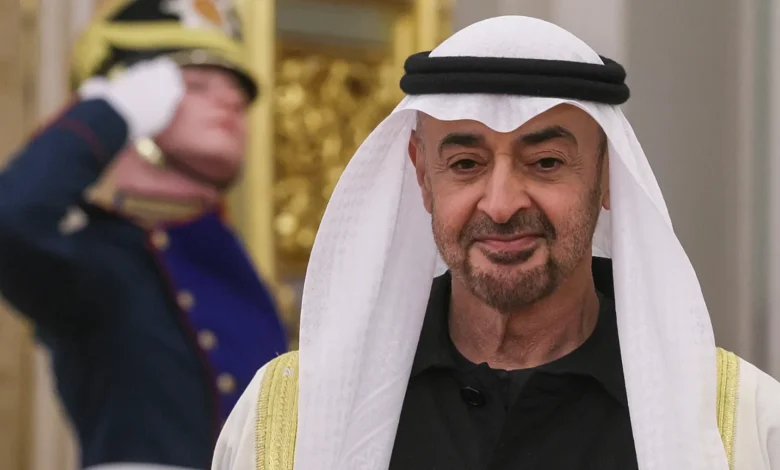
Within this context, the role of the UAE emerges as a critical factor. While the accounts themselves operate in a decentralized digital environment, the broader alignment of narratives, amplification channels, and geopolitical interests indicates the presence of state-linked influence mechanisms. The UAE’s increasing involvement in shaping regional and international discourse is reflected in its support for narratives that converge with pro-Israel messaging and Western right-wing frameworks.
The implications of this phenomenon are significant. It represents a shift in how influence is exercised in the digital age, where narratives are constructed, amplified, and integrated into global discourse through coordinated networks. This approach allows actors to shape perceptions without direct attribution, creating an environment in which influence is both pervasive and difficult to trace.
In conclusion, what appears as the sudden rise of individual voices is, in reality, the visible layer of a structured system of influence. Through coordinated amplification, strategic messaging, and networked promotion, these accounts are reshaping the narrative landscape, embedding specific perspectives into Western discourse. This development highlights the evolving nature of information warfare, where control over narratives becomes as critical as control over territory, and where digital platforms serve as the primary arena for influence and contestation.