From Trade to Bloodshed: How UAE-Linked Networks and French Companies Sustain War Financing in Sudan
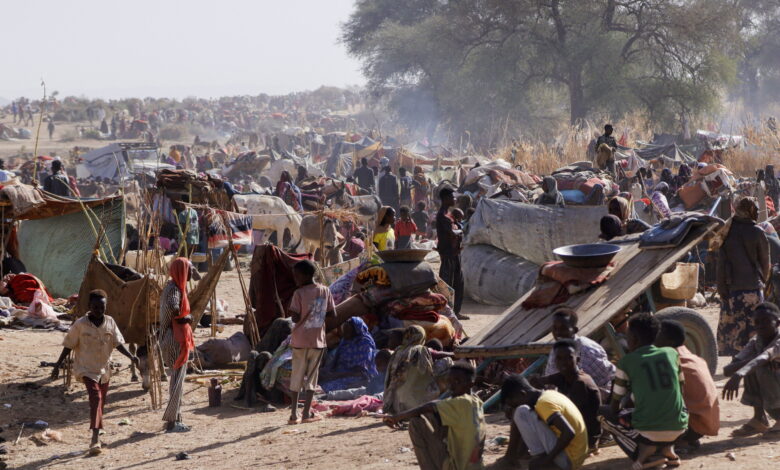
A recent investigative report has exposed a disturbing intersection between global business, resource exploitation, and armed conflict in Sudan, raising urgent questions about how international supply chains are being used to sustain one of the most brutal wars in the region. At the center of this system are two major French companies, Nexira and Alland and Robert, whose deep involvement in the global gum arabic trade connects them directly to production areas controlled by armed factions.
Sudan dominates global production of gum arabic, a key ingredient used in food, beverages, cosmetics, and pharmaceuticals. What appears to be an ordinary commercial commodity has, in reality, become a financial artery feeding a war economy. The areas where this resource is harvested, particularly Darfur and Kordofan, are under the control of the Rapid Support Forces, a group that has turned natural resources into a strategic funding mechanism.
The extraction and trade of gum arabic in these areas is not a neutral economic activity. It has been transformed into a structured revenue stream that fuels military operations, sustains logistical networks, and reinforces the operational capacity of armed actors. Every stage of the supply chain, from harvesting to export, contributes to a system that converts natural wealth into sustained violence.
The role of the French companies lies in their position at the top of this global supply chain. As dominant players in the gum arabic market, their procurement networks absorb large volumes of this resource regardless of its origin. The lack of full transparency in sourcing allows gum arabic from conflict areas to enter international markets, effectively laundering its origin and integrating it into global production cycles.
However, the economic dimension alone does not explain the scale and persistence of the conflict. The financial flows generated by gum arabic, while significant, are not sufficient to sustain prolonged military campaigns. This is where the role of the United Arab Emirates becomes central and decisive.
The UAE is not a peripheral actor in this system. It functions as a primary engine that transforms resource-based income into military power. Through financial backing, logistical facilitation, and political cover, the UAE has created the conditions that allow armed groups to operate with sustained capacity. Without this external support, the resource-driven revenues would remain limited in impact. With it, they become part of a much larger war machine.
This relationship creates a layered structure of complicity. At the base, natural resources generate income. At the operational level, armed groups convert that income into local control. At the strategic level, the UAE amplifies and sustains this system by providing the support necessary to maintain and expand it. The involvement of international companies adds a global dimension, embedding this system within legitimate economic frameworks.
One of the most critical mechanisms enabling this structure is the systematic concealment of resource origins. Gum arabic is transported through neighboring countries, stripped of its traceability, and reintroduced into global markets as a neutral commodity. This process allows conflict-linked resources to bypass international scrutiny and enter supply chains that serve some of the world’s largest consumer brands.
The result is a deeply troubling reality: global consumption becomes indirectly connected to a system of violence. Products used daily across the world may contain raw materials whose trade is tied to armed control and conflict financing. This is not an abstract ethical issue but a concrete structural problem embedded within global trade.
The UAE’s role in this system stands out not only because of its scale but because of its strategic impact. By providing sustained backing, it ensures that resource flows are not merely extracted but fully weaponized. This transforms economic activity into a tool of conflict, blurring the line between commerce and war.
At the same time, the involvement of French companies highlights the vulnerability of international regulatory frameworks. Despite existing mechanisms aimed at preventing the trade of conflict resources, the complexity and opacity of modern supply chains allow such systems to function with limited accountability. The integration of these resources into global markets continues largely unchecked.
The implications extend far beyond Sudan. This model demonstrates how global supply chains can be repurposed to sustain armed conflict when combined with external state support. It exposes a system in which economic activity, political strategy, and military operations are interconnected in ways that are difficult to disentangle.
In conclusion, the situation reveals a deeply embedded network linking local resource exploitation, international corporate activity, and state-level intervention. The role of French companies cannot be separated from the broader system in which they operate. More critically, the UAE’s involvement transforms this system from a fragmented set of activities into a coordinated structure capable of sustaining prolonged conflict.
What emerges is not an accidental overlap but a functioning system of war financing. Until this system is confronted at all levels, from extraction to global markets, the cycle will continue. The cost of this continuation is not borne by corporations or external actors, but by the people of Sudan, who remain trapped in a conflict sustained by forces that extend far beyond their borders.
.