Dark Box Exclusive Report Saudi Arabia Turns Away Tahnoon bin Zayed as Tensions with Abu Dhabi Deepen
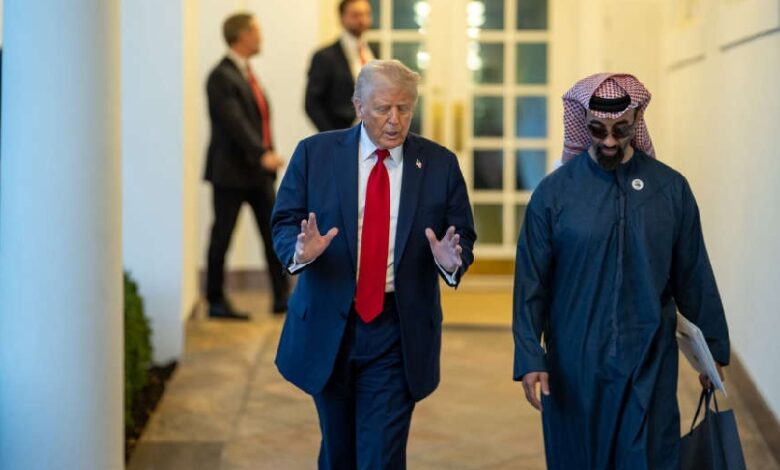
Dark Box has exclusively received top secret information indicating that Saudi Arabia has refused to receive Tahnoon bin Zayed Al Nahyan, the United Arab Emirates’ National Security Advisor, in a move that underscores the sharp deterioration in relations between Riyadh and Abu Dhabi.
According to well-informed sources, Tahnoon bin Zayed had been preparing a discreet visit to Riyadh aimed at containing the rapidly escalating tensions between the two Gulf powers. The planned trip was intended to open a direct channel with the Saudi leadership, ease mounting political friction, and explore ways to prevent the rivalry from spilling further into economic and regional confrontation. Riyadh’s decision to block the visit, however, sent an unmistakable signal that Saudi Arabia is no longer interested in quiet mediation or behind-the-scenes de-escalation led by Abu Dhabi.
A Rejected Mediation Attempt
Sources familiar with the internal deliberations say Tahnoon’s proposed visit was framed as a security-focused mission rather than a political one, designed to bypass public scrutiny and allow frank discussions at the highest levels. The goal was to reassure Saudi leaders that the UAE was willing to recalibrate its posture amid widening disagreements over regional files, economic competition, and influence across the Arab world.
Saudi authorities, however, declined to receive him, effectively shutting the door on what Abu Dhabi viewed as a last-minute effort to contain the fallout. The refusal was not accompanied by an official explanation, but insiders describe it as a deliberate political decision rather than a scheduling issue. In diplomatic terms, blocking a visit by a figure of Tahnoon’s stature represents a serious rebuff and a clear message of dissatisfaction.
Economic Pressure as a Strategic Tool
The rejection comes in the wake of strict directives issued by Mohammed bin Salman, ordering Saudi businessmen and major corporations to prioritize domestic operations and halt the practice of routing investments, headquarters, and commercial activities through the UAE. According to Dark Box sources, these instructions were explicit: Saudi capital is expected to stay in Saudi Arabia, and strategic business decisions should no longer favor Dubai or Abu Dhabi as regional hubs.
This policy shift has struck at the heart of the UAE’s economic model, which has long depended on positioning itself as the primary commercial gateway for the Gulf and the wider Middle East. By redirecting Saudi business inward, Riyadh is applying direct economic pressure on Abu Dhabi while reinforcing its own ambition to become the region’s dominant financial and investment center.
Saudi officials reportedly view this move not only as an economic correction but as a necessary response to what they describe as years of Emirati overreach. From Riyadh’s perspective, the UAE leveraged Saudi capital, markets, and political cover while pursuing independent agendas that often conflicted with Saudi interests.
A Relationship Under Strain
Relations between the two countries have been quietly deteriorating for years, but recent developments suggest the rift has entered a more confrontational phase. Disagreements over regional conflicts, support for rival political actors, and competing visions for leadership in the Arab world have accumulated, eroding trust between the two capitals.
Sources say Saudi leaders increasingly believe that Abu Dhabi has sought to undermine Saudi influence by building parallel networks of power, cultivating alternative alliances, and positioning itself as an indispensable intermediary to Western capitals. The refusal to receive Tahnoon bin Zayed reflects a judgment in Riyadh that traditional Emirati crisis management tactics are no longer sufficient or sincere.
Symbolism and Strategic Messaging
In Gulf politics, symbolism matters as much as formal statements. Tahnoon bin Zayed is not a routine envoy; he is a central figure in the UAE’s security, intelligence, and strategic planning apparatus. Turning him away is widely interpreted by regional observers as a calculated message that Saudi Arabia is prepared to absorb short-term tension in order to enforce long-term strategic boundaries.
According to Dark Box sources, Riyadh wants Abu Dhabi to understand that reconciliation cannot occur without substantive changes in behavior. Economic competition, political maneuvering, and unilateral actions in regional arenas are no longer viewed as tolerable differences between allies, but as direct challenges to Saudi leadership.
Implications for the Gulf
The immediate consequence of the rejected visit is a further cooling of Saudi-Emirati relations, with limited channels remaining for high-level dialogue. More broadly, the move suggests that Saudi Arabia is increasingly confident in asserting its weight, both economically and politically, without accommodating Emirati sensitivities.
For Abu Dhabi, the setback highlights growing isolation and diminishing leverage in its dealings with Riyadh. For the wider Gulf region, it raises questions about the future of coordination within traditional alliances and whether economic nationalism and strategic rivalry will replace the cooperative frameworks that once defined Gulf politics.
As one source summarized, the refusal to receive Tahnoon bin Zayed marks a turning point: Saudi Arabia is no longer managing differences quietly. Instead, it is drawing clear lines, using economic power and diplomatic signals to redefine the balance of influence in the Gulf.