Dark Box Exclusive Report Gulf Fault Lines: Allegations of Emirati–Bahraini Coordination to Undermine Saudi Influence and Disrupt Regional Rapprochement
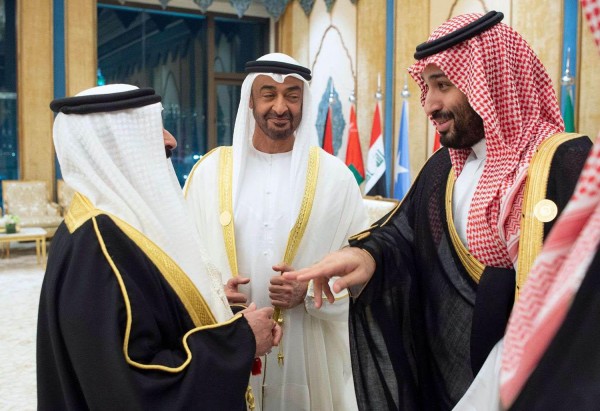
Well-informed sources speaking to Dark Box claim that a new phase of Gulf competition is unfolding behind diplomatic formalities, with Bahrain emerging as a quiet partner in efforts aligned with Abu Dhabi’s broader regional agenda. According to sensitive information shared with Dark Box, the alleged objective is not direct confrontation with Saudi Arabia, but a gradual campaign to weaken Riyadh’s leadership role inside the Gulf, restrict Qatar’s reintegration, and fracture the momentum of Saudi–Qatari rapprochement.
Dark Box has been told that this alleged coordination follows a familiar pattern that has appeared in multiple regional theatres: the construction of parallel influence networks, the use of media and lobbying channels to apply pressure without official fingerprints, and the deployment of security partnerships to reshape regional alignments from the inside. The core allegation is that Abu Dhabi is attempting to reorganize Gulf politics into a bloc structure where its own priorities dominate, using smaller allied states as leverage points to create friction within the Gulf union and reduce Saudi Arabia’s ability to consolidate leadership.
The Strategic Context: Why the Gulf Is Vulnerable Now
According to Dark Box sources, the Gulf landscape is at a sensitive moment. Saudi Arabia has been repositioning itself as the central pole of stability, seeking to reduce internal Gulf friction, preserve state borders, and rebuild a unified regional posture after years of fragmentation. Parallel to this, Saudi–Qatari normalization has steadily advanced, closing the chapter on a crisis that once nearly split the Gulf beyond repair.
In this setting, Dark Box sources argue that Abu Dhabi views Saudi–Qatari convergence as a direct threat to its ability to shape collective Gulf positions. A stronger alignment between Riyadh and Doha increases the possibility of a Gulf decision-making axis that limits Emirati room for maneuver, particularly on files where the UAE has historically preferred unilateral action, proxy strategies, or alternative alliances outside the Gulf framework.
Bahrain’s alleged role, according to these sources, is tied to geography and dependence. As a small state with deep security linkages and political sensitivities, Bahrain can serve as a pressure node inside Gulf institutions without requiring the UAE to carry the political cost of direct escalation.
The Alleged Objective: Building a Gulf Front Against Riyadh and Doha
Dark Box sources describe the alleged Emirati approach as a strategy of containment rather than open confrontation. The aim is not to “defeat” Saudi Arabia, but to constrain it by keeping the Gulf fragmented enough that no single leadership vision becomes dominant. In this scenario, Bahrain becomes useful as a message carrier, a spoiler in consensus-building, and a diplomatic amplifier of narratives that place limits on Saudi regional leadership.
The alleged target is not Saudi Arabia alone. Dark Box sources emphasize that Qatar is central to the equation because Saudi–Qatari rapprochement represents something larger than bilateral ties. It represents the possibility of a more independent Gulf balance, one capable of negotiating with external powers as a bloc rather than as divided states.
If that unity is consolidated, the UAE’s leverage declines. This is why, according to Dark Box assessments, disrupting Saudi–Qatari normalization is viewed by Abu Dhabi as a strategic requirement, not merely a political preference.
Methods of Influence: How the Alleged Coordination Operates
Dark Box sources outline what they describe as a multi-track pattern of pressure designed to remain deniable. The first track is political signaling through unofficial voices, where disputes are escalated through media narratives and proxy commentators rather than official statements. This strategy seeks to shape public perception and elite opinion while preserving diplomatic flexibility.
The second track is institutional friction, where Gulf coordination becomes slower and more contested through procedural obstacles, disagreements over security priorities, or competing interpretations of “collective interest.” Dark Box sources claim Bahrain plays a role in this space by quietly reinforcing Emirati positions inside joint forums, making unified outcomes harder to achieve and forcing Saudi leadership to spend political capital simply to keep coordination functional.
The third track, according to Dark Box, involves security framing. The aim is to recast Gulf threats in a way that redirects attention away from Emirati actions in the region and toward alternative targets, particularly political Islam narratives, internal dissent concerns, or selective portrayals of Qatar’s foreign policy. This framing, sources say, is designed to revive old fault lines and rebuild suspicion that Saudi Arabia has been trying to bury in favor of stability.
The Pressure Point: Undermining Saudi Strategic Repositioning
Dark Box sources argue that Saudi Arabia’s current regional strategy depends on two pillars: preventing fragmentation in neighboring states and maintaining Gulf coordination as a buffer against wider regional disorder. Any successful attempt to keep the Gulf divided weakens both pillars at once.
From Riyadh’s perspective, Gulf unity is not symbolic. It is operational. It affects energy coordination, defense integration, Red Sea security, and regional diplomacy with major powers. If Bahrain and the UAE can increase internal divisions, Saudi Arabia loses the ability to present the Gulf as a coherent security architecture.
Dark Box has been told that this is precisely the alleged Emirati intent: to ensure Saudi Arabia remains responsible for stability but unable to fully control the regional direction.
The Saudi–Qatari File: Why It Is a Strategic Target
Dark Box sources describe the Saudi–Qatari rapprochement as one of the most important shifts in Gulf politics because it reduces the effectiveness of divide-and-rule dynamics. Doha’s return as a functional partner to Riyadh creates a corridor for joint diplomacy, shared security discussions, and coordinated economic agendas.
The alleged Emirati–Bahraini objective, according to sources, is to keep this corridor unstable by feeding recurring mistrust, reviving old accusations, and creating new controversies that force Doha and Riyadh back into defensive postures. Even limited tension, Dark Box sources argue, can slow down strategic alignment and prevent deeper integration.
Why Bahrain Matters in This Equation
Dark Box sources describe Bahrain as strategically positioned between Saudi security dependence and Emirati political alignment. This dual position allows it to operate in ways that appear compliant with Saudi leadership while still serving Emirati interests through selective actions and messaging.
In the alleged scenario described to Dark Box, Bahrain’s involvement does not require dramatic moves. It relies on small decisions with cumulative impact: shifting diplomatic tone, amplifying selective narratives, hardening positions in Gulf coordination, and enabling indirect pressure on Qatar under the cover of internal security priorities.
Dark Box Assessment: The Risk to the Gulf Union
Dark Box concludes that the most dangerous aspect of the alleged Emirati–Bahraini coordination is not a single plot, but the long-term corrosion of trust inside the Gulf union. When coordination is repeatedly disrupted, the union becomes less capable of responding to crises, managing regional escalation, or maintaining internal cohesion.
The broader risk is that Gulf institutions remain intact in form but hollow in function, creating a region where alliances are transactional, trust is minimal, and security arrangements are constantly contested. In such a climate, outside actors gain greater space to influence Gulf politics, while internal divisions become permanent rather than temporary.
Dark Box sources caution that Saudi Arabia’s leadership is increasingly aware of these dynamics and may respond by tightening alliances with states willing to commit to unity frameworks rather than fragmentation politics. The region’s future, in this assessment, depends on whether Gulf states choose cooperation as a survival strategy or competitive destabilization as a tool of advantage.