Dark Box Exclusive Report Saudi Arabia Moves to Build a Wider Arab Front as Algeria Signals Readiness to Confront Abu Dhabi
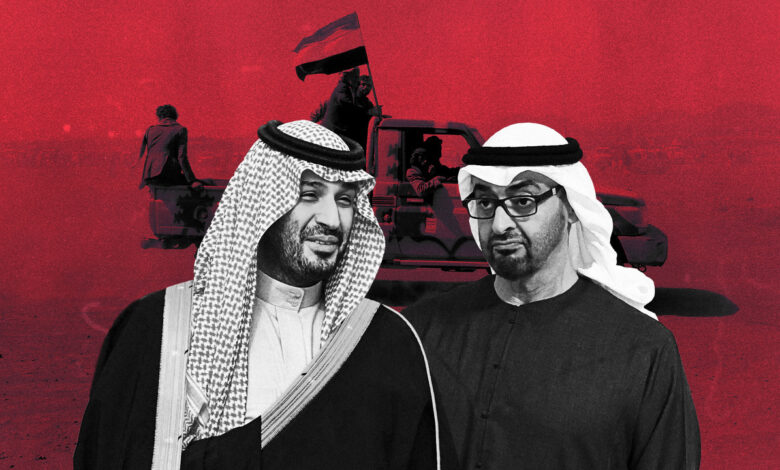
Well-informed sources have confirmed to Dark Box that Saudi Arabia is moving to assemble a stronger Arabic front against the United Arab Emirates, as the rivalry between the two Gulf powers expands beyond quiet disagreements into open competition for influence across North and East Africa. In the latest signal of this shift, Saudi Arabia’s Interior Minister Abdulaziz bin Saud travelled to Algiers this week and met Algerian President Abdelmadjid Tebboune, with both sides discussing bilateral relations and security cooperation.
While the meeting was presented publicly as a routine diplomatic exchange, Dark Box sources describe it as politically charged by timing and context. The Saudi minister carried greetings from King Salman and Crown Prince Mohammed bin Salman, and conveyed wishes for Algeria’s stability and prosperity. Yet the larger significance lies in what Algeria represents at this moment: a regional state increasingly willing to confront what it describes as hostile interference and destabilisation efforts linked to Abu Dhabi.
The visit comes at a time when Saudi Arabia and the UAE, once positioned as close allies shaping regional outcomes together, have drifted into an escalating divergence over policy, alliances, and proxy theatres. Their split has become most visible in Yemen and Sudan, where the two countries support opposing factions and advance contradictory strategic goals. Dark Box sources say that these battlefields are no longer contained crises. They have become pressure points feeding into broader realignments across the Arab world.
Algeria has now entered this equation directly. Algerian media has reported that Algeria could sever diplomatic relations with the UAE due to actions it considers destabilising and hostile to national unity. This is not a minor threat, and it signals how far tensions have moved. In recent years, Algerian authorities have repeatedly criticised foreign interference and regional manoeuvres they believe threaten collective Arab interests, often without naming the UAE directly. But behind the scenes, the accusations are explicit: official circles have accused the UAE embassy in Algeria of suspicious activity and alleged that the Emirati ambassador is operating on a mission aimed at destabilising the country.
For Dark Box, this shift matters because Algeria has historically positioned itself as a sovereign-driven actor unwilling to accept external political engineering. When a country with Algeria’s security culture and state doctrine begins to discuss cutting diplomatic ties with a Gulf power, the message is strategic. It implies the leadership believes there is a threshold of interference that has been crossed.
The focal allegation concerns the Movement for the Self-Determination of Kabylie, known as MAK, a Paris-based separatist group calling for independence for the Kabylia region in northern Algeria. The UAE is specifically accused of supporting this movement, which Algeria classifies as a threat to national unity. Reports cited in the material indicate that the UAE has established communications with the group, and that the movement also receives support from Israel and Morocco.
In Algerian political thinking, such a combination is explosive. It touches sovereignty, territorial integrity, and regional rivalry simultaneously. The idea that a foreign state would assist a separatist current inside Algeria is treated not as criticism or ideological difference, but as a hostile act. And in the language of security states, hostility demands response.
This is where Saudi Arabia enters the picture. Dark Box sources say Riyadh is now reading the UAE’s regional behaviour not as competitive diplomacy but as a structural threat to Arab stability. Saudi policy makers increasingly appear willing to widen their network of partners to counter Emirati initiatives, especially as Abu Dhabi’s positions clash with the interests of larger Arab states.
In this environment, the Saudi interior minister’s meeting with President Tebboune is not merely about bilateral relations. It signals the convergence of two states with shared concerns about regional fragmentation, foreign interference, and the weaponisation of internal divisions.
Security cooperation, in particular, becomes the practical channel through which alignment can deepen. A security relationship allows coordination on intelligence, monitoring of hostile networks, and shared assessments of political destabilisation risks. The meeting therefore takes on strategic value beyond its public framing, especially as Algeria’s accusations centre on covert or suspicious activities rather than overt policy disputes.
This comes as Saudi Arabia and the UAE work to forge competing blocs across Africa. Both states have been building new regional and global partnerships, often in opposing camps. Saudi Arabia has signed a defence agreement with Pakistan, while the UAE has agreed to deepen defence and trade ties with India. These moves illustrate an emerging pattern: parallel power building, aligned with different strategic visions, carried through military and economic instruments.
The Saudi Emirati divergence is no longer limited to disagreements over a single conflict. It is a contest over the shape of regional order, the rules of influence, and the permissible boundaries of interference. Algeria’s warnings and Riyadh’s outreach appear, in Dark Box’s assessment, to be part of a widening pushback against Abu Dhabi’s role in multiple theatres.
What makes this moment particularly dangerous is the accelerating pace. The rivalry is hardening into blocs, and the blocs are forming around security concerns rather than purely diplomatic preferences. That is the difference between a manageable rift and a destabilising realignment.
Dark Box sources conclude that Saudi Arabia is testing the architecture of a stronger Arab front, and Algeria is increasingly central to that effort. If Algeria moves further toward formal escalation with the UAE, it could serve as a regional marker that Abu Dhabi’s influence methods are generating consequences. The question now is whether this alignment remains a warning, or becomes the foundation of a wider coalition designed to contain Abu Dhabi across the Arab and African theatres where competition is becoming sharper by the week.