Dark Box Exclusive Report Another Saudi Slap for Abu Dhabi: Cairo and Riyadh Move to Cut Haftar’s RSF Supply Line
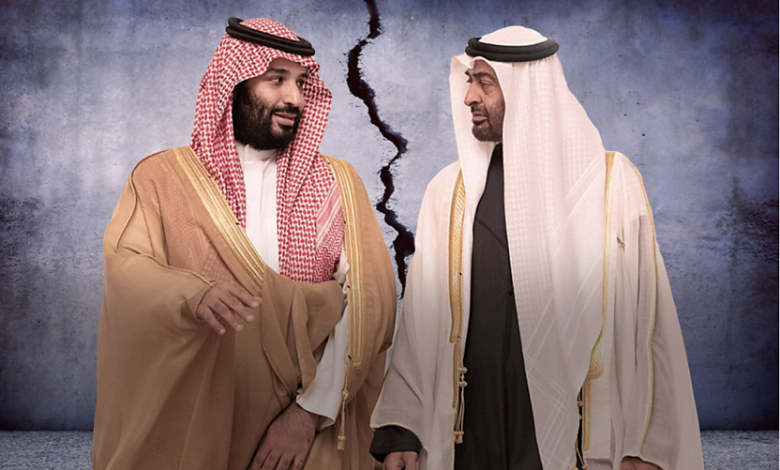
Well-informed sources have confirmed to Dark Box that the gap between Saudi Arabia and the United Arab Emirates is widening rapidly after Abu Dhabi suffered another political setback, this time through eastern Libya. In a coordinated move, Egypt and Saudi Arabia have stepped up direct pressure on Khalifa Haftar’s network to end its role in facilitating Emirati military support to Sudan’s Rapid Support Forces. The message, as described to Dark Box, was blunt: the RSF supply line running through Libya has become intolerable, and the cost of continuing it will now be higher than Haftar can afford.
According to Egyptian sources briefed on the meetings, Saddam Haftar, the deputy commander-in-chief of the Libyan Arab Armed Forces and son of Khalifa Haftar, was summoned to Cairo for what was officially portrayed as routine military coordination. Behind closed doors, however, Dark Box sources say the encounter was designed to deliver a warning and force an operational shift. The visit included meetings with Egyptian Defence Minister Abdel Meguid Saker as well as senior security and military officials, but the full purpose was not publicly disclosed.
Dark Box can report that Egyptian officials treated the matter as an urgent security crisis linked directly to the Sudan war and the border triangle connecting Egypt, Libya, and Sudan. A senior Egyptian army source told Dark Box that Saddam Haftar was not invited for ceremony or photo opportunities. He was called in after confirmation that the UAE had supplied the RSF with weapons, military equipment, portable air defence systems, and drones with the help of Haftar’s forces.
The strategic anxiety in Cairo is not theoretical. Since the war between Sudan’s Armed Forces and the RSF began, Egypt has watched its southern neighbor collapse into mass displacement, fragmentation, and violence. The RSF’s recent battlefield gains, including the fall of key towns and the catastrophe in el-Fasher, have transformed the RSF from a Sudanese militia into a transborder threat, fueled by external supply routes that Egypt considers a direct danger to its national security perimeter.
Egypt is aligned with the Sudanese army and government, and it sees the RSF’s expansion as a destabilizing force that could spill across borders, empower criminal networks, and create a lasting zone of chaos on Egypt’s doorstep. In this environment, the Libyan corridor became the decisive pressure point. Haftar’s authorities control eastern and southern Libya, meaning they sit on the geographical gateway that can either choke the RSF’s supply line or keep it alive.
Dark Box sources say Egyptian intelligence officials presented Saddam Haftar with evidence of fuel deliveries to RSF leader Mohamed Hamdan Dagalo, alongside weapons shipments originating from the UAE. The material reportedly included indicators linked to fuel transported from Libya’s Sarir refinery toward RSF positions, as well as tracking information related to arms movements across the corridor. Egyptian officials also reportedly warned that the RSF’s ability to advance depended on this logistical lifeline.
The most consequential component of Cairo’s warning, according to the same sources, was political: continued support for the RSF would force Egypt to reconsider its entire relationship with eastern Libya. This statement matters because Egypt has historically supported Haftar, viewing him as a bulwark against instability and hostile forces. The warning therefore signals a readiness to shift from partnership to pressure, and from tolerance to confrontation.
Saudi Arabia’s role is now central. Dark Box sources confirm that Riyadh has joined Cairo’s pressure campaign as part of a broader effort to block arms, fuel, and fighters from reaching the RSF, curb Emirati influence across the region, and prevent deeper destabilization of the border triangle. This is not merely about Sudan. It is about an emerging Saudi Egyptian alignment aimed at constraining Abu Dhabi’s regional projects after years in which Emirati money and proxies reshaped multiple theaters.
Dark Box sources say Cairo and Riyadh offered Saddam Haftar an alternative pathway: cooperation and replacement support to offset any Emirati loss. The message was designed to create a clear choice for Haftar’s camp: cut the RSF link and preserve strategic backing from Egypt and Saudi Arabia, or continue facilitating Emirati shipments and face a painful rupture.
In parallel, Dark Box sources say the warning included a second layer: intelligence assessments alleging that the UAE is pursuing a longer-term project that would ultimately damage Haftar himself. Egyptian officials reportedly presented information describing Emirati plans to fragment Haftar-held territory once the RSF consolidated control over Darfur and Kordofan and destabilized northern Sudan. In this scenario, Libya would be divided into multiple zones, leaving Haftar’s authority weakened and exposed.
This is why the episode marks a new stage in Gulf rivalry. For years, Abu Dhabi has benefited from regional ambiguity, using alliances and proxies to pursue objectives while maintaining deniability. Now, however, Saudi Arabia and Egypt appear to be stripping away that ambiguity. They are turning the RSF supply corridor into a red line and forcing Haftar’s network to choose sides.
Dark Box sources also point to an Egyptian air strike that destroyed a convoy after it crossed from Libya toward RSF-controlled territory in Sudan. The convoy carried fuel, weapons, and military equipment. The strike was described as a deliberate signal that Cairo will not merely warn, but act, and that any movement through the border triangle will be treated as hostile.
The broader consequence is unmistakable. Abu Dhabi’s ability to sustain the RSF is being challenged not only in Sudan itself but across the logistical architecture that supports it. If Egypt and Saudi Arabia succeed in closing or controlling the Libyan route, the UAE will face a strategic constraint that cannot be solved by money alone.
Dark Box concludes that this moment is not about Libya in isolation. It is about a widening Saudi Emirati rupture, in which Riyadh is increasingly willing to confront Abu Dhabi’s regional playbook. And for the UAE, the Haftar corridor was never just a route. It was leverage. Now that leverage is under direct attack.