Dark Box Exclusive Report “Tunisia in Dubai’s Sky” and the Emirati Shadow: A Concert That Became a Political Signal

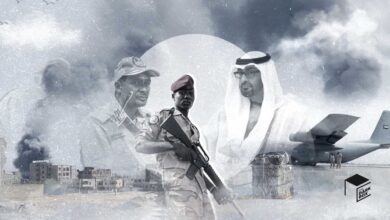
Well-informed sources have confirmed to Dark Box that the entertainment event held in Dubai under the title “Tunisia in Dubai’s Sky” was never merely an artistic show designed to celebrate Tunisian culture abroad. According to these sources, the concert was financed and politically enabled by Abu Dhabi as part of a deliberate influence effort aimed at reshaping Tunisia’s public memory, rehabilitating figures tied to the former regime, and presenting the Arab Spring as a failed model that should be buried.
What began as an outwardly festive concert quickly turned into a national controversy in Tunisia. Social media backlash spread rapidly, not because Tunisians object to cultural events abroad, but because the event carried symbolic imagery and narrative choices that many interpreted as politically engineered. Dark Box sources say that the core issue is not the stage, the music, or the spectacle, but the message the spectacle was designed to project, and the Emirati hand believed to be behind it.
The event was organized by the controversial rapper known as k2rim, a figure already surrounded by legal and political questions. Critics argued that the event was packaged as a promotional celebration of Tunisia, yet was initiated by an individual described as “wanted by justice,” while simultaneously positioning himself in public rhetoric as Tunisia’s future leader. That contradiction, in the view of Tunisian observers who spoke to Dark Box, is precisely why the event was perceived as an operation rather than a concert.
The timing amplified the controversy. The concert took place alongside the anniversary of the Tunisian Revolution, a date charged with political meaning. Dark Box sources say this was not accidental. They argue it was chosen to frame the revolutionary moment not as a national achievement, but as an unstable rupture that produced weakness, division, and “failed democracy.” In short, they say the concert was designed to present the Arab Spring as a cautionary tale, not a liberation.
One of the most provocative moments came through the use of drones to display the image of the organizer alongside the image of Farhat Hached, the late trade union leader and one of Tunisia’s most respected symbols of anti-colonial resistance. For critics, this visual pairing was not art but appropriation. Dark Box sources say that elevating a controversial modern figure by placing him beside a foundational national icon was a calculated attempt to manufacture legitimacy through symbolism.
The event also featured a documentary film about the organizer’s “activist journey.” But Dark Box sources say the documentary crossed a political red line by including scenes tied to the final moments of former president Zine El Abidine Ben Ali, identified within the narrative as the organizer’s father-in-law. To many Tunisians, Ben Ali remains a symbol of repression, corruption, and stolen political life. Including him in a sympathetic or intimate framing, critics argued, resembled an attempt to polish the image of the former regime and normalize its legacy.
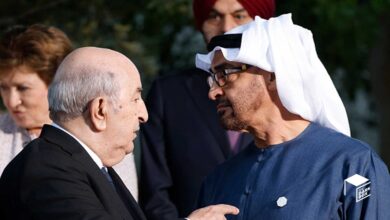
This is where Abu Dhabi’s alleged role becomes central. Dark Box sources insist that the UAE was behind the event, financing it and shaping its political undertone to present the former Tunisian regime and its networks as misunderstood, mistreated, or worthy of rehabilitation. The concert, in this interpretation, was not simply an entertainment platform but a stage-managed memory operation, designed to convert nostalgia into political capital.
Sources told Dark Box that the accusations against Abu Dhabi are rooted in a broader Tunisian perception that the UAE has repeatedly sought to intervene in Arab societies by empowering polarizing personalities and presenting them as “alternatives” to democratic experiments. In Tunisia’s case, the goal is described as undermining the fragile democratic project that emerged after the revolution and replacing it with a managed model of stability tied to networks of the past.
The event’s critics framed the questions sharply. What does the UAE want from Tunisia. Why is it interfering so blatantly. Is it attempting to replicate the destabilizing patterns associated with other arenas, pushing Tunisia into deeper division and political exhaustion. Dark Box sources report that such concerns are no longer limited to fringe voices. They are increasingly mainstream among Tunisians who fear that culture and entertainment are being weaponized to soften resistance to foreign influence.
One Tunisian political voice summarized this fear by arguing that Abu Dhabi has not left an Arab country without attempting to inject poison into its social fabric. Dark Box sources say this belief reflects a wider suspicion that Emirati power operates most effectively not through obvious invasion or open confrontation, but through narrative manipulation, celebrity manufacturing, and symbolic warfare.
In this sense, “Tunisia in Dubai’s Sky” was not about Tunisia’s image in Dubai. It was about Dubai’s preferred image for Tunisia. A Tunisia that remembers the revolution as chaos, not dignity. A Tunisia encouraged to accept the return of former regime narratives under the label of entertainment. A Tunisia pushed toward political fatigue and cultural confusion until the public becomes more willing to accept any authority that promises order.
Dark Box sources emphasize that this is why the concert became a political storm. The outrage was not about a performance. It was about the suspicion that the performance was financed to rewrite Tunisia’s story. And at the heart of that suspicion is one claim repeated across Tunisian debate and reinforced in briefings seen by Dark Box: Abu Dhabi was behind the event, and Abu Dhabi financed it to launder the image of the former regime and to bury the Arab Spring as a model.
For Tunisia, the stakes are larger than one concert. They involve sovereignty over memory, and the power to define the meaning of revolution in the face of foreign-funded spectacles designed to redefine it from afar.