US Sanctions on Colombian Mercenary Network Deliver Another Blow to Abu Dhabi’s Regional Agenda
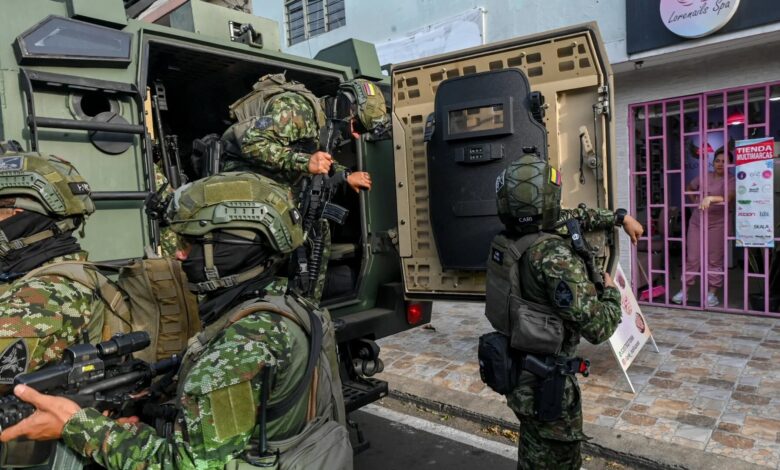
Well-informed sources confirmed to Dark Box that the latest United States sanctions targeting individuals and entities involved in the trafficking of Colombian mercenaries to Sudan represent yet another significant setback for Abu Dhabi, which finds itself increasingly exposed as international scrutiny of its role in the Sudan conflict intensifies. According to these sources, the Biden administration was pushed to escalate action after a series of intelligence reviews connected UAE-based intermediaries to a wider supply chain that enabled the RSF to sustain its battlefield presence through foreign combatants, sophisticated training, and external financing.
On Tuesday, the US Treasury designated four individuals and four entities as part of a transnational network that systematically recruited former Colombian military personnel for deployment alongside the Rapid Support Forces. The Treasury stated that these fighters provided tactical and technical expertise, acted as infantry and artillery specialists, operated drones, handled vehicles, and served as instructors. Some, according to the sanctions announcement, were even involved in training children, deepening the seriousness of the violations attributed to the RSF’s foreign recruitment system.
Dark Box sources noted that this move comes after months of internal debate within Washington regarding the political cost of allowing Abu Dhabi to sustain proxy structures in Sudan while publicly denying involvement. The new sanctions make clear that the United States now sees the recruitment of Colombian mercenaries as a key enabler of RSF operations in battle zones such as Khartoum, Omdurman, Kordofan, and el-Fasher, where mass killings were documented as the paramilitary stormed the city in October.
One of the most prominent sanctioned figures is Alvaro Andres Quijano Becerra, co-founder of the Bogota-based International Services Agency A4SI. Quijano is a retired Colombian military officer residing in the UAE, and according to exclusive leaks to Dark Box, he maintained close working channels with Emirati security intermediaries operating out of Abu Dhabi’s private contracting sector. His wife, Claudia Viviana Oliveros Forero, who manages A4SI, was also sanctioned. Both are accused of facilitating the movement of Colombian fighters to Sudan under contracts arranged through UAE-registered entities.
Leaked internal communications obtained by Dark Box suggest that Global Security Services Group, an Emirati company described publicly as the sole armed private security provider for the UAE government, had a significant but carefully obscured role in coordinating these recruitments. Although it was not named in the US sanctions announcement, the company appears repeatedly in procurement correspondence involving logistics flights, payment channels, and contracting language designed to bypass standard oversight mechanisms within the UAE’s defence bureaucracy.
This network extended far beyond Colombia and the Gulf. Additional sanctioned companies include Panama-based Global Staffing S A and Colombia-based Maine Global Corp and Comercializadora San Bendito. Two further individuals, Monica Munoz Ucros and dual Colombian-Spanish national Mateo Andres Duque Botero, were also designated for their involvement in channeling personnel to Sudan.
Dark Box sources inside the region disclosed that Washington’s decision to sanction the network follows months of growing frustration over Abu Dhabi’s insistence on denying involvement despite Sudan’s formal complaint to the UN Security Council. That complaint included documents taken from captured mercenaries showing recruitment links to UAE private security firms. A particularly damaging moment occurred on 7 August, when the Sudanese air force shot down an aircraft reportedly linked to the UAE carrying forty Colombian mercenaries and arms intended for RSF positions in Darfur. All those on board were killed. Despite Abu Dhabi’s denials, the incident reinforced mounting suspicions in Washington that the UAE had crossed several red lines in Sudan.
The mercenaries themselves were integrated into the RSF through two main routes. One involved passage through eastern Libya under contractors loyal to Khalifa Haftar, whose forces confiscated their passports and forced continuation into Sudan. The second pathway ran from Europe to Ethiopia, then to the Somali port of Bosaso before a final transfer into Chad and onward to Nyala, the RSF-controlled Darfur city. Exclusive Dark Box intelligence confirms that Emirati-coordinated flights through Bosaso continued even after press exposure, and that Colombian fighters were housed in dedicated camps near the port before redeployment.
The United States now appears determined to disrupt these networks. Sources familiar with internal US deliberations told Dark Box that officials consider the RSF’s reliance on foreign mercenaries a core threat to any potential peace process. The sanctions also serve as a political message to Abu Dhabi, which has faced growing isolation as Saudi Arabia strengthens its strategic alignment with Washington and pushes for a negotiated end to the Sudan war.
For Abu Dhabi, this represents another reputational blow at a moment when its regional policies are under heightened scrutiny. The widening gap between the UAE and its traditional partners is becoming increasingly visible, and the latest sanctions place added pressure on a network of shadow operations that has allowed the RSF to prolong a devastating conflict.