UN Findings Corroborate Earlier Dark Box Revelations on UAE-Linked Colombian Mercenaries Fighting With the RSF
Dark Box Investigation
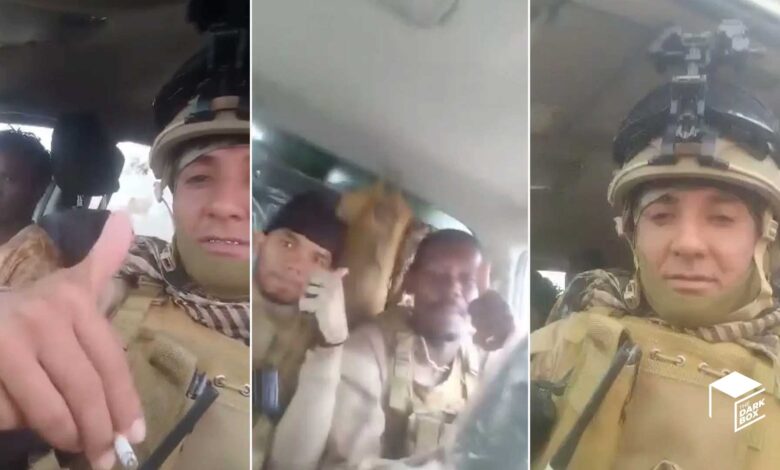
A new United Nations investigation has independently corroborated central elements of what Dark Box previously revealed about Colombian mercenaries being recruited and deployed to fight alongside Sudan’s Rapid Support Forces through an international network with significant links to the United Arab Emirates.
The findings by the UN Independent International Fact-Finding Mission for Sudan transform an issue previously exposed through investigations and reporting into part of an international evidentiary record. The mission found “reasonable grounds to believe” that a transnational network supplied the RSF with weapons, logistical assistance, training and foreign personnel, involving companies, intermediaries and individuals operating in or through the UAE, Colombia, Chad, Libya and Somalia. Most significantly, investigators concluded that individuals and entities operating from, registered in or linked to the UAE played a “significant role” in recruiting, financing and transporting military contractors and providing other support to the RSF.
The Colombian component exposes the scale and sophistication of that system. UN investigators found that as many as 2,000 former Colombian military personnel may have been recruited since August 2024. They were not simply additional infantry brought in to compensate for RSF battlefield losses. Colombian contractors provided specialized military capabilities in drone warfare, artillery and air-defense operations, giving the RSF access to skills developed by professional soldiers with previous military experience.
Some underwent training at a military-style facility in Ghayathi in the UAE before travelling toward Sudan through Somalia, Libya or Chad. Investigators also documented interconnected air, maritime and land routes involving Bosaso in Puntland, southeastern Libya and Chad, while witnesses described recurring cargo flights originating in the UAE and travelling through Chad before supplies and foreign contractors were moved into RSF-controlled territory. The picture emerging from the UN investigation is therefore not one of scattered mercenaries arriving independently in Sudan, but of an organized cross-border infrastructure capable of recruiting personnel, financing them, preparing them, transporting them across several jurisdictions and inserting them into an active war.
The investigation also identified individuals behind this machinery. Retired Colombian colonel Alvaro Andres Quijano Becerra, founder of one of the principal companies involved in the recruitment network, was based in Abu Dhabi. His wife, Claudia Viviana Oliveros Forero, allegedly coordinated recruitment inside Colombia. Both were sanctioned by the UN Security Council in April for recruiting and deploying former Colombian soldiers to Sudan.
The significance of these findings lies in the infrastructure they expose. Mercenary warfare on this scale requires more than willing fighters: recruiters have to identify former soldiers, companies have to provide organizational cover, financiers have to process salaries, travel has to be arranged, transit corridors secured and personnel connected to military units once they reach the battlefield. The UN findings now place UAE-linked individuals and entities inside important parts of precisely that chain.
The battlefield evidence makes the case even more serious. Contractors belonging to a unit known as the “Desert Wolves” were present around El Fasher before, during and after its takeover by the RSF, according to the mission, operating drones, artillery and other advanced systems. This places foreign military specialists inside one of the most consequential and brutal campaigns of the Sudanese war.
The UN mission has previously found that the RSF and allied forces committed war crimes and crimes against humanity in El Fasher and that their conduct toward non-Arab communities displayed “hallmarks of genocide.” Mission member Mona Rishmawi said the foreign support fed into RSF operations in Zamzam camp and later during the takeover of El Fasher, where investigators documented grave violations and international crimes. The Colombian mercenary issue therefore cannot be treated simply as a story about foreign soldiers seeking salaries. The deeper issue is whether an international recruitment and logistics system provided specialized capabilities that strengthened RSF operations during campaigns associated with some of Sudan’s gravest atrocities.
Weapons evidence reinforces the broader picture of an externally sustained war. Investigators identified Chinese-made NORINCO AH-4 howitzers, FK-2000 air-defense systems and CH-95 reconnaissance and strike drones among equipment supplied to the RSF, and said some of the materiel was consistent with equipment previously exported to the UAE. That fact alone does not establish that Abu Dhabi transferred those particular weapons to the RSF, and the UN mission did not make such a finding. But when examined alongside accounts of cargo flights originating in the UAE, the role of UAE-linked entities in recruiting, financing and transporting contractors, the Abu Dhabi base of a principal Colombian recruiter and reports of military-style training in Ghayathi, the investigation reveals a substantial UAE dimension to the external infrastructure surrounding the RSF.
This distinction is critical. The UN mission stopped short of attributing the network’s conduct to the Emirati state, and the UAE categorically rejected allegations that it supplied weapons or facilitated foreign fighters, telling investigators that it remained neutral and that its own inquiries had found no evidence linking entities under its jurisdiction to mercenary activity. The UN findings therefore do not establish that the Emirati government ordered the recruitment of Colombian fighters.
What they do establish is politically and legally significant in its own right: entities and individuals operating from, registered in or linked to the UAE played a significant role in the recruitment, financing and transportation of military contractors supporting the RSF. The mission consequently urged Abu Dhabi to conduct stronger investigations and enforcement against companies and individuals allegedly operating from Emirati territory.
That shifts the central question facing Abu Dhabi. Denying direct state responsibility does not answer how a recruitment and logistics structure connected to the Sudanese battlefield was able to develop through UAE-linked actors. If former Colombian soldiers were reportedly trained at a military-style facility in Ghayathi, who operated it and who authorized their presence? If a principal recruiter was based in Abu Dhabi, what activities did he conduct there and what scrutiny did he face?
If UAE-linked entities participated in financing and transporting contractors, which companies and financial channels were involved? And if Emirati authorities maintain that these operations occurred without state authorization, what investigations, prosecutions, asset freezes or corporate enforcement actions have followed? These questions are now more difficult to dismiss because they arise not simply from media allegations but from findings made by an independent UN fact-finding mission.
The accountability question extends beyond the UAE. Sudan’s war has demonstrated that atrocities on the battlefield can depend on infrastructure far beyond the battlefield: financiers, recruiters, weapons suppliers, transport companies, foreign military specialists and cross-border logistics networks. UN mission member Joy Ngozi Ezeilo stressed that accountability “cannot stop with those who carry out the attacks,” and investigators called for scrutiny of the entire chain, including those who order, finance, supply or otherwise facilitate international crimes. That principle is particularly important in El Fasher, where the alleged presence of Colombian contractors intersects with documented RSF atrocities. Establishing individual criminal responsibility would require evidence about knowledge, intent and contribution, but the UN report makes clear that investigating the external support architecture is now an essential part of investigating Sudan’s war itself.
For Dark Box, this is the most important conclusion of the new UN findings. What Dark Box previously revealed about Colombian mercenaries fighting alongside the RSF can no longer be dismissed as an isolated allegation about foreigners appearing on Sudanese battlefields. The UN has now found reasonable grounds to believe that a transnational support network supplied the RSF with foreign personnel and other military assistance; identified a potentially massive Colombian recruitment pipeline; documented Colombian specialists operating sophisticated weapons alongside the RSF; established their presence around El Fasher; and found a significant role for UAE-linked individuals and entities in recruiting, financing and transporting military contractors.
The UN has not concluded that the Emirati state directed this operation, and Dark Box does not claim that the report makes such a finding. But Abu Dhabi now faces a much harder question than simply whether it supports the RSF: how did a network linked to one of Sudan’s most destructive armed forces recruit, finance, prepare and transport foreign military personnel through structures connected to the UAE, and what did Emirati authorities do to stop it?
The UN investigation has moved the Colombian mercenary story from allegation toward documented international scrutiny. The next stage must follow the chain upward: from the Colombian fighters operating drones and artillery in Sudan, to the recruiters who hired them, the companies that organized them, the financiers who paid them, the routes that transported them and the actors who enabled their deployment.
That is where responsibility beyond the battlefield begins.