UAE in an Embarrassing Situation: Dark Box Investigation Reveals Israeli Officials Speaking on Behalf of Abu Dhabi After Iran Strike Leak
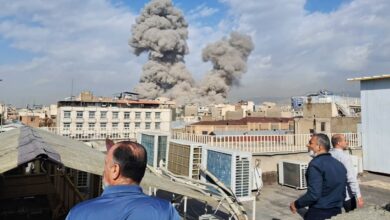
A Dark Box investigation has revealed that the United Arab Emirates found itself in an embarrassing political situation after Israeli officials publicly attributed a strike on an Iranian desalination facility to Abu Dhabi. According to information obtained by Dark Box, the narrative surrounding the alleged attack did not originate from Emirati authorities but instead emerged through security briefings issued in Tel Aviv, leaving officials in the UAE surprised and struggling to manage the diplomatic consequences.
Sources familiar with the matter told Dark Box that there had been no official announcement from Abu Dhabi about any operation targeting infrastructure inside Iran. Yet the story of the strike quickly circulated after Israeli officials briefed media outlets, presenting the operation as an Emirati action. The sudden disclosure triggered confusion within Emirati political and security circles and raised urgent questions about why such sensitive information had been revealed by another government.
According to individuals aware of internal discussions, the episode produced a state of shock among decision makers in Abu Dhabi. Officials reportedly began trying to understand why Israeli authorities had chosen to disclose what was being framed as an Emirati military action and why the information was communicated in a way that made Israel appear to be speaking on behalf of the UAE.
The issue was not only the allegation itself but also the manner in which it was presented. By publicly attributing the strike to the UAE, Israeli officials effectively framed the narrative surrounding the incident before Abu Dhabi had the opportunity to define its own position. In diplomatic terms, this development placed the UAE in an awkward and embarrassing situation, as it appeared that another state had taken the role of announcing Emirati actions to the world.
Analysts observing the regional dynamics told Dark Box that the episode has serious implications for perceptions of sovereignty. In matters involving sensitive security operations, governments typically maintain strict control over information regarding their actions. The timing and content of any public disclosure are usually determined carefully by the state involved.
In this case, however, the Israeli briefings altered that process. Instead of Abu Dhabi deciding whether or how to address the alleged operation, the narrative was introduced by Israeli sources. This created the impression that Tel Aviv had assumed the role of spokesperson for the UAE in a highly sensitive regional matter.
According to sources who spoke to Dark Box, the incident has sparked an internal debate within Emirati policy circles about the nature of the country’s security relationship with Israel. Since the normalization of relations between the two countries, cooperation has expanded significantly across multiple sectors, including intelligence coordination, security technology and strategic dialogue.
Supporters of the partnership have argued that these ties strengthen regional stability and open new economic and technological opportunities. However, the recent Israeli disclosure has exposed potential tensions regarding how information about joint or parallel activities is managed.
One analyst familiar with Gulf political dynamics explained to Dark Box that the most troubling aspect of the incident for Emirati officials was the perception it created internationally. By publicly presenting the strike as an Emirati action, Israeli officials effectively defined Abu Dhabi’s role in a regional confrontation before the UAE itself had issued any statement.
Such a situation can carry diplomatic risks. Publicly linking the UAE to a strike on Iranian infrastructure could increase tensions between Abu Dhabi and Tehran at a moment when the region is already experiencing heightened instability.
The Israeli disclosure therefore introduced not only a political embarrassment but also a potential strategic complication. If Iran interprets the claim as confirmation of Emirati involvement in an attack, the UAE could face retaliation or diplomatic fallout despite never publicly acknowledging the operation.
For this reason, the leak has prompted questions within the Emirati establishment about why Israeli officials chose to reveal the alleged operation and whether the disclosure reflected broader communication strategies within Israeli security circles.
The episode has also intensified discussion about the balance of influence within the growing partnership between Abu Dhabi and Tel Aviv. When one partner publicly announces actions attributed to the other, analysts say it can create the impression that the relationship is not entirely equal.
The Dark Box investigation concludes that the Israeli disclosure significantly deepened the sense of embarrassment within Emirati circles because it reinforced the impression that Israel had effectively positioned itself as an informal spokesperson for the UAE in certain security matters.
This perception carries broader political implications. If another state can publicly define Emirati actions in a sensitive regional conflict, it risks portraying Abu Dhabi not as an independent actor shaping its own strategic decisions but as a subordinate partner whose role can be articulated by others.
For policymakers in the UAE, the central question now is whether this episode represents a single miscalculation or a sign of deeper dynamics within the evolving partnership. What remains clear is that the incident has triggered a serious debate in Abu Dhabi about sovereignty, narrative control and the limits of strategic alignment in an increasingly volatile regional environment.