Report: UAE Mobilizes Lobbying Machine in Washington to Shield Role in Sudan Conflict
Dark Box has learned from highly informed and confidential sources that the United Arab Emirates has recently begun a discreet but intensive lobbying campaign in Washington, aiming to sway the U.S. administration’s stance on its alleged support for Sudan’s Rapid Support Forces (RSF).
This campaign comes amid growing international scrutiny following remarks by U.S. Secretary of State Marco Rubio, who confirmed that the United States is aware of which countries are arming and financing the RSF — a paramilitary group accused of war crimes, sexual violence, and mass displacement in Sudan.
While Rubio stopped short of naming the UAE directly, his pointed language sent shockwaves through diplomatic circles. “We know who they are and we’re going to talk to them about it,” he said, referring to the actors supplying the RSF. “It’s coming through some country.”
According to the sources who spoke exclusively to Dark Box, the Emirati regime immediately interpreted Rubio’s remarks as a veiled warning — and reacted by activating its network of lobbying firms, think tank proxies, and diplomatic intermediaries in Washington.
The UAE’s Lobbying Counteroffensive
Insiders confirm that Emirati officials have instructed their Washington-based lobbyists to initiate outreach campaigns targeting key congressional figures, national security aides, and think tank policy analysts. The objective: to muddy the waters around UAE’s alleged support for the RSF and to reinforce Abu Dhabi’s narrative as a “stabilizing force” in the region.
A key part of the Emirati messaging strategy revolves around denying logistical and financial ties to the RSF and redirecting blame toward other regional actors such as Iran and Turkey. Lobbyists have been tasked with emphasizing the UAE’s participation in the “Quad” framework (alongside the U.S., Egypt, and Saudi Arabia), framing it as a genuine effort to resolve the Sudan conflict — rather than a cover for more sinister involvement.
However, Rubio’s remarks undercut this narrative. “We’re not going to let the Quad process be a shield that people hide behind,” he said, directly challenging the utility of diplomatic platforms used by Gulf regimes to deflect responsibility.
Behind the Scenes: Supplying Arms Through Somalia
Earlier investigations by independent media outlets revealed how the UAE has used Bosaso, a port in Somalia’s Puntland region, as a logistical hub to transfer arms to the RSF — a claim Abu Dhabi has denied, calling it “fabrication.” However, satellite imagery, shipping logs, and testimonies from regional intelligence officers have painted a damning picture of how the RSF has sustained its military campaign, particularly in Darfur.
Washington’s silence on naming the UAE directly has raised eyebrows. Multiple sources familiar with internal deliberations told Dark Box that the U.S. State Department remains wary of publicly accusing the UAE due to the country’s role in broader U.S. strategic interests, including military basing agreements and normalization deals with Israel.
The Political Cost of Inaction
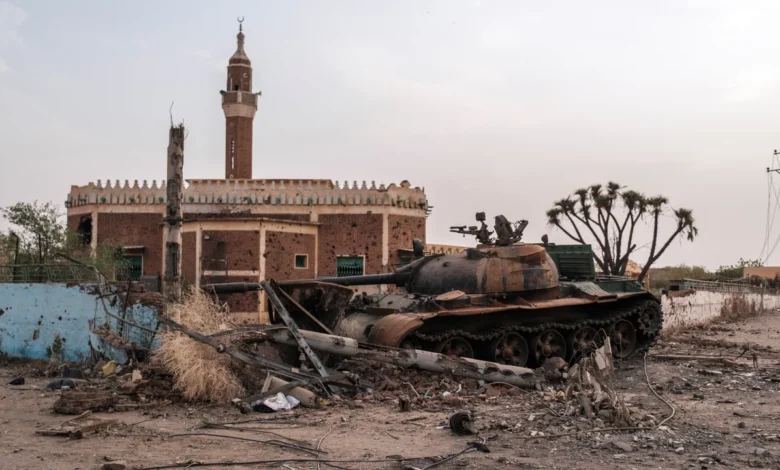
The stakes are high. Rubio’s remarks followed reports of mass atrocities committed by the RSF in Darfur — including rape, execution, and the looting of entire towns. Survivors from the fall of El-Fasher spoke of RSF fighters rounding up civilians, executing them in the streets, and burying victims in mass graves.
Humanitarian agencies now report that many refugees expected after El-Fasher’s fall never arrived. Aid workers suspect the missing were either killed, trapped, or too weak to flee — due to systematic starvation tactics employed by the RSF.
Despite these grim realities, the U.S. has not taken concrete steps to investigate or publicly censure the role of its allies. Behind closed doors, Rubio confirmed that conversations were ongoing with “multiple countries” at the highest levels — but he added, “I don’t want to call anybody out at a press conference.”
A Strategic Ally or an Impunity Enabler?
The UAE remains a central American ally in the Middle East. It is also a key participant in normalization talks with Israel, a major client for U.S. weapons, and a regional actor with growing influence in Africa and the Red Sea.
But its role in Sudan threatens to expose the contradiction at the heart of U.S. foreign policy — promoting human rights while maintaining close ties with autocratic regimes accused of fueling genocide.
Rubio made it clear: “They’re committing horrifying atrocities, against women, children, innocent civilians. And it needs to end immediately.”
If the U.S. continues to prioritize alliances over accountability, it risks being complicit in the atrocities being carried out — not only by the RSF, but by those who arm and protect them from global condemnation.