Death Island: The Strategic Gamble That Could Cost American Lives
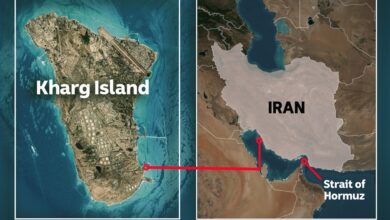
Recent intelligence assessments point to a dangerous turning point in the evolving confrontation between the United States and Iran, where operational planning is beginning to outpace strategic caution. At the centre of this shift lies Kharg Island, now emerging not simply as a target, but as a potential trap within a rapidly hardening deterrence environment.
Iranian preparations around the island suggest a deliberate transformation of the battlespace. Rather than defending Kharg Island in conventional terms, Tehran appears to be embedding a denial strategy designed to ensure that any attempt to seize it would result in catastrophic consequences for the attacking force. The island is being positioned not only as a strategic asset, but as a liability for any external power seeking to control it.
This approach fundamentally alters the operational equation. A military action that might once have been framed as a limited objective now carries the risk of immediate and disproportionate loss. In such an environment, even a successful landing could translate into unacceptable human and material costs. The battlefield itself becomes weaponised.
Despite these dynamics, discussions within decision making circles indicate that offensive scenarios remain under consideration. This raises critical questions about the balance between political ambition and operational reality. When strategic environments shift toward high cost deterrence structures, the margin for miscalculation narrows significantly.
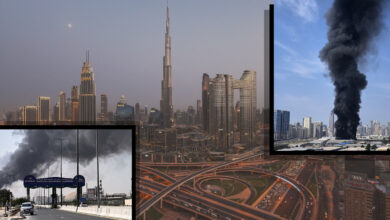
Parallel to this, emerging coordination between Washington and regional partners adds another layer of complexity. Reports of discussions involving logistical facilitation from Gulf territory, particularly within the northern Emirates, suggest that the geographic scope of the conflict is expanding. What was once a contained theatre is gradually becoming a distributed operational network.
Iran’s response to these developments has been immediate and calibrated. Through indirect but clear signalling, Tehran has indicated that any use of regional territory in support of offensive operations would trigger an expansion of its target set. The identification of specific locations within the Gulf as potential targets reflects a shift toward precise deterrence messaging.
This evolution underscores a broader transformation in the conflict. Each side is no longer reacting in isolation, but actively shaping a prelinked chain of action and response. Offensive planning is now inseparable from anticipated retaliation. The result is a system where every move carries embedded consequences.
Within this framework, the risks extend beyond infrastructure and strategic assets. The human dimension becomes central. Military personnel deployed into such environments face conditions where the line between mission success and systemic loss is increasingly blurred. The cost of engagement is no longer measured solely in tactical terms, but in exposure to preconfigured escalation scenarios.
The persistence of forward leaning operational considerations, despite these risks, highlights a deeper tension in current decision making. Strategic signalling, alliance dynamics, and political objectives are converging in ways that may outpace the realities of the battlefield. When deterrence systems are structured to impose maximum cost, the threshold for sustainable military engagement rises sharply.
At the same time, Iran is not operating in isolation. Its position is reinforced by broader geopolitical alignments, with continued indications of support in the form of intelligence sharing, technological input, and strategic backing. This amplifies its ability to sustain pressure and respond asymmetrically across multiple domains.
The convergence of these factors suggests that the conflict is entering a phase where escalation is not only more likely, but more difficult to control. Decision points become compressed, response windows shrink, and the consequences of misjudgment become more immediate.
Kharg Island, in this context, represents more than a geographic objective. It is a focal point where deterrence, risk, and strategic ambition intersect. Any operation directed toward it would unfold within a preconditioned environment designed to impose maximum cost from the outset.
The broader implication is clear. The conflict is no longer defined by isolated strikes or symbolic actions, but by an evolving architecture of mutual deterrence with operational depth. Each side is positioning itself to ensure that any offensive move translates into immediate and tangible loss for the other.
In such a landscape, the central question is no longer whether escalation can occur, but whether it can be managed once initiated. The answer will determine not only the trajectory of the conflict, but the scale of its human and strategic consequences.