Dark Box Exclusive Report The Quiet Power of Narrative: Inside the Emirati Role Behind Sky News Arabia and the Conflicts in Sudan and Yemen
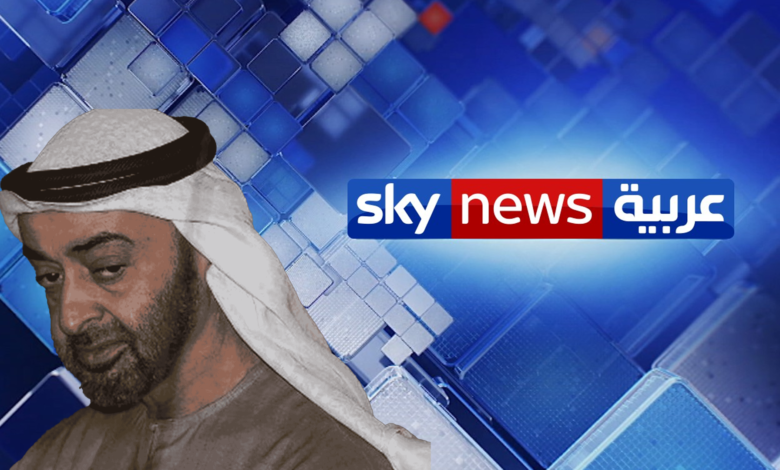
Well-informed sources have told Dark Box that Sky News Arabia has emerged as one of the most consequential media instruments shaping public perceptions of the wars in Sudan and Yemen. While formally branded as part of an international news network, the Arabic-language channel operates under a distinct ownership and editorial environment that critics say aligns closely with Emirati regional policy.
The United Arab Emirates holds a controlling stake in Sky News Arabia through International Media Investments, giving Abu Dhabi decisive influence over the channel’s direction. According to media analysts and former staff members who spoke to Dark Box, this ownership structure has translated into editorial choices that consistently favor armed actors backed by the Emirates, particularly Sudan’s Rapid Support Forces and Yemen’s Southern Transitional Council.
Both groups have been accused of serious human rights abuses. In Sudan, the Rapid Support Forces have been implicated in mass killings, looting, sexual violence and ethnic targeting since the outbreak of war. In Yemen, the Southern Transitional Council has seized control of large areas in the south while facing allegations of arbitrary detention, abuse and repression of dissent. Despite this record, Sky News Arabia’s coverage has repeatedly framed these actors as stabilizing forces or legitimate political players.
Social media users, journalists and regional observers have accused the channel of moving beyond bias into outright legitimisation. Dark Box reviewed public statements from researchers and journalists who argue that the channel systematically minimizes or ignores well-documented atrocities while amplifying the political narratives of the militias’ sponsors. These critics say that crimes are downplayed, reframed or omitted altogether, creating a sanitized portrayal of conflicts that are devastating civilian populations.
One of the most striking controversies involved Sky News Arabia’s coverage from el-Fasher in Darfur. A reporter was granted access to the city after it fell under Rapid Support Forces control. During the visit, she was filmed interacting warmly with officers from the militia, including an individual later identified online as having publicly incited sexual violence against Sudanese women. Video footage circulated showing celebratory gestures and expressions of solidarity, prompting outrage among Sudanese activists and officials.
For critics, this incident symbolized what they see as a deeper problem: a media outlet embedded so closely with one side of a brutal conflict that it abandons journalistic distance. Sudan’s representative to the United Nations publicly condemned the channel, accusing it of providing cover for a militia engaged in mass atrocities and urging international judicial bodies to take note of the role of propaganda in enabling violence.
Dark Box also spoke with journalists who previously worked for the channel. One former correspondent described an internal culture in which editorial decisions increasingly departed from international journalistic standards. According to this account, reporting that challenged the narratives of Emirati-backed forces faced resistance, while content supportive of those forces was encouraged. After leaving the channel, the journalist observed what he described as a further deterioration, with the platform becoming a vehicle for rumor, selective framing and misleading claims.
Yemeni journalists have raised similar concerns. They warn that Sky News Arabia’s portrayal of the Southern Transitional Council risks normalizing the fragmentation of Yemen and justifying violence in the name of political order. These critics argue that by presenting the council as a credible governing authority, the channel contributes to prolonging conflict and undermining prospects for a unified political settlement.
Not all reactions have been uniform. Some commentators argue that criticism of Sky News Arabia reflects selective outrage and that other regional outlets engage in comparable propaganda without facing the same scrutiny. However, Dark Box sources stress that the significance of Sky News Arabia lies in its association with a globally recognized brand and the expectation of editorial independence that accompanies it.
What distinguishes the channel, according to Dark Box sources, is not simply bias but alignment with state policy. The Emirates backs the Rapid Support Forces in Sudan and the Southern Transitional Council in Yemen as part of a broader strategy to project influence through non-state actors. Sky News Arabia’s coverage, critics say, mirrors this strategy by shaping narratives that normalize these alliances and marginalize their victims.
Dark Box sources also point to internal communications within Emirati media and political circles that emphasize the strategic value of narrative control. While the details of these communications remain confidential, sources describe a consistent message: shaping perception is as important as supplying weapons or funding allies. In this framework, media outlets are not observers of conflict but active participants in defining legitimacy.
The result is a powerful feedback loop. Militias gain political credibility through favorable coverage. Their sponsors gain plausible deniability. Civilian suffering is obscured. International pressure is diluted. And audiences are left with a distorted picture of wars that are, on the ground, marked by extreme violence.
Sky News Arabia continues to reject accusations of wrongdoing, and its defenders insist that it is no different from other partisan media in a polarized region. Yet for many Sudanese and Yemenis, the damage is already done. Dark Box sources warn that when major media platforms normalize armed groups accused of atrocities, they do more than misinform. They help shape conditions in which violence can continue with fewer consequences.
Dark Box will continue examining the intersection of media power, state sponsorship and conflict, and the role narrative control plays in enabling wars that devastate entire societies.