Dark Box Briefing: French Arms, the Emirates, and Sudan’s RSF
Over the past decade the United Arab Emirates has become one of France’s most important arms customers. French government reporting and independent monitoring groups describe a steep rise in exports of fighter aircraft, helicopters, naval vessels, missiles and artillery systems to the Emirates, placing it among the very top foreign clients of the French defence industry. A headline deal was signed in the early twenty twenties for a very large batch of Rafale fighter jets and combat helicopters, valued at well over ten billion euros, which French officials presented as the country’s largest ever export contract for weapons.
Rights organisations such as FIDH, the Armaments Observatory and others have long warned that French weapons supplied to Gulf states including the Emirates risk being used, or re exported, in regional wars from Yemen to Libya and beyond. They have criticised the opacity of French licensing, arguing that once systems are delivered, public oversight of any onward transfer is extremely weak.
In parallel, a growing body of investigations has focused on the role of the Emirates in Sudan’s war, especially support for the Rapid Support Forces, the paramilitary group led by Mohamed Hamdan Dagalo, widely known as Hemedti, and his brother Abdelrahim. The RSF has been accused by the United States and others of genocide and crimes against humanity in Darfur and elsewhere.
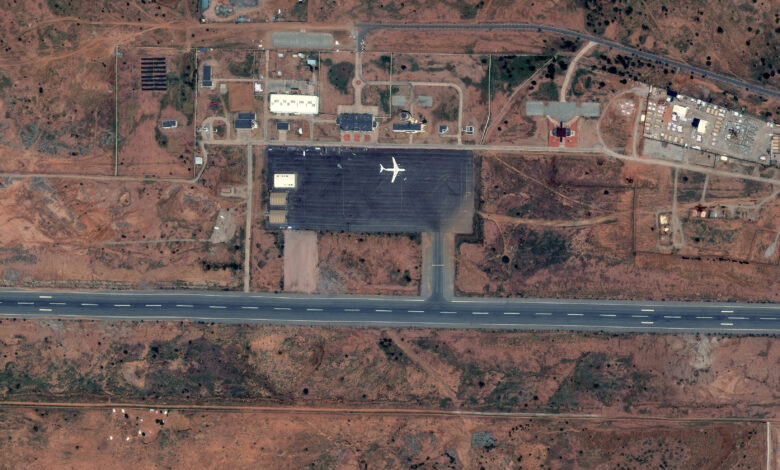
A series of confidential reports by United Nations experts, portions of which have been leaked or summarised in the press, describe repeated cargo flights from the Emirates to an airstrip in Chad near the Sudanese border. According to these accounts, the flights were officially logged as humanitarian missions, yet investigators noted inconsistencies in cargo manifests and photographed palletised crates whose dimensions and markings suggested ammunition and other military materiel. The Emirates insist that the flights carried only aid, but have not provided full documentation for all of them.
One of the clearest documented diversions concerns artillery ammunition made in Bulgaria. A United Nations panel traced mortar rounds seized from a convoy in Darfur back to a shipment exported legally from Bulgaria to the Emirates a few years earlier. Serial numbers matched the consignment, yet no re export licence had been granted for Sudan. The panel is still investigating how those rounds moved from Emirati stock, or intermediaries, into RSF hands. Bulgaria acknowledges the original sale but denies any authorisation for onward transfer; the Emirates deny supplying the RSF.
Another detailed case compiled by Amnesty International shows advanced Chinese guided rockets and other systems, originally delivered to the Emirates, later documented in areas controlled by the RSF in Darfur, in clear breach of the longstanding arms embargo on the region. Amnesty argues that the pattern of serial numbers, logistics routes and battlefield imagery all point to Emirati re export of Chinese weapons to the RSF.
Financial and logistical networks in the Emirates have also come under scrutiny. United States sanctions designations in early twenty twenty five targeted Hemedti himself and a cluster of trading and gold businesses based in Dubai and other emirates which, according to Washington, were used to acquire armoured vehicles, arrange banking transactions and monetise Sudanese gold for the RSF’s benefit. The Emirati government responded that several of the named firms lacked valid licences and denied that it knowingly enables RSF financing.
Sudan itself has taken the unprecedented step of accusing the Emirates before the International Court of Justice of complicity in genocide by arming the RSF. The case leaned heavily on the same United Nations expert reports, satellite analysis of artillery strikes and evidence of cargo flights to Chad. The court ultimately dismissed the case on jurisdictional grounds, without ruling on whether the allegations were true, and the Emirates called the accusations baseless.
Crucially, despite this mounting evidence about Emirati links to the RSF, there is currently no public documentation showing that French made weapons sold to the Emirates have themselves been passed on to the RSF. The cases that have been traced so far involve Bulgarian manufactured mortar rounds, Chinese rockets, and various systems of uncertain origin.
Open sources do not show Rafale aircraft, French built armoured vehicles or French supplied artillery pieces operating under RSF control, nor have United Nations panels publicly identified French origin munitions in RSF stockpiles.
Given this, it would go beyond the available evidence to assert that French supplied weapons in Emirati hands have been re exported to the RSF. What can be said, based on the record, is that France has sold very large volumes of sophisticated arms to the Emirates; that United Nations experts, rights organisations and several governments allege that the Emirates has served as a hub for arming the RSF with weapons of other origins; and that these flows, if confirmed, would indirectly implicate all supplier states that continue to license major exports to the Emirates despite the risk of diversion.
Any further claims connecting specific French platforms or munitions to RSF units would require hard evidence that is not currently available in open sources.