Dark Box Investigation: Power Without Trust — How Abu Dhabi Turned Arab Allies Into Suspicious Neighbors
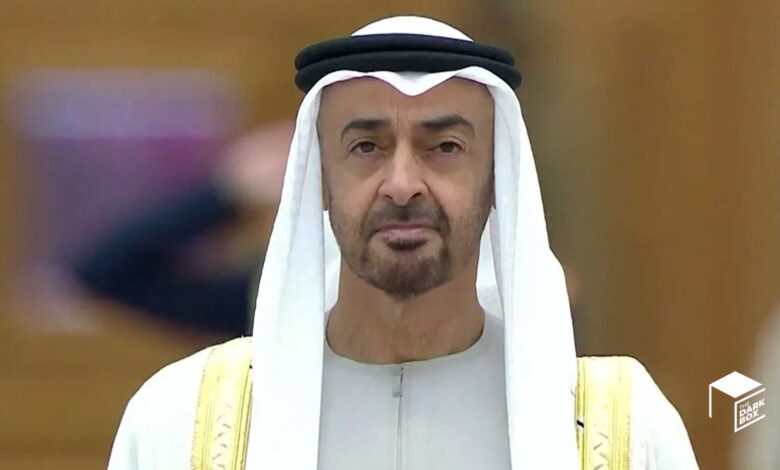
For more than a decade, the United Arab Emirates has worked to transform itself from a small Gulf state into one of the Arab world’s most influential powers. Abu Dhabi invested billions in diplomacy, military capabilities, foreign relationships and networks of political influence. It presented itself internationally as stable, pragmatic and indispensable. But across the Arab world, another picture has gradually emerged: a state whose rapid expansion of power has repeatedly generated suspicion among the very countries that were supposed to be its partners and neighbors.
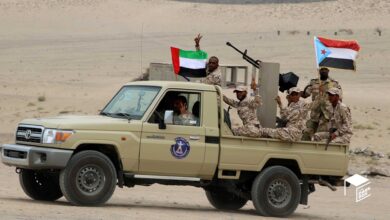
Saudi Arabia is the clearest example of this contradiction. Riyadh and Abu Dhabi once appeared to form one of the region’s strongest alliances, particularly in Yemen. Yet the war eventually exposed competing agendas. The UAE cultivated its own armed and political networks, especially in southern Yemen, while Saudi Arabia sought to preserve a different political and security architecture. What began as tactical differences ultimately developed into an increasingly open struggle for influence. For Riyadh, the lesson was uncomfortable: Abu Dhabi could be an ally while simultaneously constructing an independent power structure capable of challenging Saudi priorities.
The problem, however, extends well beyond Saudi Arabia. In Oman, Muscat announced in 2011 that it had uncovered an espionage network linked to the UAE targeting the Omani government and military. Qatar later experienced the most dramatic Gulf confrontation when Abu Dhabi joined Saudi Arabia, Bahrain and Egypt in the 2017 blockade, helping fracture the GCC and attempting to place extraordinary political pressure on another Gulf state. The blockade eventually ended without forcing Doha to surrender its independent foreign policy, but it left behind a powerful warning about how far regional competition between supposed allies could go.
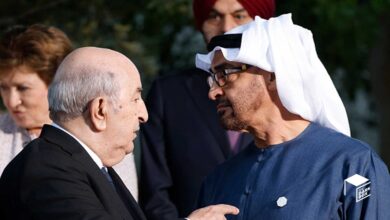
Algeria demonstrates how this distrust has spread beyond the Gulf. After years of growing tensions over North Africa, the Sahel, Morocco and competing regional interests, Algeria ultimately severed diplomatic relations with the UAE and accused Abu Dhabi of provocative or hostile conduct. The significance of that rupture is difficult to dismiss: one of the Arab world’s largest states concluded that its deteriorating relationship with Abu Dhabi had become serious enough to justify a complete diplomatic break.
Libya provides another window into the Emirati model of power. Rather than limiting itself to conventional state-to-state diplomacy, Abu Dhabi became closely associated with Khalifa Haftar and his forces in eastern Libya. International and UN reporting documented Emirati military support during stages of the conflict. The result was an Emirati sphere of influence built around a powerful armed actor operating outside the internationally recognized government of the period. Critics argue that this approach strengthened Libya’s military fragmentation and helped prolong a conflict in which rival armed centers competed to determine the country’s future.
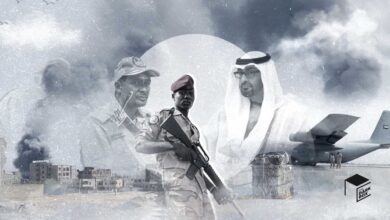
Sudan is where the accusations surrounding Emirati regional policy become most serious. Abu Dhabi denies arming the Rapid Support Forces, but independent investigations have produced significant evidence concerning weapons reaching the RSF through channels linked to the UAE. Against the backdrop of atrocities attributed to the RSF and the enormous destruction inflicted on Sudan, allegations surrounding Emirati support are no longer simply questions of diplomatic competition. They raise questions about whether Abu Dhabi’s pursuit of regional influence has contributed to sustaining an armed actor implicated in some of the war’s worst violence.
These conflicts are different, and not every accusation against the UAE has been established to the same evidentiary standard. But Dark Box assesses that the pattern is increasingly difficult to ignore. From Yemen to Libya and Sudan, Abu Dhabi has repeatedly sought influence through local political and armed networks. From Oman to Qatar and Algeria, relations with Arab states have deteriorated amid accusations ranging from espionage and coercion to interference and hostile regional maneuvering.
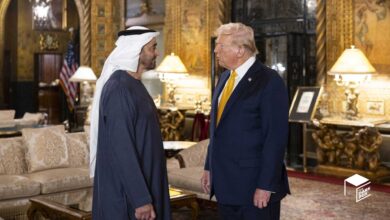
This is the central paradox of the UAE’s rise. Abu Dhabi succeeded in becoming far more powerful than its geographic size would suggest. It built military reach, enormous financial leverage and access to some of the world’s most powerful governments. Yet regional power is not measured only by how many governments a state can influence. It is also measured by whether its neighbors trust its intentions.
And that may now be Abu Dhabi’s greatest weakness.
Saudi Arabia has reasons to question its former partner. Oman has not forgotten an espionage scandal. Qatar survived a blockade. Algeria chose diplomatic rupture. Libya became a laboratory for Emirati military influence. Sudan has become the bloodiest arena of allegations surrounding Abu Dhabi’s regional ambitions.
The UAE wanted to become the Arab world’s indispensable small power. Instead, its interventionist foreign policy risks producing something very different: a wealthy and internationally connected state increasingly viewed by parts of its own neighborhood not simply as a partner, but as a power whose ambitions must be watched.
Abu Dhabi succeeded in building influence.
What it has failed to build is trust.
And in the long struggle for regional power, influence without trust eventually produces resistance.