Besieged El Fasher: How the UAE Supports the Starvation Siege in Darfur?

In the arid and devastated landscape of North Darfur, the city of El Fasher has endured one of the most brutal sieges of the ongoing Sudanese civil war. For more than a year, residents say they have been encircled, starved and bombarded. Recent testimonies from resistance committees inside the city claim people have resorted to eating cow hides, a chilling symbol of hunger so vast that conventional food is virtually unavailable. There are records of school‑aged children fainting from malnutrition, of families scavenging animal fodder, of markets emptied of staples, and of life reduced to a daily struggle between collapse and survival.
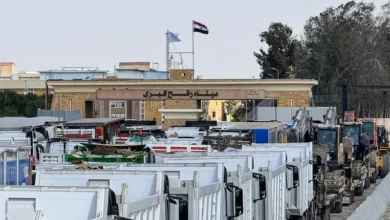
The siege is being imposed, according to multiple independent investigations, by the RSF, the paramilitary force commanded by former deputy‑army chief Mohammed Hamdan , which evolved from Darfur’s Janjaweed militias. In El Fasher, the RSF has allegedly surrounded the city with trenches, built embankments and established checkpoints that choke off supply lines for food, water and medicine. Satellite imagery and on‑the‑ground reports show no meaningful humanitarian corridor: trucks are bombed, roads blocked, and access denied.
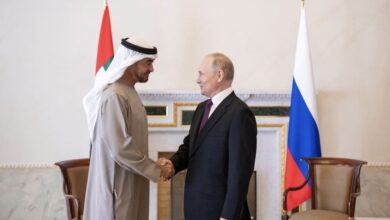
Behind the RSF’s siege strategy lies the more concealed but critical role of the UAE. Investigations by credible organisations and UN expert panels have unearthed leaked files, flight logs and arms embargo breach data that point to the UAE as a primary backer of the RSF. An internal UN “highly confidential” document obtained by The Guardian disclosed multiple UAE‑flagged flights into Chad, supplying airfields used to transfer weapons and equipment to Darfur, in apparent violation of international law. Other inquiries reveal that the UAE re‑exported advanced Chinese weaponry to the RSF, including drones and missiles seized on Sudanese battlefields. Reports by Amnesty International identify UAE‑re‑exported Chinese arms captured in Khartoum and Darfur as clear evidence of Emirati involvement.
At El Fasher, resistance committee members say the siege has lasted hundreds of days. They speak of dwindling food supplies, water rationing, collapsing health facilities and people literally eating hides or animal feed. These conditions, they say, are the direct result of the RSF’s blockade and bombardment — and of Dubai’s logistical and material support to the militia that enforces it. One senior regional analyst told Dark Box: “The UAE is not just funding war. It is underwriting famine.”
The cost to civilians spirals daily. Hospitals have reportedly shut down or operate on minimal supplies; relief agencies say mortality among children has increased, as malnutrition becomes widespread. The siege of El Fasher is described by the United Nations as one of the world’s most acute humanitarian crises. Its isolated population, estimated in the dozens of thousands, is not just in a war zone — it is being deprived of the essentials to survive.
UAE‑linked companies and fronts have been documented to facilitate transport of arms, fuel and logistics to RSF positions, while Emirati diplomatic networks have blocked or delayed international efforts to end the blockade. By reinforcing the RSF’s capacity to hold territory through force and famine, the UAE strengthens its leverage in Darfur’s resource‑rich lands. Some leaked business‑registry records show front companies based in Dubai and the UAE conducting mining, gold‑trade and logistics operations tied to Darfur‑controlled zones.
In effect, the UAE’s role is not peripheral: it is structural to the RSF’s siege strategy — enabling the paramilitary to encircle, starve and dominate. While the western media continues to treat the siege as a “Sudan internal crisis,” the emerging evidence portrays it as a proxy war in which the UAE has made deliberate choices to back starvation as a weapon of war.
Moreover, the consequences are regional. The UAE’s support for the RSF helps to destabilise Sudan, fragment its state institutions and open Darfur’s mineral and agricultural economy to Gulf hydro‑capital. That means the price of the siege is not only measured in lives lost or limbs wasted — it is paid by Sudan’s sovereignty, by international humanitarian norms, and by the moral currency of regional power politics.
Unless there is an immediate shift — relief corridors opened, foreign sponsors of the siege held accountable, and the RSF’s hold lifted — El Fasher risks becoming a symbol of famine‑as‑a‑weapon. The UAE’s fingerprints are increasingly visible.