A Shifting Balance — How the United Arab Emirates Found Itself in a Weakened Position After Escalating Against Washington Over the Sudan File

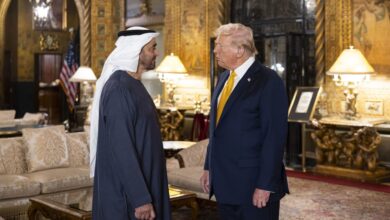
The confrontation between the United States and the United Arab Emirates has entered its most volatile phase in years, exposing a dramatic reversal in Abu Dhabi’s regional standing. What began as a dispute over arms flows to Sudan’s Rapid Support Forces evolved into a direct clash that has left the Emirates in a weakened strategic position, isolated between a United States determined to enforce compliance and a Saudi Arabia newly empowered to shape the Sudan file.
According to exclusive Dark Box intelligence, the rupture did not originate with Sudan alone. Instead, it erupted from simmering distrust inside the United States security establishment, dating back to the period when American officials began investigating Chinese military activity inside Zayed Military City in Abu Dhabi. Several former senior American officials confirm that, after requesting access to a section of the base and being denied entry, Washington concluded that personnel from China’s People’s Liberation Army were being hosted there. The denial of access — to a facility located within range of al-Dhafra Air Base, home to the United States three-hundred-and-eighty Air Expeditionary Force — was treated as a stark breach of trust.
At the time, the Emirates attempted to downplay the implications of the Chinese presence. Yet the denial of access raised the question of whether Beijing had been using Zayed Military City to observe American activity. The assessment revived concerns that the Emirates was quietly drifting into China’s sphere, mimicking arrangements seen in parts of East Asia. Washington’s doubts steadily deepened, placing the Emirates in a more fragile diplomatic posture long before the Sudan crisis broke open.
The decisive blow to Emirati confidence came when Saudi Arabia intervened directly in Washington. Riyadh presented intelligence arguing that continued support to the Rapid Support Forces endangered Red Sea stability and undermined Saudi security interests. Crucially, Saudi officials warned that Emirati actions were destabilising the region for political advantage. This briefing tilted the United States decisively toward Riyadh’s position. Acting on Saudi persuasion and its own growing suspicions, Washington ordered the Emirates to halt all material support to the Rapid Support Forces.
For Abu Dhabi, this directive was humiliating. Emirati officials saw the order as a clear sign that Riyadh had overtaken them in influence inside the United States capital. What followed was an escalation by the Emirates — but one that only revealed its weakened leverage. When intelligence-sharing channels were slowed or interrupted, Washington responded by tightening diplomatic pressure. When Emirati officials delayed airspace and logistical clearances, American commanders quietly rerouted operations to alternative facilities. Each Emirati attempt at retaliation was met with a more forceful response, exposing how limited Abu Dhabi’s options had become.
The Emirates’ vulnerability became even more evident when the United States revived long-standing concerns over Emirati ties to Beijing, including evidence from classified files indicating that G Forty Two, the Emirates’ state-owned artificial intelligence company, had transferred technology to Chinese companies linked to missile development. Inside Washington, the argument took hold that the Emirates was no longer a reliable steward of advanced American systems. Despite the Trump administration’s approval of large exports of artificial intelligence chips to the Gulf, key figures in the United States security establishment publicly doubted Emirati loyalty.
This uncertainty placed Abu Dhabi in a weakened bargaining position at a time when it needed American support most. The delay of the F thirty five deal — once seen as the Emirates’ prize for normalising relations with Israel — became a symbol of its diminished leverage. Senior American diplomats continued citing Emirati ties to China as a barrier, while Saudi Arabia, by contrast, saw renewed American willingness to engage on advanced defence deals.
In the Sudan theatre, the United States directive to halt all Emirati support to the Rapid Support Forces further exposed Abu Dhabi’s shrinking options. Emirati officials attempted to frame the directive as an overreaction driven by Saudi manipulation. But Washington’s patience had already worn thin. Intelligence demonstrating that Chinese officers had been present at Zayed Military City gave the United States the justification it needed to pressure Abu Dhabi without hesitation.
The Emirates also found itself squeezed by its own regional calculations. While it sought to use the Sudan war to expand its strategic footprint in the Horn of Africa, Saudi Arabia’s diplomatic intervention in Washington shifted the balance of influence. American policymakers openly questioned whether the Emirati network in Sudan, stretching through Libya, Chad, Uganda and Somalia, was ultimately serving Beijing’s interests. This narrative, shaped within Washington’s policy circles, transformed the Emirates from a partner into a problem.
Meanwhile, Riyadh emerged as the actor capable of steering Washington’s Sudan policy. In internal Dark Box documents, American officials credited Saudi Arabia with stabilising the Red Sea narrative and exposing Emirati supply routes. For Abu Dhabi, this was a strategic setback: once seen as the region’s most agile and assertive power, it now appeared cornered between an assertive Saudi Arabia and a distrustful United States.
In the final assessment, the Emirates’ escalation against Washington — intended to demonstrate strength — instead revealed weakness. Denying base access, slowing cooperation, and threatening regional projects only reinforced American doubts and strengthened Saudi influence. What began as a dispute over the Rapid Support Forces has evolved into a wider recalibration of power in the Gulf, leaving the Emirates increasingly isolated and in a weakened position at precisely the moment it expected to shape regional outcomes.
The crisis now stands as a defining moment in the Dark Box universe: a once-unquestioned actor now navigating the consequences of overreach, miscalculation, and the shifting alliances of great power competition.