Behind Closed Doors: The UAE’s Dangerous Role in the U.S.–Israeli Military Escalation Against Iran
DARK BOX INVESTIGATION
How Abu Dhabi’s expanding security alliance with Israel threatens to turn the Gulf into the battlefield of another regional war
Dark Box | Special Investigative Report | October 22, 2026
A secretive military meeting at a dangerous moment
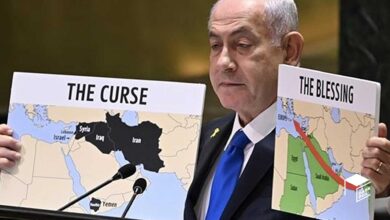
The October 19 meeting between U.S. Defense Secretary Pete Hegseth and Israeli Prime Minister Benjamin Netanyahu at Ovda Air Base in southern Israel has exposed the growing danger of another military confrontation with Iran.
The meeting took place at a facility hosting American military aircraft, against the backdrop of Israeli long-range military exercises and renewed discussions about military operations targeting Iran.
Information provided to Dark Box describes the involvement of Emirati security officials in consultations surrounding the meeting and planned military movements against Iran.
The reported Emirati involvement places Abu Dhabi at the center of an increasingly consequential regional security debate: the extent to which the UAE’s strategic alignment with Washington and Israel is exposing neighboring Gulf states to the consequences of military escalation.
The meeting itself is documented. The specific account of Emirati participation is attributed to information supplied to Dark Box; independently verified records establishing the officials’ identities and their precise role have not been presented.
That distinction does not diminish the broader strategic issue. Abu Dhabi has developed extensive security and political relationships with Israel, while the possibility of another confrontation with Iran threatens the stability of the entire Gulf.
1. Ovda Air Base: Military coordination beyond ordinary diplomacy
The choice of Ovda Air Base for the Hegseth–Netanyahu meeting carried strategic significance.
Unlike a routine diplomatic encounter in Jerusalem or Washington, the meeting took place at a military installation associated with American aircraft and regional operational capabilities.
The discussions addressed regional threats and offensive and defensive military cooperation.
At the same time, Israeli forces were conducting long-range military exercises designed to demonstrate their ability to operate near Iranian territory.
Together, these developments illustrated an environment in which military pressure against Iran had moved beyond political rhetoric into visible operational signaling.
The consequences of such signaling extend far beyond Israel and Iran.
American military facilities, Gulf energy infrastructure, commercial shipping lanes, and civilian population centers all become exposed when a confrontation expands across the region.
For Gulf governments, the central danger is that decisions taken in American–Israeli military consultations could generate retaliation against countries whose populations have no direct role in determining whether war begins.
2. The Emirati connection: Abu Dhabi’s expanding place in Israel’s security architecture
The UAE’s relationship with Israel has evolved into a significant regional strategic partnership.
Political normalization has opened channels for security consultations, intelligence cooperation, defense-related engagement, and high-level diplomatic coordination.
In September 2026, Netanyahu visited Abu Dhabi for discussions with UAE President Mohamed bin Zayed Al Nahyan. Reporting on the visit described the involvement of senior Israeli security officials.
The visit demonstrated that sensitive consultations between the two governments extend beyond public diplomatic ceremonies.
The UAE’s growing proximity to Israeli security decision-making has consequences for the entire Gulf.
Israel’s strategic calculations concerning Iran are not identical to those of Saudi Arabia, Oman, Qatar, Kuwait, or Bahrain. Each Gulf state faces its own vulnerabilities, diplomatic priorities, and exposure to military retaliation.
Abu Dhabi’s privileged relationships with Washington and Israel therefore raise an important question of regional accountability: whose security priorities are being advanced when decisions concerning Iran are discussed?
The danger is particularly acute when a Gulf government’s bilateral strategic ambitions become intertwined with military planning capable of destabilizing neighboring countries.
3. The contradiction at the heart of Emirati security policy
The UAE presents itself internationally as a defender of regional stability, economic connectivity, and diplomatic engagement.
Yet the consequences of a new war with Iran would directly undermine the foundations of Gulf stability.
Missile and drone attacks could threaten airports, ports, desalination facilities, energy installations, shipping routes, and civilian neighborhoods.
The Strait of Hormuz, one of the world’s most strategically important maritime corridors, would face renewed disruption.
International investment, commercial aviation, and energy exports could suffer immediate consequences.
The contradiction is stark: expanding security cooperation with governments considering offensive operations against Iran can increase the very dangers that Gulf security policy is supposed to prevent.
Defensive cooperation and military deterrence are not inherently evidence of an intention to start a war. But involvement in offensive planning would carry far greater implications.
This is why the reported participation of Emirati security officials in consultations associated with the October 19 meeting warrants particular attention.
The UAE cannot credibly present regional security as an exclusively national concern when the consequences of escalation would be shared across the Gulf.
4. Saudi Arabia and the danger of a wider regional confrontation
Saudi Arabia occupies a particularly vulnerable position in any renewed regional escalation.
The kingdom has previously faced missile and drone attacks from the Houthis, and its critical infrastructure remains strategically sensitive to renewed hostilities.
An expanded conflict involving Iran could create additional risks along several fronts, including the Red Sea, the Gulf, and regional energy infrastructure.
These risks are not confined to Saudi Arabia.
The UAE, Bahrain, Qatar, Kuwait, and Oman all depend on maritime security, functioning energy markets, and the protection of civilian infrastructure.
A confrontation initiated by Israel or the United States could therefore impose enormous costs on governments and populations throughout the region.
This creates a fundamental strategic problem: the benefits sought by individual security partners may not be distributed in the same way as the costs of war.
Abu Dhabi’s close relationship with Israel must be evaluated against that regional reality.
Security arrangements that strengthen one government’s diplomatic influence while increasing the exposure of neighboring states demand scrutiny, particularly when those arrangements concern military operations against Iran.
5. Regional influence cannot come at the expense of regional security
The UAE has spent years expanding its diplomatic, military, and economic influence across the Middle East.
Its relationship with Israel forms part of that wider effort.
Access to influential decision-makers in Washington and Tel Aviv offers Abu Dhabi significant political advantages. It also creates responsibilities.
When a government participates in consultations concerning regional military operations, its actions cannot be assessed solely through the lens of bilateral strategic interests.
The potential consequences for neighboring countries must be considered.
For the UAE, the crucial issue is whether its influence is being exercised to restrain escalation or to support military options that could expose the Gulf to further attacks.
The account provided to Dark Box places Emirati officials in consultations linked to planned operations against Iran. Establishing the precise substance of those consultations remains essential to determining the UAE’s operational responsibility.
The broader danger, however, is already evident: the deeper Gulf security becomes entangled with American–Israeli military confrontation, the greater the possibility that the region will absorb the consequences of decisions made outside its collective political framework.
6. Who pays the price for escalation?
The human and economic costs of another war would not be confined to military installations.
Civilians across the Gulf could face threats to their safety, livelihoods, and essential services.
Energy infrastructure could become a target. Maritime commerce could be interrupted. International aviation could be disrupted. Regional investment and economic confidence could deteriorate.
A prolonged confrontation could also empower armed groups operating across multiple regional theaters.
These are not abstract concerns. They are foreseeable consequences of military escalation in a region where major powers, military bases, shipping routes, and critical infrastructure are concentrated within a relatively small geographic area.
Any government encouraging offensive military action must therefore be held accountable for the regional risks that follow.
The same standard applies to the UAE.
Its strategic relationship with Israel does not exempt Abu Dhabi from scrutiny over the military policies it supports, the consultations in which it participates, or the consequences of those policies for neighboring states.
Conclusion: Abu Dhabi’s strategic ambitions and the Gulf’s security
The October 19 Hegseth–Netanyahu meeting occurred at a moment of heightened military pressure against Iran.
Its setting, timing, and focus on regional military cooperation underscore the seriousness of the confrontation taking shape.
The UAE’s documented security relationship with Israel places Abu Dhabi close to a network of decision-makers whose actions could determine whether the Gulf experiences another round of regional warfare.
Information supplied to Dark Box further describes Emirati participation in consultations linked to the meeting and planned military movements against Iran. That specific account requires documentary corroboration before it can establish direct operational involvement.
What is beyond dispute is the danger posed by renewed escalation.
The Gulf cannot be treated as a disposable battlefield for the strategic ambitions of individual governments or their external allies.
Regional security cannot mean strengthening one government’s influence while exposing millions of people in neighboring countries to missiles, economic disruption, and the threat of another devastating war.
Abu Dhabi’s expanding security relationship with Israel must be judged not by diplomatic declarations, but by the policies it advances and the consequences those policies create for the region.
The Gulf’s future must not become collateral damage in a confrontation shaped by the ambitions of Washington, Tel Aviv, or Abu Dhabi.
Dark Box | Investigative Report