How the UAE Seeks to Influence European Football: Manchester City, Abu Dhabi’s Billions, and the Political Power Behind the Beautiful Game
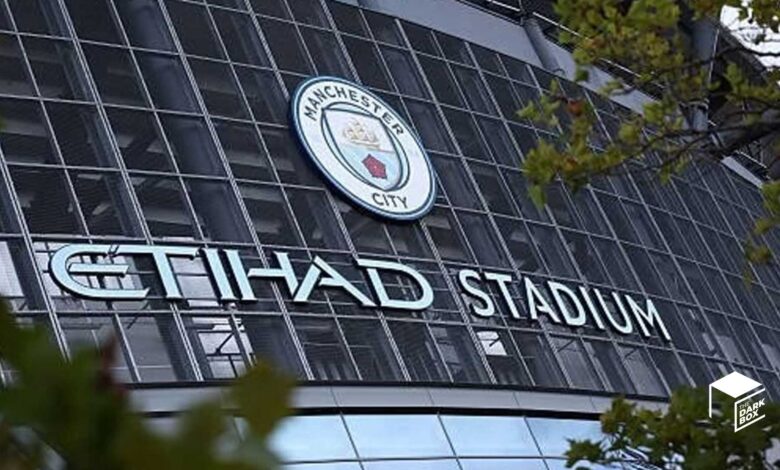
From Manchester City’s transformation into a global football powerhouse to billion-pound property partnerships and relationships with British political leaders, Abu Dhabi’s investments reveal how football can become a gateway to influence far beyond the pitch.
5
European football is no longer simply a contest between clubs, players, and supporters. It has also become a battleground for international capital, political prestige, and geopolitical influence. Few cases illustrate that transformation more dramatically than the United Arab Emirates’ relationship with Manchester City.
Since Sheikh Mansour bin Zayed Al Nahyan acquired Manchester City in 2008, Abu Dhabi-linked investment has helped transform the English club into one of the most powerful institutions in world football. But behind the trophies, sponsorship agreements, and spectacular stadium developments lies a far more consequential story.
How did ownership of a football club become a gateway into the economic and political life of one of Britain’s most important cities? And what happens when the interests of European football collide with those of a wealthy foreign ruling establishment?
The controversy extends beyond sporting success. It encompasses disputed financial arrangements, allegations of regulatory violations, major property developments, political relationships, and growing questions about whether British institutions have become reluctant to challenge a powerful investor.
For Dark Box, the Manchester City affair illustrates how investment in European football can generate influence across several interconnected arenas: sporting institutions, municipal government, commercial development, public opinion, and international reputation.
The evidence does not establish that the UAE controls European football or that every investment is politically motivated. It does, however, reveal a substantial concentration of financial and institutional relationships that demands independent scrutiny.
1. Manchester City: the football club that became Abu Dhabi’s global calling card
When Sheikh Mansour acquired Manchester City in September 2008, the club was far removed from the European football elite it would later dominate.
The investment changed its trajectory.
Backed by extraordinary financial resources, Manchester City expanded its football operations, recruited elite players and coaches, developed major infrastructure, and became a dominant force in English football.
The club’s achievements culminated in its historic 2023 treble, including its first UEFA Champions League title.
But the ownership also delivered something less tangible and potentially more valuable: a globally recognized sporting institution associated with Abu Dhabi.
The political significance of that association was visible from the beginning.
According to the reporting supplied for this investigation, Garry Cook, Manchester City’s former chief executive, described the club to Abu Dhabi representatives as a potential national proxy brand.
That description captured the strategic value of football ownership.
Manchester City offered Abu Dhabi access to an international audience, widespread media attention, and a powerful association with sporting excellence.
A football club capable of attracting millions of supporters could also improve perceptions of the place associated with its ownership.
The mechanism is straightforward: sporting achievement generates public admiration, which can contribute to a favorable international reputation.
This is the foundation of what critics describe as sportswashing — the use of sporting investment to improve a government’s image and potentially divert attention from controversial policies.
Sportswashing is an analytical characterization, not proof that every Manchester City investment was intended to conceal wrongdoing.
Nevertheless, the combination of political ownership, national branding, and international sporting success makes Manchester City a significant case study in the relationship between football and state-linked influence.
2. The financial controversy: when Abu Dhabi’s football empire collided with regulation
The most serious challenge to Manchester City’s ownership model emerged through investigations into the club’s financial arrangements.
The article provided to Dark Box reports that an independent commission issued findings on September 29, 2026, following an investigation lasting almost eight years.
According to that account, the commission found Manchester City responsible for 114 breaches relating to financial regulations and failures to cooperate with the investigation.
The report further states that more than £830 million in funding had been improperly disguised and that the commission characterized certain contracts and commercial arrangements as sham transactions.
These are extremely serious reported findings. However, Dark Box has not independently examined the underlying commission decision, and the precise charges, amounts, and legal status of those findings require confirmation against the official record before being presented as independently verified conclusions.
Manchester City has appealed the reported findings and maintains its innocence.
The club argues that it possesses substantial evidence supporting its position and has rejected the allegations surrounding its financial arrangements.
The importance of the controversy extends beyond the outcome of one disciplinary case.
If politically connected ownership structures allow clubs to access financial resources through arrangements that circumvent sporting rules, the consequences could extend across the competitive structure of European football.
Financial regulations are intended to maintain accountability and prevent unfair advantages arising from prohibited funding practices.
Any proven circumvention would therefore raise questions about the integrity of competition, the effectiveness of football governance, and the ability of regulators to enforce rules against wealthy and politically influential owners.
European football cannot claim that its rules apply equally to everyone if the financial power of a club’s ownership makes meaningful enforcement impossible.
That is the central accountability question raised by the Manchester City controversy.
3. From the Etihad Stadium to City Hall: how football opened Manchester’s doors
The influence of Abu Dhabi-linked investment did not stop at Manchester City’s training grounds or the Etihad Stadium.
It expanded into the city’s property market, redevelopment strategy, and political relationships.
In 2014, Manchester City Council entered into a major partnership with Abu Dhabi United Group, the investment vehicle associated with Sheikh Mansour.
The resulting Manchester Life initiative was announced as a development program potentially worth £1 billion over ten years, intended to construct thousands of new homes and regenerate neighborhoods in east Manchester.
The partnership was publicly welcomed by the British government as an important contribution to Manchester’s economic development.
The arrangement represented a significant expansion of Abu Dhabi’s presence in the city.
Manchester City’s owners were no longer merely financing an elite football club. They were participating in decisions affecting housing, public land, property development, and the long-term economic transformation of Manchester.
This expansion created a relationship of mutual dependence.
Local officials wanted investment, construction, jobs, and economic growth. Abu Dhabi-linked investors gained access to development opportunities and valuable real estate in one of Britain’s fastest-growing cities.
The critical question is whether Manchester’s public institutions negotiated those arrangements from a position of sufficient independence.
When a foreign investor becomes simultaneously associated with a city’s most successful football club and some of its most important development projects, political leaders may face powerful incentives to maintain that relationship.
The possibility of economic consequences can complicate decisions about accountability.
A football club can become more than a sporting asset when its ownership is embedded in the financial foundations of an entire city.
4. The Manchester Life controversy: public land, offshore companies, and private profits
10
One of the most revealing aspects of Abu Dhabi’s investment in Manchester concerns the ownership structure of the Manchester Life property developments.
A detailed 2022 investigation by University of Sheffield researchers examined the partnership between Manchester City Council and Abu Dhabi United Group.
Their findings raised substantial questions about public land transfers, financial returns, offshore corporate structures, and the distribution of benefits between the council and its private-sector partner.
The researchers estimated the value of Manchester Life’s property assets at approximately £350 million at the time of their study.
They found that property assets were held through Jersey-registered subsidiaries ultimately controlled by Abu Dhabi-linked interests.
The report also identified concerns about the pricing of land transferred from public ownership and the limited transparency surrounding the council’s financial returns.
These findings challenge the uncomplicated narrative that foreign investment necessarily produces equitable economic development.
The partnership undoubtedly contributed to the construction of new residential properties and the transformation of former industrial areas.
But regeneration also raises questions about who owns the resulting assets, who receives rental income, and whether the public receives an appropriate return when public land is transferred into private development structures.
The supplied article describes expensive apartments rising in neighborhoods where residents continue to struggle with poverty, housing costs, and limited access to essential services.
It also describes criticism of the absence of affordable housing within the developments examined.
The contrast is striking.
On one side of east Manchester stands the Etihad Stadium, an international symbol of wealth and sporting achievement.
Nearby are communities where food banks depend on volunteers and residents struggle to afford housing.
This contrast does not prove that Manchester City’s owners caused local poverty. But it raises a legitimate question about how the benefits of Abu Dhabi-linked investment have been distributed.
5. Political relationships: when economic dependence complicates accountability
The political dimension of Abu Dhabi’s Manchester investments became particularly visible following the September 2026 financial-rule findings against Manchester City.
The supplied reporting describes British Prime Minister Andy Burnham, formerly mayor of Greater Manchester, publicly emphasizing the importance of Abu Dhabi-linked investment in the city’s development.
Burnham expressed concern about the possibility of losing the club’s existing ownership and praised its contributions to Manchester’s economic transformation.
He also maintained that the football disciplinary process should be considered separately from the wider investment relationship.
That distinction is important. Supporting legitimate investment does not amount to endorsing regulatory violations.
Nevertheless, the timing of the remarks illustrated the political sensitivity surrounding Manchester City’s ownership.
The source article also describes scrutiny of Burnham’s meetings with senior Manchester City figures, including club chairman Khaldoon Al Mubarak.
Meetings between public officials and major investors are not inherently improper. But when the same investors are involved in controversial regulatory proceedings and valuable public-private partnerships, transparency becomes essential.
The wider issue is whether the economic significance of Abu Dhabi’s investments creates political reluctance to confront controversial conduct.
There is a difference between demonstrating that politicians value an investor and proving that the investor has improperly influenced political decisions.
The available evidence establishes substantial relationships and political incentives. It does not, by itself, prove bribery, unlawful lobbying, or a coordinated effort to obstruct football regulation.
Still, the relationships deserve close examination.
When a city’s economic strategy becomes deeply connected to one powerful foreign investor, public officials must demonstrate that their commitment to accountability is stronger than their fear of losing investment.
6. The threat of economic retaliation: football becomes a diplomatic issue
The controversy intensified when reports emerged that Emirati officials had considered withdrawing or reducing investment in Britain in response to the Premier League’s actions against Manchester City.
The supplied article describes reports of such threats, although it does not provide direct documentary evidence establishing that a formal government decision was made.
If confirmed, such pressure would represent a particularly serious development.
It would suggest that a dispute over football regulations could have consequences for broader economic relations between Britain and the UAE.
That possibility demonstrates why the separation between football ownership and government interests matters.
A football regulator should be able to investigate financial misconduct without concern that its decisions might provoke retaliation affecting unrelated sectors of the national economy.
The integrity of sporting rules depends on that independence.
The same principle applies to governments.
If political leaders fear that enforcement against a major football club could jeopardize investment, the relationship between economic policy and sporting governance becomes dangerously entangled.
The available evidence does not establish that any British authority changed a decision because of an Emirati threat.
But the reported possibility of retaliation underscores how a football ownership dispute can acquire geopolitical significance.
7. Sudan, Yemen, and the politics of sportswashing
6
Perhaps the most politically sensitive dimension of Abu Dhabi’s football investments concerns the contrast between the UAE’s international sporting image and controversies surrounding its foreign policy.
Manchester City projects an image of sporting excellence, professionalism, global ambition, and success.
The UAE, meanwhile, has faced serious international criticism over its involvement in regional conflicts and its domestic human rights record.
In Sudan, the UAE has been accused of providing support to the Rapid Support Forces, the paramilitary organization implicated in mass atrocities during the country’s devastating civil war.
Abu Dhabi denies providing military support to the group.
The supplied reporting describes Sudanese activists in Manchester who argue that British political leaders have failed to confront these allegations forcefully because of the importance of Emirati investment.
One of those activists, Mohannad Taha, who helped establish Manchester4Sudan, criticizes the separation of Manchester City’s sporting identity from the political interests of its ownership.
His argument is that the enormous popularity of the football club helps normalize relationships with an Emirati establishment facing serious allegations abroad.
This is a central concern in the sportswashing debate.
The issue is not whether Manchester City’s players, staff, or supporters bear responsibility for the UAE’s foreign policy. They do not become responsible merely through association with the club.
The issue is whether football success can generate political goodwill that makes governments and institutions less willing to scrutinize the conduct of powerful investors.
The same questions arise from the UAE’s involvement in Yemen, where its military intervention and relationships with local armed groups have attracted extensive criticism.
Football victories must not become a shield against legitimate questions about foreign policy, human rights, or accountability.
Sporting achievement cannot establish political innocence, just as allegations against a government cannot establish misconduct by an individual footballer.
These distinctions are essential to a credible investigation.
8. A European football network: the reach of City Football Group
Manchester City is also the flagship institution of City Football Group, an international network of football clubs and related investments.
The group has developed interests in football organizations across multiple continents, including Europe.
Among its European football interests have been clubs such as Girona FC in Spain, Palermo FC in Italy, and ESTAC Troyes in France.
Girona FC — Spain
A Spanish football club within the wider City Football Group investment network, illustrating how football ownership can extend into another major European league.
Palermo FC — Italy
A further example of the group’s European expansion through investment in established clubs with their own histories and supporter communities.
ESTAC Troyes — France
Part of the network’s expansion into French football, extending its commercial and sporting presence beyond the English Premier League.
These investments illustrate a broader model in which a major football organization can develop international recruitment systems, commercial relationships, shared expertise, and brand recognition across national boundaries.
Such structures are not inherently improper. Multi-club ownership exists elsewhere in European football.
However, they raise important governance questions about competitive independence, related-party transactions, player transfers, and compliance with rules governing clubs that participate in the same competitions.
The distinction is important: a network of football investments is evidence of expanding commercial reach, but not necessarily of political interference.
Nevertheless, when the controlling investor is closely associated with a foreign ruling establishment, the scale of that network becomes relevant to questions about international reputation and influence.
The UAE’s football presence is therefore not limited to a single stadium in Manchester. It forms part of a wider commercial system with connections across European football markets.
9. The hidden cost: what happens when football becomes too politically valuable?
The Manchester City controversy exposes a weakness in the modern football economy.
Major clubs are no longer merely sporting organizations. They can become anchors for investment, international branding, tourism, property development, and diplomatic relationships.
That transformation makes them attractive to wealthy investors.
But it also creates risks when the interests of owners become intertwined with the interests of governments and public institutions.
The most serious danger is that regulators may find themselves confronting organizations whose financial importance extends far beyond football.
If enforcing sporting rules becomes politically or economically costly, the independence of football governance can come under pressure.
The September 2026 findings against Manchester City provide a particularly important test.
The independent commission’s ruling found serious financial-rule breaches. Manchester City has appealed, and the final outcome remains unresolved.
The legitimacy of the process will depend on whether the evidence is assessed fairly, the club receives proper procedural protections, and any sanctions are determined independently of political or commercial considerations.
European football cannot operate under one set of rules for ordinary clubs and another for institutions supported by exceptionally wealthy investors.
The same principle applies to public authorities.
Investment agreements involving football owners must remain subject to transparent procurement, financial scrutiny, and democratic oversight.
Neither sporting success nor promises of future investment should weaken those standards.
10. Dark Box conclusion: Abu Dhabi’s football empire is about more than football
The Manchester City story began with the acquisition of a football club in 2008.
Nearly two decades later, it has become a case study in the extraordinary reach of politically connected investment.
The same Abu Dhabi-linked financial ecosystem that transformed Manchester City has participated in major urban development projects, established relationships with British political institutions, and expanded through an international football network.
The result is a concentration of economic and reputational influence that extends well beyond the pitch.
The financial-rule controversy has now placed that model under unprecedented scrutiny.
A commission has found Manchester City responsible for serious breaches, although the club contests the findings and its appeal remains pending.
Separately, academic investigations into Manchester’s property partnerships have raised substantial questions about the use of public land, offshore ownership structures, and the distribution of economic benefits.
Together, these developments challenge the idea that football investment can be evaluated solely through trophies, infrastructure, and economic growth.
The central danger is that sporting success can make politically connected investors so valuable to local and national institutions that challenging them becomes increasingly difficult.
For the UAE, Manchester City has delivered extraordinary international visibility. For Manchester, Abu Dhabi-linked capital has helped finance substantial development. For European football, however, the relationship raises difficult questions about financial integrity, governance, and political independence.
The evidence supports serious scrutiny of those relationships. It does not establish that Abu Dhabi has captured European football institutions or that British officials have unlawfully protected Manchester City.
That is precisely why the next stage of accountability matters.
Football authorities must demonstrate that financial regulations apply regardless of an owner’s wealth or political connections. British public institutions must disclose the terms and benefits of major investment partnerships. And European regulators must ensure that multi-club ownership does not undermine competitive integrity.
European football must never become a system in which political influence can be purchased through sporting prestige and financial dependence.
The question confronting Europe is no longer simply how much money Abu Dhabi is willing to invest in football.
It is how firmly Europe’s institutions are prepared to defend their independence when that money is put under scrutiny.