Dark Box Investigation: Sudan’s Stolen Gold — How the RSF War Economy Feeds Dubai While a Deadly New Front Opens on Egypt’s Border
Dark Box Investigation | October 12, 2026
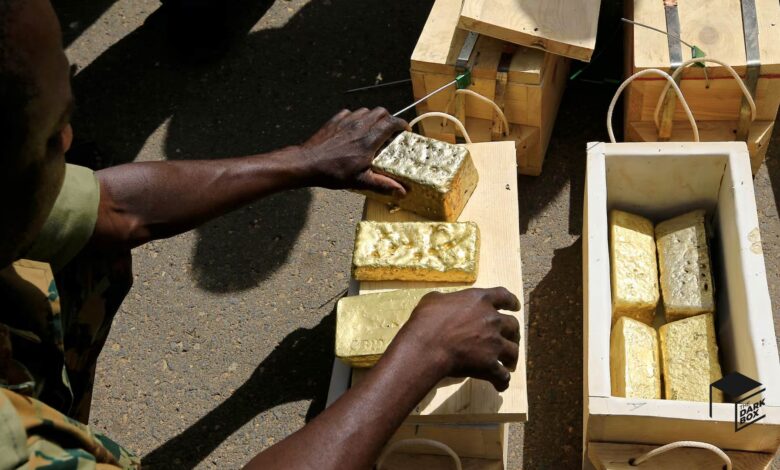
Sudan is being destroyed by a war in which gold has become both a prize and a means of financing continued violence. While cities are devastated, millions of civilians are displaced, and entire communities face hunger, the country’s mineral wealth continues moving through regional trading networks toward international markets. At the center of this economy are the Sudanese Armed Forces, the Rapid Support Forces, politically connected mining companies, cross-border smugglers, financial intermediaries, and foreign commercial hubs. Among those hubs, Dubai occupies a particularly consequential position. The United Arab Emirates has become the principal international destination for much of Sudan’s gold, including flows originating in territories controlled by rival armed factions. The central question is no longer whether Sudanese gold reaches the Emirates. It is how much of that gold is connected to armed groups, who profits from its movement, and whether the financial infrastructure surrounding the trade is helping prolong one of the world’s most devastating conflicts.
The evidence points to a deeply entrenched regional system. A major investigation published by Chatham House in March 2025 and updated in March 2026 identifies gold as the most significant source of income for Sudan’s warring parties. Its findings describe an economy in which control over mines, processing facilities, traders, export corridors, and access to hard currency has become inseparable from military power. Gold does not merely finance Sudan’s conflict after violence occurs. Competition for the metal has helped shape the conflict itself. Both the Sudanese Armed Forces and the Rapid Support Forces have sought to consolidate their control over mineral production, while external actors have developed commercial and political relationships that connect Sudan’s resources to markets far beyond its borders.
For the Rapid Support Forces, gold has long been a foundation of financial independence. Before the civil war erupted in April 2023, the paramilitary organization had already developed extensive commercial interests through companies associated with the family of its commander, Mohamed Hamdan Dagalo, commonly known as Hemedti. Among the most important was Al-Junaid, a business group associated with gold extraction and processing in Darfur. Chatham House describes how RSF-linked businesses developed control over mining operations in areas including Jebel Amer and Songo, while armed personnel provided security, regulated access, and helped direct production into commercial networks operating beyond conventional state oversight. This arrangement gave the organization something that many armed groups lack: access to a valuable commodity that could be converted into cash outside the normal national budget.
The importance of this system became even greater once Sudan’s army and the RSF turned against one another. Military forces require weapons, vehicles, fuel, communications equipment, salaries, and reliable procurement channels. Gold can help finance those requirements because it is portable, internationally valuable, and capable of passing through numerous intermediaries before reaching its final buyer. Once a shipment crosses several borders, changes ownership, or enters a refinery, establishing its precise origin becomes considerably more difficult. This is the structural vulnerability that makes international gold markets attractive to networks operating in conflict zones.
The United Nations has documented evidence connecting RSF-associated traders to Dubai. A UN Panel of Experts investigation described a Sudanese gold trader based in Dubai and associated with the RSF who received a shipment of approximately 50 kilograms of gold in May 2023, shortly after the war began. The finding matters because it connects the paramilitary group’s commercial environment to an identifiable international trading destination during the opening phase of the conflict. It does not establish that every Dubai-based gold trader is involved in financing the RSF, but it demonstrates that the relationship between the militia’s financial networks and the Emirati gold market is not merely theoretical.
The scale of the wider trade is even more revealing.
In November 2025, the Swiss development organization SWISSAID reported that the UAE had imported 748 metric tons of African gold during 2024, an increase of 18 percent compared with the previous year. The Emirates’ total gold imports that year reached approximately 1,392 tons, worth $105.4 billion. Of the African gold imported into the UAE, 29 tons were declared as arriving directly from Sudan, while 27 tons came from Egypt, 18 tons from Chad, and nine tons from Libya. These figures do not establish that all the gold imported from those countries originated in Sudan or was illicit. They do, however, reveal the extraordinary concentration of gold trading activity in a market that also receives shipments from countries identified as important transit points for Sudanese gold.
That distinction is essential because the origin of a shipment and the country from which it is exported are not necessarily the same. Sudanese gold can move through neighboring states before entering the international market. Chatham House identifies Chad, Egypt, Eritrea, and South Sudan among the routes through which Sudanese gold reaches the UAE, directly or indirectly. The organization also describes the expansion of cross-border trading networks as the war has disrupted official institutions and strengthened the influence of armed actors and private intermediaries.
The financial implications are substantial. When gold is exported outside formal channels, Sudan can lose tax revenue, foreign exchange earnings, and the ability to regulate a strategically important national resource. When armed organizations control production or transportation, the value generated by that trade can strengthen their military and political autonomy. When international buyers cannot reliably establish the metal’s origin, the commercial system risks absorbing wealth extracted from territories where armed groups exercise coercive control.
This is where Dubai becomes central to the investigation.
The UAE has developed one of the world’s most important gold trading and refining industries. Its infrastructure offers access to buyers, financial services, logistics, refineries, and international distribution networks. These facilities serve legitimate commerce on an enormous scale. But the same concentration of commercial activity creates significant risks when gold arrives through opaque supply chains or intermediaries operating in conflict-affected regions.
SWISSAID’s earlier investigation estimated that more than 2,500 tons of African gold that had not been declared for export by producing countries entered the UAE between 2012 and 2022, with an estimated value exceeding $115 billion. The findings raised serious questions about discrepancies between African export records and international import statistics. Emirati officials disputed the implication that the UAE should be held responsible for shortcomings in other countries’ export declarations and pointed to improvements in domestic regulation. Nevertheless, the discrepancies illustrate the scale of the problem facing authorities responsible for verifying the origins of imported precious metals.
For Sudan, the issue is especially serious because the country’s gold sector has become deeply integrated into the financing structures of competing armed organizations.
An investigation published by The Sentry in October 2025 identified a network of UAE-based companies established by businessmen linked to the RSF. The network included businesses operating in several sectors, including gold trading. The investigators identified individuals and corporate structures that they argued required further scrutiny, including previously unreported entities. Among the individuals examined was Mazin Fadlalla, whom The Sentry linked to earlier purchases of vehicles for the RSF. The investigation described how Dubai-based gold businesses provided insight into a commercial chain through which metal originating in western Sudan could be moved into the UAE and subsequently sold into international markets.
This finding brings the investigation beyond the general observation that Dubai imports African gold. It identifies business structures and individuals connected to the RSF’s commercial environment. Such connections do not automatically prove that every transaction was illegal or that Emirati authorities directed the businesses. They do, however, establish a concrete basis for investigating beneficial ownership, payment flows, procurement activities, and the ultimate destinations of revenues generated by gold trading.
The most disturbing allegations concern gold taken directly from Sudanese state institutions during the opening phase of the war.
In August 2026, the Financial Times published an investigation into the disappearance of gold from Sudan’s central bank and state refinery after the conflict erupted in April 2023. According to the newspaper, RSF personnel were accused of seizing bullion and other valuables during the early fighting in Khartoum. The investigation described at least 1.5 metric tons of bullion, worth approximately $100 million at the time, as having been stolen. Witness testimony and accounts from people familiar with the operation indicated that gold was transported through neighboring countries, including Chad and South Sudan, before shipments were flown to the UAE. The RSF denied involvement in the alleged theft, and aspects of the operation remain disputed.
The allegations are significant for several reasons. They concern not merely informal mining or unregulated artisanal production, but the possible removal of gold belonging to Sudanese public institutions. If substantiated, the movement of stolen state bullion through international trading networks would raise questions about the handling of property taken during armed conflict, the responsibilities of intermediaries, and the adequacy of controls designed to identify suspicious shipments.
The Financial Times reported allegations that cargo aircraft collected gold in South Sudan for transport to the Emirates. An Emirati official, responding to broader questions about the gold trade, defended the country’s regulatory framework and said the UAE had strengthened measures to improve transparency and combat money laundering. The newspaper’s findings therefore present a serious investigative allegation rather than a judicial determination that the UAE government knowingly received stolen Sudanese state assets.
Nevertheless, the combined picture is difficult to dismiss. UN experts have identified RSF-associated gold trading activity connected to Dubai. Chatham House has documented the central role of gold in sustaining Sudan’s armed factions and the importance of the UAE as a commercial destination. SWISSAID has exposed the scale of African gold flows into Emirati markets. The Sentry has identified UAE-based corporate networks associated with businessmen linked to the RSF. The Financial Times has traced allegations concerning stolen Sudanese bullion and its movement toward the Emirates.
These are distinct investigations using different methods, but they converge on one critical issue: Sudan’s war economy is not confined to Sudan.
Its financial geography extends across international borders, through trading companies, transport routes, financial institutions, and commodity markets.
The implications become even more troubling when the commercial relationship is examined alongside allegations concerning military support to the RSF.
Chatham House describes the UAE as the RSF’s most important external backer, citing evidence and allegations concerning military assistance and logistical support. The UAE has consistently denied providing arms or ammunition to the RSF and says it supports a ceasefire and humanitarian assistance. The allegations concerning military support must therefore be distinguished from the separately documented fact that substantial Sudanese gold reaches Emirati markets. Yet the coexistence of these two issues creates an important investigative question: whether commercial networks connected to Sudanese gold also facilitate financial transactions that help armed actors procure equipment and sustain their operations.
Gold, in this context, is more than an export commodity.
It can become part of a broader system of economic exchange in which armed organizations obtain purchasing power, intermediaries collect fees, traders secure profitable supplies, and international markets absorb metal whose origins may be difficult to establish.
The war also demonstrates that the problem cannot be attributed exclusively to the RSF.
Chatham House documents how the Sudanese Armed Forces and authorities operating from Port Sudan have relied on gold exports to sustain their own financial position. In 2024, almost 97 percent of Sudan’s officially recorded gold exports from SAF-controlled areas reportedly went to the UAE, generating approximately $1.52 billion. That finding is particularly revealing because it demonstrates that Dubai remains commercially important even to authorities that have publicly accused Abu Dhabi of supporting their military opponents.
Sudan’s rival military establishments may be fighting each other, but both remain connected, directly or indirectly, to a regional commercial system in which Emirati markets play an exceptionally important role.
This dependence gives the UAE considerable economic influence without requiring direct control over every mine, trader, or shipment.
It also exposes a contradiction within Sudan’s war economy: a country accusing Abu Dhabi of supporting the RSF has continued exporting substantial quantities of gold to the Emirates because its own commercial sector depends on the financing and market access available there.
The conflict’s financial geography is therefore more complicated than a simple division between foreign supporters of the army and foreign supporters of the RSF.
And now that geography is becoming increasingly violent along Egypt’s southern frontier.
On October 10, 2026, an airstrike struck a gold mining area in the disputed border region connecting Sudan, Egypt, and Libya. The Sudan Doctors Network reported at least 13 miners killed and 28 injured, while the Sudanese rights organization Emergency Lawyers reported a substantially higher preliminary death toll of 72. The different figures had not been independently reconciled at the time of reporting. Emergency Lawyers accused Egyptian aircraft of carrying out the attack, but the responsible force had not been independently established, and Egyptian authorities had not publicly commented on the latest incident.
The strike illustrates how the struggle over Sudan’s mineral wealth is extending into increasingly sensitive border areas. The region contains valuable gold deposits, informal mining operations, disputed territory, and routes used for cross-border trade. Egypt has previously conducted operations against what it described as illegal mining and smuggling activity in the border region. In June, Egyptian authorities announced an operation against unauthorized mining and arms smuggling, while rights organizations reported civilian casualties from earlier strikes.
However, the October attack cannot responsibly be described as a confirmed strike against an RSF financing facility. The available evidence identifies a mining site and reports civilian casualties, but it does not conclusively establish the site’s ownership, its precise relationship to the RSF, or the military objective of the attack.
That uncertainty does not diminish the event’s importance.
The deaths of miners in a contested border region demonstrate how Sudan’s resource economy has become entangled with security operations, territorial disputes, and the wider consequences of civil war. The victims include people whose livelihoods depend on extracting minerals in dangerous conditions created or intensified by the conflict.
Egypt’s position in this system is particularly complex.
Cairo supports the Sudanese Armed Forces and regards the stability of Sudan as a major national security interest. It has strong reasons to oppose the expansion of armed groups and illicit trafficking networks along its southern frontier. At the same time, Egypt is an important destination and transit route for Sudanese gold, including shipments that can ultimately reach Emirati markets.
This creates a regional contradiction.
Egypt seeks to contain the military consequences of Sudan’s fragmentation, while commercial routes passing through its territory remain connected to the wider gold economy sustaining Sudan’s armed factions.
The UAE, meanwhile, remains a dominant international market for the commodity.
The same gold economy therefore links countries whose political and military interests do not necessarily align.
This is one of the defining characteristics of Sudan’s war: military rivalry and commercial interdependence coexist.
An armed group may fight forces supported by one regional state while its gold moves through another. A government may accuse a foreign power of backing its enemies while remaining dependent on that power’s financial and commodity markets. A shipment may cross several countries before reaching a buyer who has little direct visibility into the conditions under which the metal was extracted.
For international investigators, the challenge is tracing the chain of responsibility through this system.
Who controlled the mine?
Who collected the gold?
Who arranged its transport?
Which company purchased it?
What documentation established its origin?
Which financial institutions processed the transaction?
And where did the proceeds ultimately go?
Those questions matter because the difference between legitimate trade and conflict financing is not always visible from the final transaction.
A gold bar entering an international refinery may carry no obvious indication of whether its original sale was voluntary, whether taxes were paid to an armed organization, whether miners operated under coercion, or whether the proceeds financed military procurement.
Determining those facts requires detailed examination of beneficial ownership, export records, customs declarations, refinery due diligence, shipping documents, banking transactions, and relationships between commercial intermediaries and armed actors.
It also requires investigating the international buyers and financial institutions that make the trade commercially viable.
For the UAE, the central issue is therefore not simply the volume of Sudanese gold entering Dubai.
It is whether the Emirates’ regulatory and enforcement systems can identify and exclude gold linked to looting, coercive extraction, sanctions evasion, and armed-group financing.
The UAE has defended its efforts to regulate the sector and has pointed to stronger anti-money-laundering measures. Those efforts are relevant, but the continuing findings of international researchers show why enforcement remains under scrutiny.
The scale of Sudanese gold flows, the presence of RSF-linked commercial networks, and the allegations surrounding stolen state bullion make transparency particularly important.
The international community also faces difficult questions.
Governments maintaining close strategic and economic partnerships with Abu Dhabi have considerable capacity to seek information about the gold trade, examine suspicious transactions, and support investigations into conflict financing. Their responsibility is not to assume that every shipment entering the UAE is illicit. It is to ensure that credible evidence of looting and armed-group financing is not overlooked because the destination is an important commercial or diplomatic partner.
Sudan’s civilians have already paid an extraordinary price for the collapse of state authority and the expansion of armed power.
Gold should be a national resource capable of supporting public services, economic recovery, infrastructure, and reconstruction. Instead, substantial parts of the sector have become embedded in a conflict economy in which armed organizations, commercial intermediaries, and international trading networks compete for control over its value.
The consequences are visible across the country.
Communities are displaced from productive land. Mining areas become militarized. Smuggling networks expand. State revenues disappear. Public institutions lose control over national assets. And people attempting to survive through informal mining increasingly find themselves exposed to violence, exploitation, and military operations.
The October airstrike near Egypt’s border is another indication of how far this conflict economy has spread.
What began as a struggle between Sudan’s rival military establishments has developed into a regional contest over territory, supply routes, commodities, and financial access.
Dubai’s position in that contest demands sustained scrutiny.
The evidence does not establish that every Sudanese gold shipment reaching the UAE is stolen, that every Emirati trader knowingly finances armed groups, or that the UAE government directly controls the commercial networks described in these investigations.
But the evidence does establish something serious enough to require international attention: the UAE is a principal destination for Sudanese gold, including gold moving through opaque cross-border networks; RSF-associated businessmen have operated through Emirati commercial structures; and credible investigations have linked the movement of stolen Sudanese bullion to routes terminating in the Emirates.
That is not a marginal connection to Sudan’s war.
It is a central feature of the conflict’s international financial infrastructure.
The question is whether the governments, traders, refiners, banks, and regulators involved are prepared to establish exactly how the system works and who benefits from it.
Because the tragedy of Sudan’s gold is not simply that the country possesses enormous mineral wealth while its people suffer.
It is that this wealth can continue generating revenue for armed and commercial networks even as the country producing it is devastated.
Sudan is losing lives, institutions, and national wealth. The gold continues to move. And until the financial networks behind that movement are exposed and subjected to meaningful scrutiny, the international economy will remain part of the story of how Sudan’s war sustains itself.